
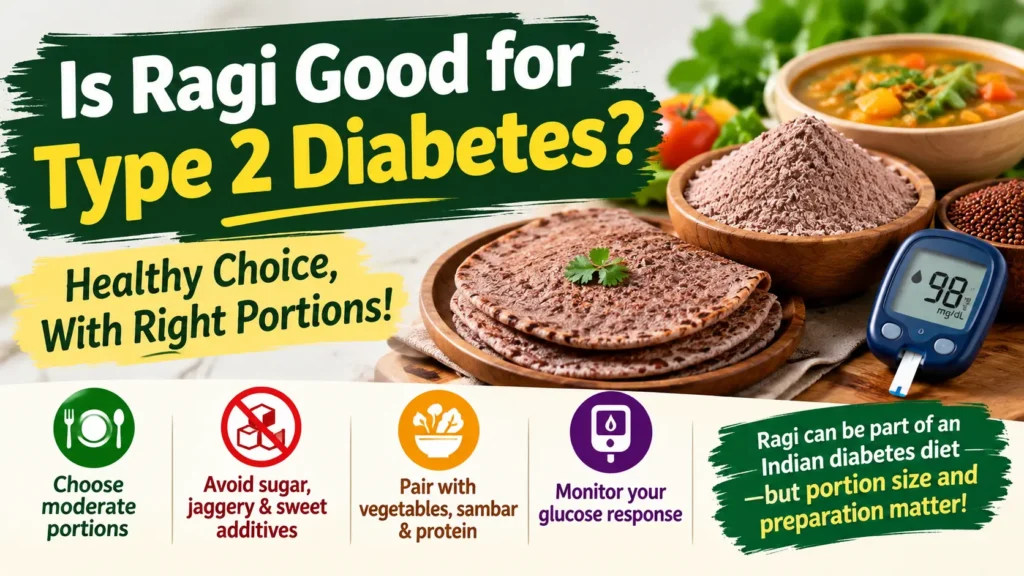
Is Ragi Good for Diabetes?: Ragi, also called finger millet, is a traditional Indian grain that is often promoted as a diabetes-friendly food. It can be included in a healthy diet, but it is important to understand that ragi is still a carbohydrate source.
Ragi and Nutrition
Ragi provides nutrients and can contribute fiber depending on how it is processed. It can be used in foods such as ragi dosa, ragi roti, or other traditional preparations.
Why Portion Size Matters
The main issue is portion size and preparation. Eating very large amounts of ragi can still contribute a substantial carbohydrate load. A food does not become unlimited simply because it is a millet.
Ragi Porridge
Ragi porridge can also vary significantly depending on how it is prepared. Adding sugar, jaggery, sweetened milk, or other sweeteners can increase the carbohydrate content substantially.
Is Ragi Good for Diabetes? : Build a Ragi Meal
A better approach is to combine a suitable portion of ragi with vegetables and protein. For example, ragi dosa can be paired with sambar and a suitable protein-rich side.
Ragi vs Rice
There is no need to replace all rice with ragi automatically. Some people may prefer ragi because it fits their dietary preferences and provides variety, while others may find different whole grains or millets more practical.
Ragi Does Not Cure Diabetes
If you monitor blood glucose, you can discuss your readings with your healthcare professional to understand your individual response.
Conclusion
Ragi should not be described as a food that cures or reverses diabetes by itself. Type 2 diabetes remission, when it occurs, is associated with broader and sustained metabolic changes rather than one particular food.
For people taking glucose-lowering medication, significant changes in carbohydrate intake should be made with medical guidance.
Ragi can be part of a balanced Indian diet for diabetes, provided portions, preparation, and the rest of the meal are considered.
Read Also:

One Response