
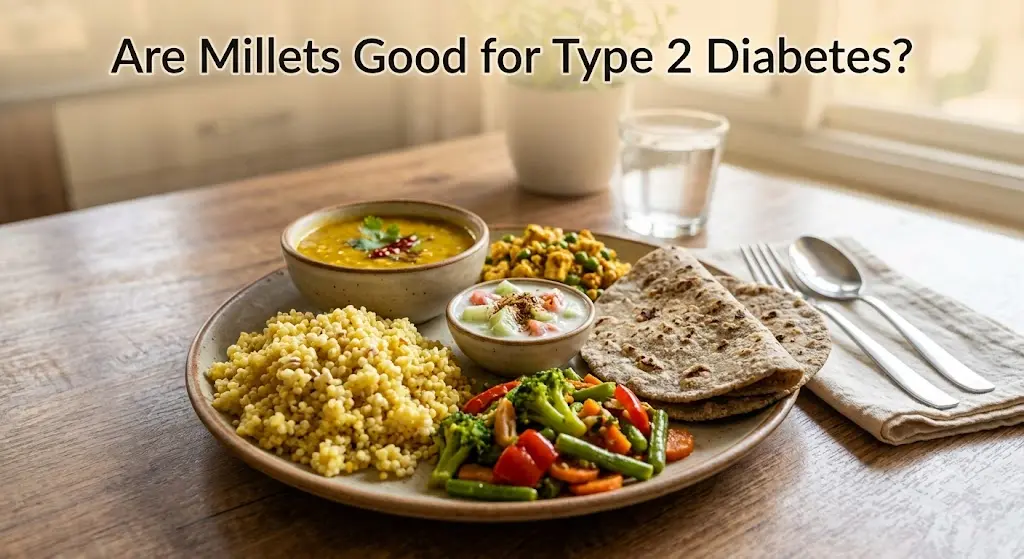
Is Millet Good for Type 2 Diabetes?: Millets are traditional grains that can be included in a healthy Indian diet. They may provide fiber and other nutrients, but they are still carbohydrate-containing foods. For people with Type 2 diabetes, portion size and the overall meal remain important.
Common Types of Millet
Commonly eaten millets include foxtail millet, little millet, pearl millet or bajra, finger millet or ragi, and others. They can be used in rotis, dosas, porridges, upma, or other dishes.
Are Millets Better Than Rice?
Millets may be useful as an alternative to refined grains for some people, especially when they help create a more varied, minimally processed eating pattern. However, switching from rice to millet does not automatically mean blood sugar will improve. The quantity and preparation still matter.
Build a Millet Meal
A diabetes-friendly millet meal can combine a suitable millet portion with plenty of vegetables and a protein source such as dal, curd, paneer, tofu, eggs, fish, or chicken.
Packaged Millet Foods
Be careful with packaged millet products. Millet biscuits, cookies, snacks, and sweetened breakfast products may still contain added sugar, refined ingredients, or substantial calories. The presence of millet on the label does not automatically make a product suitable for diabetes.
Millet Porridge and Portions
Millet porridge can also become high in carbohydrate if large portions or added sweeteners are used.
Monitor Your Glucose
Individual responses to foods vary. If you monitor glucose, your readings can help you understand how a particular millet and portion affect you.
Conclusion
There is no need to treat millet as a miracle food. A sustainable diabetes diet is based on the overall pattern: vegetables, appropriate protein, sensible carbohydrate portions, healthy fats, physical activity, sleep, weight management, and medical care.
Millets can be part of that pattern, but they should not be presented as a guaranteed treatment or cure for Type 2 diabetes.
Read Also:

One Response