
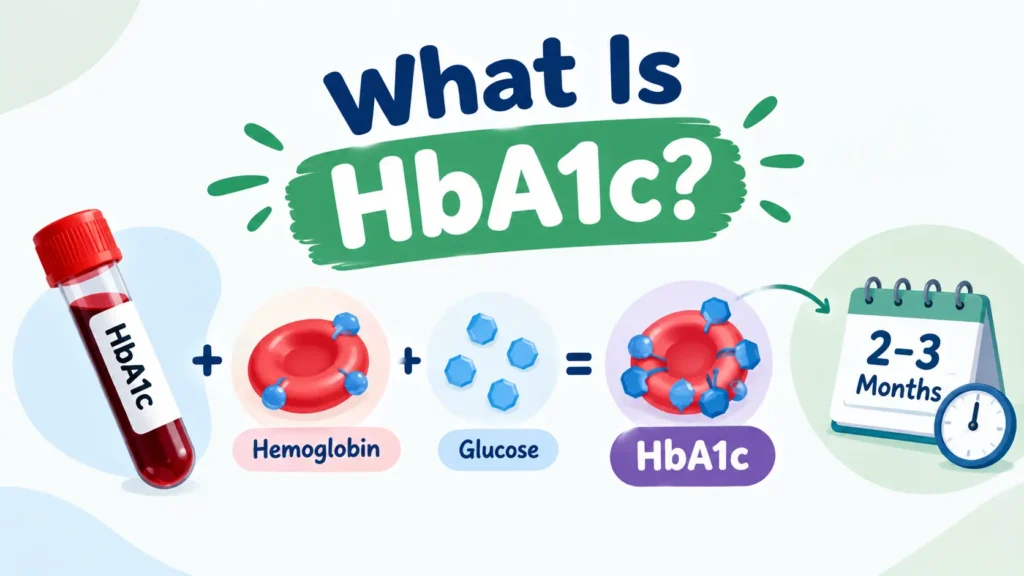
What Is HbA1c and What Does It Tell You About Blood Sugar?: HbA1c is an important blood test used to understand a person’s average blood glucose levels over a longer period. It measures the percentage of hemoglobin in red blood cells that has glucose attached to it. Because red blood cells remain in circulation for several weeks, HbA1c provides a broader picture of glucose control than a single blood sugar reading.
Understanding what HbA1c shows—and what it does not show—can help you interpret your diabetes or prediabetes results more accurately.
What Time Period Does HbA1c Reflect?
HbA1c generally reflects average blood glucose exposure over approximately 2 to 3 months. However, recent weeks contribute more substantially to the result than earlier months.
This makes HbA1c useful for assessing longer-term glucose patterns rather than short-term changes. For example, one high or low blood sugar reading will not usually have the same effect on HbA1c as repeated changes in glucose levels over time.
HbA1c for Diabetes and Prediabetes Diagnosis
HbA1c can be used as one of the tests for diagnosing diabetes and identifying prediabetes when the appropriate testing criteria are followed.
For non-pregnant adults, an HbA1c of 5.7% to 6.4% falls within the range used to identify prediabetes, while 6.5% or higher meets the laboratory criterion for diabetes diagnosis. When there is no clear evidence of hyperglycemia, an abnormal result generally requires appropriate confirmation.
HbA1c testing should therefore be interpreted in the context of the person’s symptoms, other glucose tests and clinical situation.
What Is a Common HbA1c Treatment Goal?
For many non-pregnant adults who already have diabetes, an HbA1c goal of below 7% is commonly appropriate. However, this is not a universal target for everyone. Treatment goals may be adjusted based on factors such as age, overall health, duration of diabetes, risk of hypoglycemia and other individual circumstances.
The goal is not simply to achieve the lowest possible HbA1c. A safe and individualized level of glucose control is more important.
What Is HbA1c and What Does It Tell You About Blood Sugar?: What HbA1c Does Not Show
Although HbA1c is useful, it does not show the full picture of daily glucose changes.
Two people can have a similar HbA1c while having very different glucose patterns. One person may experience frequent highs and lows, while another may have glucose levels that remain relatively stable.
HbA1c also does not tell you exactly when glucose levels were high or low. Home blood glucose monitoring or continuous glucose monitoring (CGM), when appropriate, can provide additional information about these patterns.
Why Can HbA1c Results Sometimes Be Misleading?
Certain conditions affecting red blood cells, hemoglobin or red blood cell lifespan can influence HbA1c results. Hemoglobin variants and conditions that alter red blood cell turnover can create a mismatch between HbA1c and actual glucose levels.
If HbA1c does not appear to match your home glucose readings or CGM results, discuss the difference with your healthcare professional. Additional testing or evaluation may sometimes be needed.
Use HbA1c With Other Diabetes Information
HbA1c is most useful when considered alongside other information, including:
- Home blood glucose readings
- Continuous glucose monitoring data, when used
- Symptoms of high or low blood sugar
- Medication use and timing
- Food and physical activity patterns
- Previous HbA1c results
- Overall medical history
Looking at these factors together can provide a more complete understanding of glucose control.
Conclusion
HbA1c is a valuable test for understanding longer-term blood sugar control, but it should not be viewed in isolation. It provides an average picture over approximately 2 to 3 months, while daily glucose monitoring can reveal individual highs, lows and patterns that HbA1c cannot show.
If your HbA1c result is higher than expected, changing, or inconsistent with your glucose readings, discuss the result with a healthcare professional before making changes to your treatment.
Get Personalized Diabetes Guidance
At Dr. Rajender’s Lifestyle Clinic, you can discuss HbA1c results, blood glucose patterns, nutrition, physical activity, medications and lifestyle factors as part of a comprehensive approach to diabetes management.
Book a consultation with Dr. Rajender’s Lifestyle Clinic for personalized guidance based on your individual health needs.
Frequently Asked Questions
What does HbA1c measure?
HbA1c measures the percentage of hemoglobin with glucose attached to it and provides an estimate of average blood glucose over approximately the previous 2 to 3 months.
Is HbA1c the same as daily blood sugar?
No. HbA1c provides a longer-term average, while daily blood glucose testing or CGM can show individual highs, lows and glucose changes throughout the day.
Is an HbA1c below 7% good for everyone with diabetes?
Below 7% is a common treatment goal for many non-pregnant adults with diabetes, but individual targets can differ depending on health status, treatment risks and other factors.
Can HbA1c be inaccurate?
Certain conditions affecting hemoglobin or red blood cell turnover can affect HbA1c results. If your HbA1c does not match your glucose readings, discuss the difference with your healthcare professional.
Read Also:

One Response