
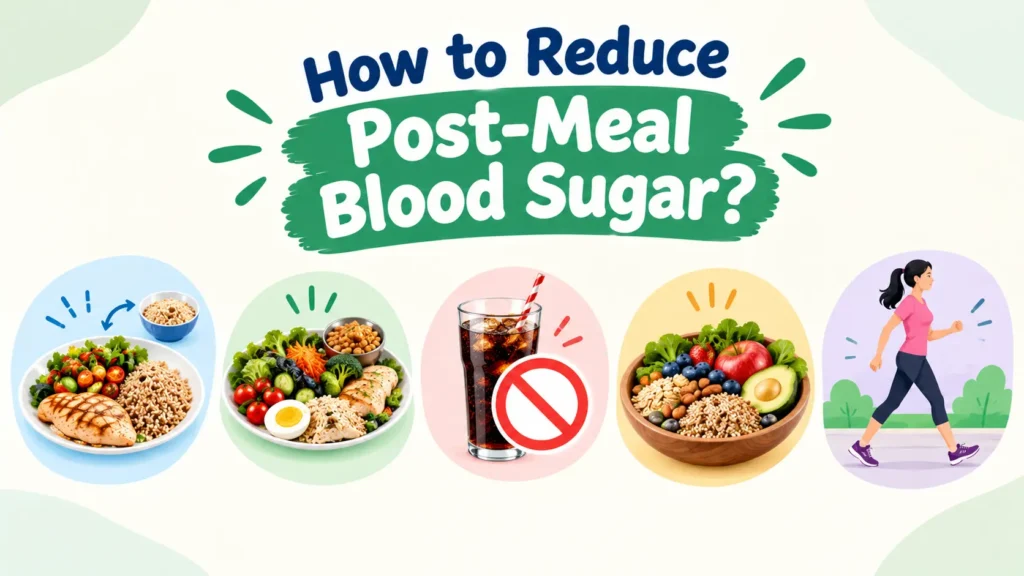
How to Control Blood Sugar Spikes After Meals: Blood sugar naturally rises after eating because carbohydrates are broken down into glucose and absorbed into the bloodstream. However, large post-meal blood sugar spikes may be a concern, particularly for people with diabetes or insulin resistance.
The size of a post-meal glucose rise can be influenced by the amount and type of carbohydrates eaten, meal composition, physical activity, medication, and an individual’s insulin response. Making practical changes to meals and daily routines may help support more stable post-meal blood sugar levels.
Choose Appropriate Carb Portions
The amount of carbohydrate in a meal can have a significant effect on blood glucose. Large portions of foods such as rice, roti, bread, potatoes, sweets and other carbohydrate-rich foods may cause a sharper glucose rise.
This does not necessarily mean eliminating carbohydrates. Instead, focus on appropriate portions and choose carbohydrate sources that fit your individual nutritional needs.
Portion control can be particularly useful when eating foods that are easy to consume in large quantities, such as rice or refined-grain products.
Add Vegetables and Protein
One simple approach to managing post-meal blood sugar is to build a more balanced meal.
Include plenty of non-starchy vegetables, such as leafy greens, cucumber, tomatoes, cauliflower, beans or other suitable vegetables. Add a protein source such as dal, eggs, fish, chicken, paneer, tofu or unsweetened curd, depending on your dietary preferences.
Combining carbohydrates with protein, vegetables and other nutritious foods may help make meals more balanced and can influence how quickly glucose levels rise.
Limit Sugary Drinks
Sugary beverages can provide a substantial amount of rapidly absorbed carbohydrate without making you feel as full as solid food.
Regular soft drinks, sweetened juices, energy drinks and other sugar-sweetened beverages may contribute to higher blood glucose levels.
Choose water or unsweetened drinks more often. If you enjoy tea or coffee, reducing added sugar can also be a practical step.
Choose Less-Processed Foods
The overall quality of your diet matters when managing blood glucose. Whenever possible, choose minimally processed foods such as whole grains, pulses, vegetables, nuts, seeds and whole fruit.
Whole fruit is generally preferable to fruit juice because it contains fiber and takes longer to consume. Highly refined foods, sweets and products with added sugars can produce larger glucose rises in some people.
However, individual responses vary, so portion size and the overall meal pattern remain important.
Move After Meals
Physical activity can help muscles use glucose for energy. For some people, a light walk after eating may help reduce the rise in blood glucose following a meal.
You do not necessarily need an intense workout. A comfortable walk may be a practical way to add movement to your daily routine.
However, exercise should be individualized, particularly for people taking insulin or medicines that can cause low blood sugar. Follow your healthcare professional’s recommendations if you have concerns about exercise and glucose levels.
Use Glucose Monitoring to Identify Patterns
When recommended by your healthcare professional, checking blood glucose around meals can help you understand how different foods and portion sizes affect you.
You may notice that certain meals consistently produce larger glucose rises. Recording meal timing, food portions, activity and glucose readings can make these patterns easier to identify.
Avoid making treatment or medication changes based on one isolated reading. Repeated patterns are generally more useful when discussing diabetes management with your healthcare professional.
Conclusion
Learning how to reduce post-meal blood sugar naturally is usually not about completely avoiding carbohydrates. It involves paying attention to carbohydrate portions, choosing balanced meals, limiting sugary drinks, selecting less-processed foods and staying physically active.
Because glucose responses vary from person to person, monitoring patterns and getting individualized guidance can help you develop a sustainable approach to post-meal glucose management.
Get Help Managing Post-Meal Blood Sugar
At Dr. Rajender’s Lifestyle Clinic, you can discuss post-meal glucose patterns, nutrition, physical activity, weight management and diabetes care with a healthcare professional.
Book a consultation with Dr. Rajender’s Lifestyle Clinic for personalized guidance based on your individual health needs.
Frequently Asked Questions
How can I reduce post-meal blood sugar naturally?
Appropriate carbohydrate portions, balanced meals with vegetables and protein, limiting sugary drinks, choosing less-processed foods and appropriate physical activity may help support healthier post-meal glucose levels.
Does walking after meals lower blood sugar?
A light walk after eating can help muscles use glucose and may reduce post-meal glucose levels for some people. The response varies depending on individual health, activity and medications.
Should I stop eating rice if I have high blood sugar?
Not necessarily. The appropriate amount depends on your individual dietary needs and glucose response. Portion control and combining carbohydrate foods with vegetables and protein may be more practical than completely eliminating rice.
Can sugary drinks cause blood sugar spikes?
Yes. Sugar-sweetened beverages contain rapidly absorbed carbohydrates and can cause blood glucose to rise quickly.
Should I check my blood sugar after every meal?
Not everyone needs to check glucose after every meal. Monitoring frequency should depend on your diabetes type, treatment, medications and healthcare professional’s recommendations.
Read Also:
