
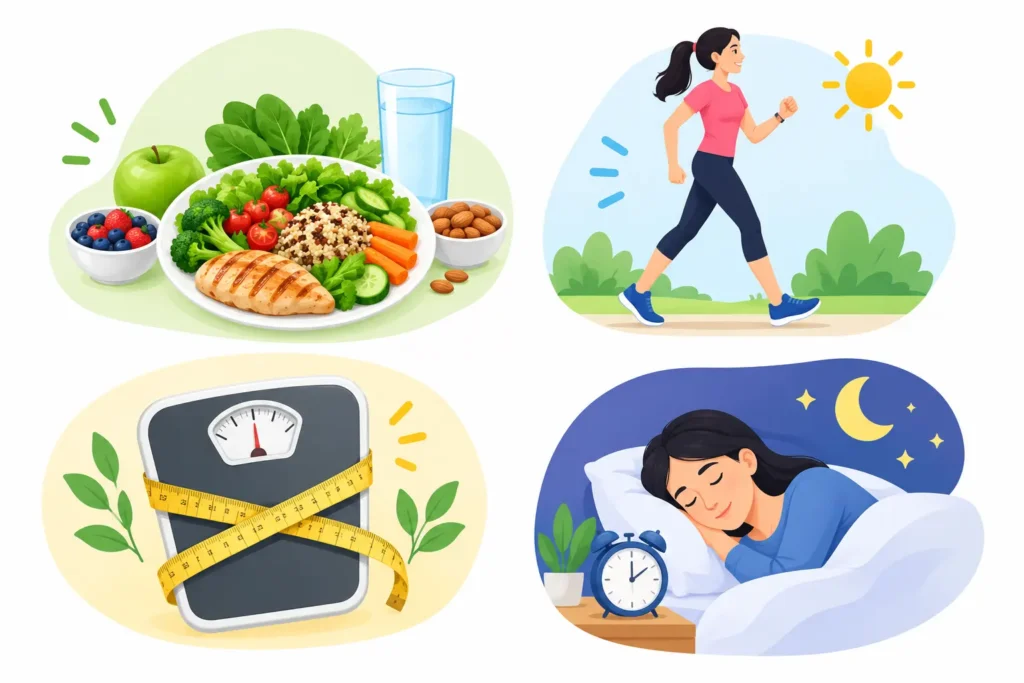
How to Lower HbA1c Naturally With Diet and Exercise: HbA1c is a blood test that reflects average blood glucose exposure over approximately the previous 2 to 3 months. For people with Type 2 diabetes, healthy eating and regular physical activity can improve blood glucose control and may help lower HbA1c over time.
Improve Meal Quality
A balanced eating pattern can support better blood glucose management. Focus on meals that include non-starchy vegetables, suitable protein sources, fiber-rich foods and appropriate carbohydrate portions.
Foods such as vegetables, pulses, whole grains, nuts, seeds and whole fruit can be included according to individual nutritional needs. Protein sources may include eggs, fish, chicken, paneer, tofu, curd or other suitable options.
It can also help to reduce foods and drinks that provide large amounts of added sugar or refined carbohydrates, including sugary beverages, sweets, desserts and highly refined foods.
Portion size matters as well. Even nutritious carbohydrate-containing foods can raise blood glucose when eaten in excessive amounts.
How to Lower HbA1c Naturally With Diet and Exercise: Increase Physical Activity
Regular physical activity can help muscles use glucose for energy and may improve insulin sensitivity.
A combination of aerobic activity and resistance exercise can be useful for many adults with Type 2 diabetes. Activities may include walking, cycling, swimming or other suitable aerobic exercises, along with strength-based activities.
If you are currently inactive, start at a level that is appropriate for you and gradually increase activity. People with certain medical conditions or diabetes-related complications may need individualized exercise advice.
Focus on Sustainable Weight Management
For people who have overweight or obesity, sustained weight loss may improve insulin sensitivity and glucose control.
Weight management does not require extreme diets or rapid weight loss. A gradual, sustainable approach that combines appropriate nutrition, physical activity, sleep and other healthy habits is generally more practical for long-term diabetes management.
The amount of weight loss needed can vary from person to person, so goals should be individualized.
Consistency Matters
HbA1c reflects glucose exposure over several weeks, which means lifestyle changes generally need time to influence the result.
Following a healthy eating pattern for a few days and then returning to previous habits is unlikely to produce the same benefit as maintaining realistic changes over time.
Regular physical activity, appropriate portions, adequate sleep and consistent diabetes care can work together to support better glucose control.
Medication May Still Be Needed
Lifestyle changes are an important part of Type 2 diabetes management, but they do not always replace medication.
Some people may need diabetes medicines even when they follow a healthy diet and exercise regularly. Treatment may also need adjustment as blood glucose changes.
Never stop, reduce or change diabetes medication based only on an HbA1c result or home glucose reading. Medication decisions should be made with your healthcare professional.
When Should HbA1c Be Rechecked?
HbA1c is not usually repeated immediately after starting a lifestyle change. Because it reflects glucose exposure over several weeks, testing is generally performed after an appropriate interval based on the individual’s treatment plan and clinical situation.
Your healthcare professional can recommend when your next HbA1c test should be performed.
Conclusion
Learning how to lower HbA1c naturally involves building sustainable habits rather than looking for a quick solution. Improving meal quality, controlling carbohydrate portions, increasing physical activity and managing weight when appropriate can all support better glucose control.
Lifestyle changes are most effective when combined with regular monitoring and appropriate medical care. Your diabetes treatment plan should be individualized according to your glucose levels, health status and treatment needs.
Get Help Managing HbA1c and Diabetes
At Dr. Rajender’s Lifestyle Clinic, you can discuss HbA1c levels, nutrition, physical activity, weight management and overall diabetes care with a healthcare professional.
Book a consultation with Dr. Rajender’s Lifestyle Clinic for personalized guidance based on your individual health needs.
Frequently Asked Questions
Can diet and exercise lower HbA1c?
Yes. Healthy eating and regular physical activity can improve blood glucose control and may help lower HbA1c in people with Type 2 diabetes.
How long does it take for lifestyle changes to affect HbA1c?
HbA1c reflects glucose exposure over approximately 2 to 3 months, so meaningful changes generally take time to appear in the result.
Can I stop diabetes medication if my HbA1c improves?
Not without medical guidance. An improved HbA1c does not automatically mean that medication should be stopped or reduced.
Does weight loss help lower HbA1c?
For people with overweight or obesity, sustained weight loss can improve insulin sensitivity and may support better blood glucose control.
How often should HbA1c be checked?
The appropriate testing interval depends on your diabetes control, treatment plan and recent changes. Your healthcare professional can determine when it should be reassessed.
Read Also:

One Response