
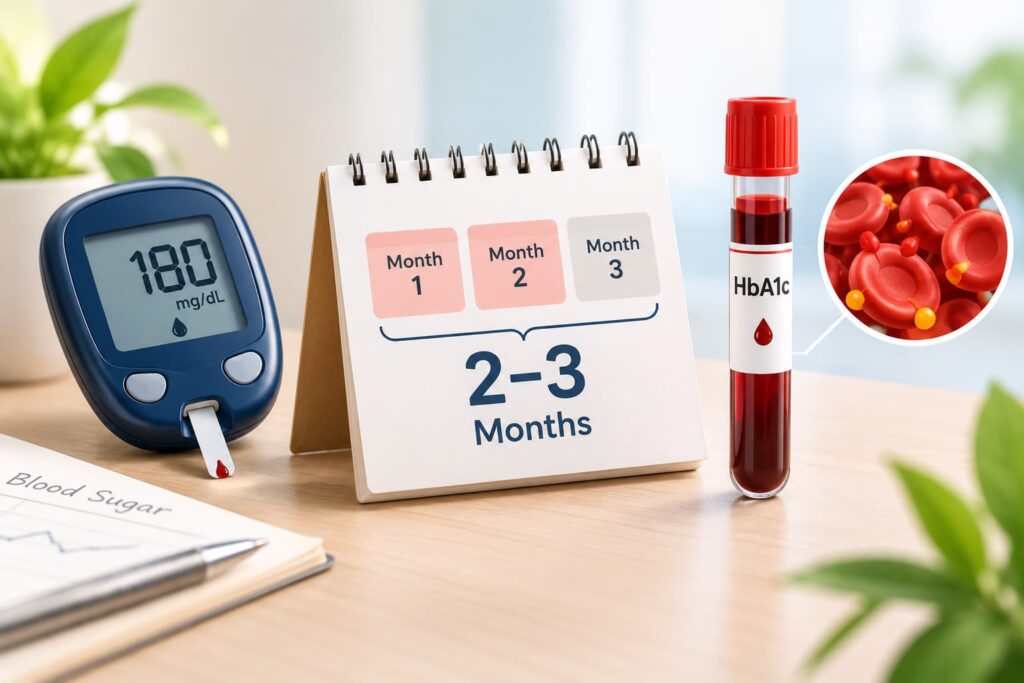
How Long Does It Take to Lower HbA1c?: If you have recently started improving your diet, exercising regularly or following a new diabetes treatment plan, you may wonder how long it takes to lower HbA1c. HbA1c does not change overnight because it reflects blood glucose exposure over several weeks.
The time needed to see a meaningful improvement varies from person to person and depends on factors such as starting HbA1c, daily glucose levels, lifestyle changes, medications and overall health.
Why Does HbA1c Take Time to Change?
HbA1c reflects average blood glucose exposure over approximately 2 to 3 months, with more recent weeks having a greater influence on the result.
This means that improvements in blood glucose may begin before they are fully reflected in an HbA1c test. A person may see better fasting or post-meal glucose readings within days or weeks, while the HbA1c result takes longer to show the overall change.
Early Improvements in Blood Sugar
Changes in food choices, physical activity or diabetes treatment can improve blood glucose relatively quickly in some people.
For example, reducing excessive carbohydrate portions, choosing more balanced meals and becoming more physically active may help improve daily glucose levels. However, an early improvement in home glucose readings does not mean that HbA1c will immediately show the full effect.
Because HbA1c reflects a longer period of glucose exposure, consistency is important.
How Long Does It Take to Lower HbA1c?: Diet and Exercise
Consistent lifestyle changes can support better glucose control and may help lower HbA1c over time.
Focus on appropriate carbohydrate portions, vegetables, protein and fiber-rich foods. Limiting sugary drinks, sweets and highly refined foods may also help improve overall glucose control.
Regular physical activity can improve insulin sensitivity and help muscles use glucose for energy. A combination of aerobic activity and resistance exercise may be suitable for many people, but activity should be individualized according to health and fitness level.
Weight Management
For people who have overweight or obesity, sustained weight loss may improve insulin sensitivity and glucose control.
Weight management should focus on realistic and maintainable changes rather than rapid or extreme approaches. Improvements in nutrition, physical activity, sleep and other lifestyle habits can work together to support long-term results.
Medication Changes
Diabetes medications can lower blood glucose more quickly in some situations. However, the effect on HbA1c still takes time to become fully reflected because HbA1c represents glucose exposure over a longer period.
Never increase, decrease or stop diabetes medication on your own. Treatment changes should always be made with guidance from a healthcare professional.
When Is HbA1c Usually Rechecked?
HbA1c is often reassessed after approximately three months when a clinician wants to evaluate a meaningful change following treatment or lifestyle adjustments. However, the appropriate timing depends on the individual’s diabetes control, treatment plan and clinical circumstances.
Your healthcare professional can determine when repeating the test is appropriate.
Focus on Consistency, Not Speed
Trying to lower HbA1c as quickly as possible is not necessarily the goal. Sustainable improvements in daily glucose control are more important than short-term efforts.
Track your glucose as recommended, follow your treatment plan, maintain healthy eating and physical activity habits, and discuss your progress with your healthcare professional.
Conclusion
How long it takes to lower HbA1c varies from person to person. Blood glucose may improve within days or weeks after lifestyle or treatment changes, but HbA1c takes longer to reflect these improvements because it represents glucose exposure over approximately 2 to 3 months.
The most effective approach is to focus on consistent daily habits, appropriate monitoring and safe medical care rather than trying to lower HbA1c as quickly as possible.
Get Help Managing HbA1c
At Dr. Rajender’s Lifestyle Clinic, you can discuss your HbA1c results, blood glucose patterns, nutrition, physical activity, weight management and diabetes treatment plan with a healthcare professional.
Book a consultation with Dr. Rajender’s Lifestyle Clinic for personalized guidance based on your individual health needs.
Frequently Asked Questions
How quickly can HbA1c decrease?
HbA1c can begin reflecting improved glucose control within weeks, but a meaningful change generally becomes clearer over a longer period because the test reflects approximately 2 to 3 months of glucose exposure.
Can blood sugar improve before HbA1c improves?
Yes. Daily fasting or post-meal glucose readings may improve within days or weeks, while HbA1c takes longer to reflect the overall change.
Is three months enough to see an HbA1c change?
Approximately three months is commonly used when reassessing HbA1c to evaluate a meaningful change, although the timing should be individualized.
Can exercise help lower HbA1c?
Regular physical activity can improve insulin sensitivity and glucose control and may contribute to a lower HbA1c over time.
Can I change my diabetes medication to lower HbA1c faster?
Medication should not be changed without medical supervision. Your healthcare professional can determine whether a treatment adjustment is appropriate based on your glucose levels and overall health.
Read Also:

One Response