
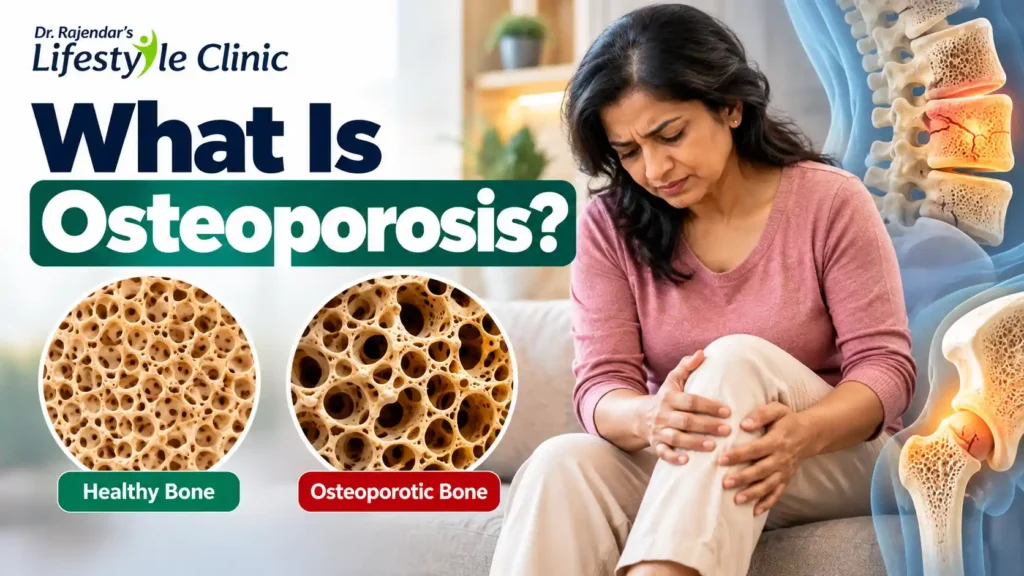
What Is Osteoporosis?
Osteoporosis is a condition in which bones become weaker and more fragile, increasing the risk of fractures. A person may develop a fracture after a minor fall or injury that would not normally cause a serious bone injury.
Osteopenia is an earlier stage in which bone density is lower than normal but has not reached the range used to diagnose osteoporosis.
Osteoporosis can affect daily activities and mobility, particularly when fractures involve the hip or spine.
Why Does Osteoporosis Develop?
Bones are living structures that continuously undergo a process called bone remodeling.
Two types of cells play important roles in this process:
- Osteoclasts break down old or damaged bone tissue.
- Osteoblasts help build new bone tissue.
Healthy bones depend on a balance between bone breakdown and bone formation. When bone is broken down faster than it is replaced, bone density can decrease over time.
Physical activity, hormones and adequate nutrition all contribute to maintaining bone strength.
Who Is at Higher Risk of Osteoporosis?
1. Aging
Bone density can gradually decrease with age. This increases the likelihood of fractures, particularly in older adults.
2. Menopause
After menopause, estrogen levels decline. Since estrogen helps maintain bone health, this hormonal change can contribute to faster bone loss in women.
3. Vitamin D Deficiency
Vitamin D helps the body absorb calcium from food. When vitamin D levels are low, calcium absorption may be affected, potentially compromising bone health.
4. Calcium Deficiency
Calcium is an essential mineral for maintaining strong bones.
If dietary calcium intake is insufficient, the body can draw on calcium stored in the bones to maintain calcium levels in the blood.
5. Inadequate Physical Activity
Bones respond to physical activity and the forces placed on them. A sedentary lifestyle can contribute to reduced bone strength over time.
6. Stress and Poor Sleep
Long-term stress and inadequate sleep can affect overall health and lifestyle habits. They are also discussed in relation to factors that may influence bone health.
7. Diabetes
People with diabetes may also be at risk of bone-related complications.
Long-term high blood sugar can contribute to the formation of advanced glycation end products (AGEs) and changes associated with inflammation. Diabetes may also coexist with other factors that affect bone health, making appropriate monitoring important.
What Foods Help Keep Bones Strong?
A balanced diet containing calcium, protein and vitamins is important for maintaining bone health.
Calcium-Rich Foods
Include suitable calcium sources such as:
- Milk
- Curd
- Ragi
- Sesame seeds
- Almonds
- Leafy greens
- Other calcium-containing vegetables
People who cannot tolerate milk may be able to obtain calcium from other foods, depending on their dietary preferences and nutritional needs.
Vitamin D Sources
Vitamin D is important for calcium absorption.
Suitable sunlight exposure and foods such as egg yolks and certain fish can contribute to vitamin D intake. People with a confirmed deficiency may need supplements or other treatment recommended by their healthcare professional.
Vitamin K and Leafy Greens
Leafy greens and vegetables provide vitamin K and other nutrients that contribute to a balanced diet.
Protein for Bone Structure
Protein is important for the structure of bones and for maintaining muscle strength. Include appropriate protein sources such as pulses, dal, eggs, dairy products and other foods suited to your diet.
How Much Calcium Do Adults Need?
The guidance discussed here uses approximately 1,000 mg of calcium per day as a general target.
The amount needed can vary with age, sex and individual health conditions. Calcium requirements should therefore be assessed according to personal needs.
Some people may obtain enough calcium through food, while others may require supplements. Do not automatically take calcium tablets or high-dose vitamin D without medical advice.
Can Long-Term Medication Affect Bone Health?
Certain medicines may be associated with bone-health concerns when used over long periods.
For example, people who regularly take acid-reducing medicines such as proton pump inhibitors should discuss prolonged use with their healthcare professional when appropriate.
Do not stop prescribed medication on your own. Your doctor can review the need for continued treatment and assess any relevant risk factors.
How Can You Prevent Osteoporosis?
1. Eat a Balanced Diet
Include calcium-rich foods, adequate protein, leafy greens and other nutrient-rich foods as part of your daily diet.
2. Get Enough Vitamin D
Maintain adequate vitamin D levels through suitable lifestyle measures and medical guidance when a deficiency is suspected or confirmed.
3. Exercise Regularly
Walking and appropriate resistance or weight-training exercises can support bone and muscle health.
Choose exercises according to your fitness level and medical condition.
4. Manage Blood Sugar
People with diabetes should follow their recommended blood sugar management plan and attend regular medical reviews.
5. Maintain Healthy Lifestyle Habits
Avoid smoking and limit alcohol. Pay attention to sleep, physical activity and a balanced diet.
6. Seek Assessment When Needed
People at increased risk of osteoporosis, particularly after menopause or following a fracture from a minor fall, should discuss bone-health assessment with their healthcare professional.
Final Takeaway
Osteoporosis causes bones to become weaker and more vulnerable to fractures. Aging, menopause, vitamin D deficiency, inadequate calcium intake, inactivity and diabetes-related health factors can all be relevant to bone health.
A practical approach includes calcium-rich foods, adequate protein, vitamin D, regular exercise, good blood sugar management and appropriate medical assessment.
Protecting bone health early can help support mobility and reduce the risk of fractures later in life.
Frequently Asked Questions
What is osteoporosis?
Osteoporosis is a condition in which bone density and strength decrease, making bones more fragile and increasing the risk of fractures.
What causes osteoporosis in women?
Aging, declining estrogen levels after menopause, inadequate calcium intake, vitamin D deficiency and low physical activity can contribute to osteoporosis.
Can diabetes increase the risk of osteoporosis?
Diabetes can be associated with bone-health problems and fracture risk. People with diabetes should discuss their individual bone-health risks with their healthcare professional.
Which foods are good for strong bones?
Milk, curd, ragi, sesame seeds, almonds, leafy greens and other calcium-containing foods can contribute to bone health.
Is vitamin D important for osteoporosis?
Yes. Vitamin D helps the body absorb calcium, making it an important nutrient for maintaining bone health.
Does exercise help prevent osteoporosis?
Regular walking and suitable resistance exercises can support bone and muscle health.
Can osteoporosis be prevented after menopause?
Healthy eating, adequate calcium and vitamin D, regular exercise and appropriate medical assessment can help support bone health after menopause.
Should everyone take calcium tablets?
No. Supplement needs depend on dietary intake, age and individual health conditions. Consult a healthcare professional before starting supplements.
Diabetes and Lifestyle Care at Dr. Rajender’s Lifestyle Clinic
At Dr. Rajender’s Lifestyle Clinic, Banjara Hills, Hyderabad, care focuses on personalized nutrition, physical activity, lifestyle correction and appropriate medical guidance. Dr. Rajender Ramagiri, Founder & Lead Physician, helps patients work toward better metabolic health through a structured, evidence-based approach.
For personalized guidance on diabetes management, nutrition and healthy lifestyle habits that support long-term health, consult your healthcare professional.
Read Also:

One Response