
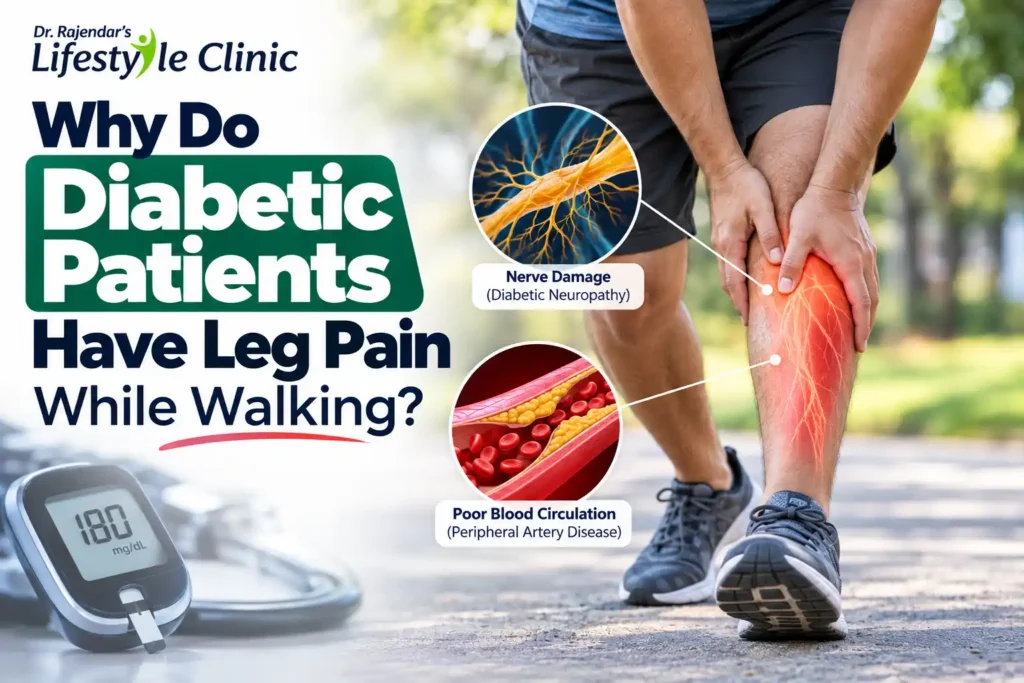
Why Do Diabetic Patients Have Leg Pain While Walking?: Do your legs hurt or your calf muscles cramp after walking a short distance? In people with diabetes, these symptoms may sometimes indicate peripheral arterial disease (PAD).
PAD occurs when arteries supplying blood to the legs become narrowed or blocked, often because of plaque buildup. Reduced blood flow means the leg muscles may not receive enough oxygen during physical activity, causing pain or cramping while walking.
Recognizing these symptoms early is important because PAD can also be associated with other cardiovascular problems.
What Are the Symptoms of Peripheral Arterial Disease?
People with diabetes and PAD may experience several changes in their legs and feet.
Common warning signs include:
- Leg pain or muscle cramps while walking
- Difficulty walking longer distances
- Wounds that heal slowly
- Loss of hair on the legs
- Reduced nail growth
- Feet that feel colder than usual
Some people may not notice these changes immediately. Regular foot checks and medical evaluation are particularly important for people with diabetes.
What Causes PAD in Diabetic Patients?
Several factors can increase the risk of peripheral arterial disease.
Poor Blood Sugar Control
Persistently high blood sugar can contribute to blood vessel damage and increase the risk of vascular complications.
High Cholesterol
High levels of LDL cholesterol, commonly called bad cholesterol, can contribute to plaque buildup inside arteries. This may narrow blood vessels and reduce blood flow to the legs.
High Blood Pressure
High blood pressure can damage blood vessels and increase the risk of cardiovascular complications.
Smoking
Smoking is an important risk factor for PAD and can worsen blood vessel health.
Obesity and Family History
Excess body weight and a family history of cardiovascular disease can also contribute to the risk.
Why Is PAD Serious in Diabetes?
Peripheral arterial disease can affect more than walking comfort.
People with diabetes and PAD may have a higher risk of heart disease and stroke. Reduced blood flow can also make wounds on the feet more difficult to heal.
A small foot injury may therefore become more serious if circulation is poor.
If you experience persistent leg pain while walking, cold feet or slow-healing wounds, seek medical evaluation rather than ignoring the symptoms.
How Can Diabetic Patients Reduce Their Risk of PAD?
1. Control Blood Sugar, Blood Pressure and Cholesterol
Managing these three factors is an important part of protecting blood vessels.
Follow your prescribed treatment plan and monitor your levels as recommended by your healthcare professional.
2. Stop Smoking
If you smoke, stopping is one of the important steps you can take to protect your blood vessels and overall cardiovascular health.
3. Maintain a Healthy Weight
Reducing excess body weight can support better metabolic health and help manage cardiovascular risk factors.
4. Exercise Regularly
Regular physical activity can support overall cardiovascular health. Walking and other suitable exercises can be part of a routine, but people with leg pain or suspected PAD should discuss an appropriate exercise plan with their healthcare professional.
5. Choose Healthier Foods
The dietary choices highlighted include:
Limit:
- Excessively oily and deep-fried foods
- Red meat
- Foods high in refined carbohydrates, such as maida-based products
- Sweets and cakes
Include suitable portions of:
- Brown rice and millets
- Oats
- Nuts and walnuts
- Apples
- Other fiber-rich foods
These choices can form part of a balanced diet that supports blood sugar and cholesterol management.
Are Medicines Needed for PAD?
Some people may need medication in addition to lifestyle changes.
Depending on their condition, doctors may prescribe cholesterol-lowering medicines or medicines that reduce the risk of blood clots. The appropriate treatment depends on the person’s circulation, cardiovascular risk and other medical conditions.
Do not start blood thinners or change prescribed medication on your own.
Final Takeaway
Leg pain or cramping while walking can be a warning sign of peripheral arterial disease in people with diabetes. Other symptoms may include cold feet, reduced hair growth on the legs and wounds that heal slowly.
Controlling blood sugar, blood pressure and cholesterol, stopping smoking, maintaining a healthy weight and following a suitable exercise and dietary plan can help reduce cardiovascular risk.
Early medical evaluation is particularly important because PAD can be associated with heart disease, stroke and diabetic foot complications.
Frequently Asked Questions
Can diabetes cause leg pain while walking?
Yes. Leg pain while walking can be associated with peripheral arterial disease, in which narrowed arteries reduce blood flow to the leg muscles.
What is peripheral arterial disease in diabetes?
PAD is a condition in which arteries supplying the legs become narrowed or blocked, often because of plaque buildup.
What are the symptoms of PAD in diabetic patients?
Symptoms may include leg cramps while walking, difficulty walking longer distances, cold feet, reduced hair growth and slow-healing wounds.
Can high cholesterol cause poor blood circulation in the legs?
High LDL cholesterol can contribute to plaque buildup inside arteries, which may narrow blood vessels and reduce circulation.
Does smoking increase the risk of PAD?
Yes. Smoking is an important risk factor for peripheral arterial disease.
Why do foot wounds heal slowly in diabetic patients with PAD?
Reduced blood flow can limit the oxygen and nutrients reaching injured tissues, making wound healing more difficult.
Can exercise help people with PAD?
Appropriate physical activity can support cardiovascular health. People who experience leg pain while walking should discuss a suitable exercise plan with their healthcare professional.
What should diabetic patients do if they have persistent leg pain?
Seek medical evaluation to identify the cause. Persistent pain, cold feet or slow-healing foot wounds should not be ignored.
Diabetes and Vascular Health at Dr. Rajender’s Lifestyle Clinic
At Dr. Rajender’s Lifestyle Clinic, Banjara Hills, Hyderabad, diabetes care focuses on personalized nutrition, physical activity, lifestyle correction and appropriate medical guidance. Dr. Rajender Ramagiri, Founder & Lead Physician, helps patients work toward better metabolic health through a structured, evidence-based approach.
For personalized guidance on diabetes management, cholesterol control and prevention of vascular complications, consult your healthcare professional.
Read Also:

One Response