
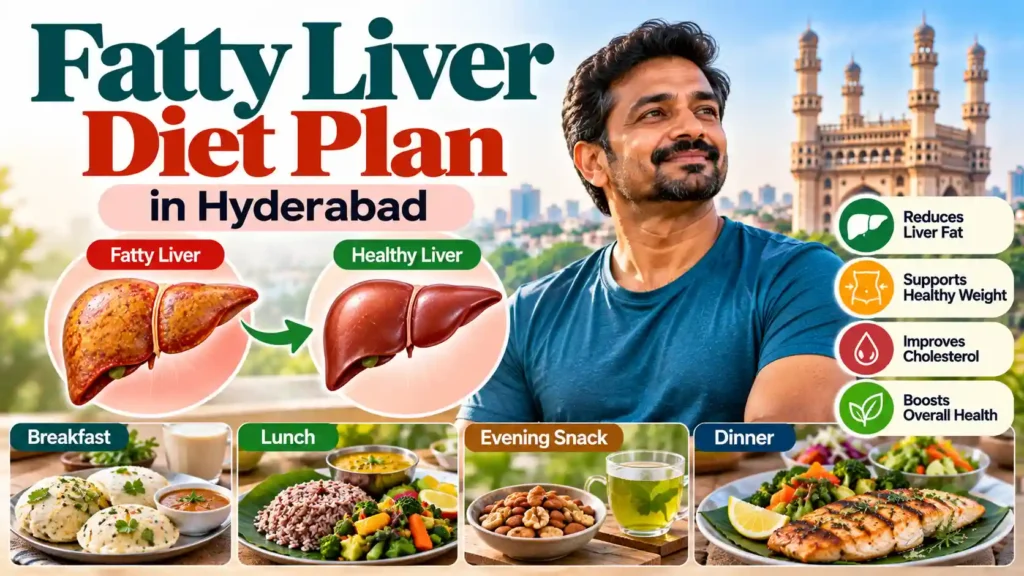
Fatty Liver Diet Plan in Hyderabad: Indian Meals: Diet is the cornerstone of fatty liver treatment. There is no single magic food, but a pattern of eating that lowers sugar and refined carbohydrates, adds fibre and protein, and supports gradual weight loss can reduce liver fat and improve liver health. This guide offers a practical Indian fatty liver diet plan that you
can adapt with your doctor or nutritionist.
Goals of a Fatty Liver Diet
The goals are to reduce liver fat, improve insulin sensitivity, support gradual weight loss if needed, and
protect your heart. Losing seven to ten percent of body weight can improve liver inflammation, but the
pace should be steady, ideally not more than about one kilogram a week, because very rapid weight
loss can sometimes worsen liver inflammation.
Foods to Emphasise
- Vegetables, especially leafy greens, and salads.
- Whole grains and millets such as jowar, ragi, bajra, and foxtail millet.
- Pulses, sprouts, and legumes.
- Fish, eggs, lean poultry, curd, paneer, and tofu.
- Nuts and seeds in small handfuls.
- Fruit in whole form, in sensible portions.
- Healthy oils such as groundnut, mustard, or olive oil in measured amounts.
- Coffee without sugar, in moderation, which studies link with better liver outcomes.
Foods and Drinks to Limit
- Sugary drinks, packaged juices, sweets, and desserts.
- Refined flour, maida products, white bread, and bakery items.
- Deep-fried snacks and repeatedly reheated oil.
- Large portions of white rice.
- Red and processed meats.
- Alcohol, which should be avoided or strictly limited as advised.
- Excess jaggery, honey, and sweetened beverages.
A Sample Day
- Morning: Water, or unsweetened coffee or tea.
- Breakfast: Vegetable besan chilla or ragi dosa with chutney, and a boiled egg or a cup of curd.
- Mid-morning: An apple or guava with a few almonds.
- Lunch: A large salad, dal, vegetable curry, one or two rotis or a small bowl of millet rice, and
buttermilk. Fish or chicken curry with minimal oil may be added. - Evening: Roasted chana, sprouts, or a handful of nuts with green tea.
- Dinner: Vegetable soup, grilled paneer or fish with sauteed vegetables, and one roti.
Cooking Tips
Steam, grill, pressure cook, or saute with minimal oil. Measure oil by the teaspoon. Avoid reusing frying
oil. Add vegetables to rice and dal. Choose homemade snacks over packaged ones.
Why Crash Diets Backfire
Starvation diets can slow metabolism, cause muscle loss, and may worsen liver inflammation. Slow,
sustainable changes work better. Do not use herbal liver cleanses or detox products, as some can harm
the liver.
Add Movement
Diet works best with exercise. Aim for about 150 minutes of brisk activity weekly plus strength training
twice a week.
Follow-Up
Repeat liver tests and, as your doctor advises, scores or elastography to track progress, alongside
blood sugar, cholesterol, and blood pressure. Improvements often appear within three to six months.
Care at Dr. Rajender’s Lifestyle Clinic
The clinic treats fatty liver as part of metabolic health, through a structured, evidence-based,
root-cause-focused approach with personalised nutrition, physical activity, lifestyle correction, and
continuous medical guidance.
Book a Consultation
Visit https://www.drrajenderslifestyleclinic.com/ to learn more and book a consultation.
Frequently Asked Questions
Can I eat rice with fatty liver?
Yes, in controlled portions with vegetables and protein. Replacing some rice with millets can help.
Is ghee allowed?
Small amounts may fit a balanced plan, but excess saturated fat should be limited. Ask your doctor
about your own limit.
Does turmeric cure fatty liver?
There is no proof that turmeric cures fatty liver. Use it in cooking, but rely on weight loss, diet, and
exercise.
How long does it take for the liver to improve?
Liver fat can begin to fall within weeks to months of consistent diet and exercise, though full
improvement may take longer.
Read Also:

One Response