
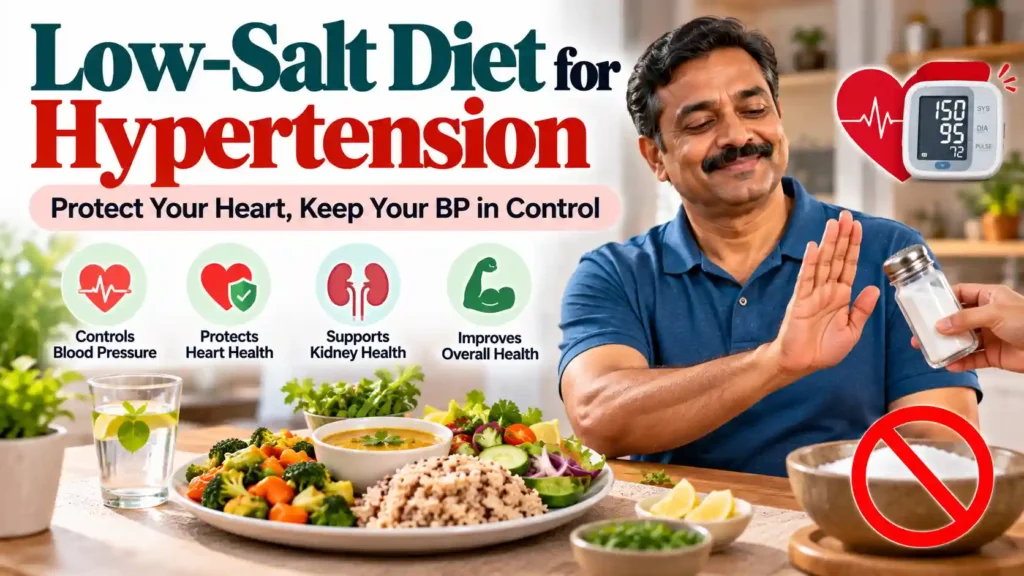
Low-Salt Diet for Hypertension: Indian Meal Guide: Salt is the quiet driver behind many high blood pressure cases. Sodium makes the body hold on to water, which increases the volume of blood and the pressure on artery walls. The average Indian
consumes far more salt than recommended, often without noticing, because it hides in pickles, snacks,
and restaurant food. This guide explains how to cut salt without losing flavour.
How Much Salt Is Safe?
The World Health Organization advises less than five grams of salt a day, roughly one level teaspoon,
which contains about two grams of sodium. People with hypertension, diabetes, or kidney disease may
be advised an even lower amount. Cutting salt can lower blood pressure meaningfully, and it works well
alongside medicines.
Where Hidden Salt Lives
- Pickles such as avakaya and gongura, and chutney powders.
- Papad, namkeen, chips, and packaged snacks.
- Instant noodles, soups, and ready mixes.
- Bread, biscuits, and bakery items.
- Cheese, processed meats, and sauces such as soy sauce and ketchup.
- Dried fish and salted nuts.
- Restaurant biryani, gravies, and fast food.
- Ajinomoto (MSG), stock cubes, and baking soda, which add sodium.
Cooking With Less Salt
- Add salt at the end of cooking, and measure it with a spoon.
- Use lemon, tamarind, ginger, garlic, green chillies, cumin, pepper, coriander, curry leaves, and mint
for flavour. - Dry roast spices to bring out their aroma.
- Choose fresh ingredients over packaged ones.
- Keep the salt shaker off the dining table.
- Rinse canned or pickled vegetables.
- Taste before adding more.
Reading Labels
Look for sodium on packaged food labels. As a rule, 2,000 mg of sodium equals about five grams of
salt. Foods with more than about 400 mg of sodium per 100 grams are high in salt. Compare brands
and choose lower-sodium versions.
The DASH-Style Indian Plate
The DASH diet, proven to lower blood pressure, emphasises vegetables, fruit, whole grains, pulses,
low-fat dairy, and nuts, with limited red meat, sweets, and salt. An Indian version includes dal, sabzi,
salad, millet or whole-wheat rotis, curd, fruit, and a handful of nuts, with minimal pickle, papad, and fried
snacks.
Potassium and Salt Substitutes
Potassium-rich foods such as bananas, coconut water, leafy greens, and pulses help balance sodium.
However, people with kidney disease or those on certain blood pressure medicines can accumulate
potassium dangerously. Do not use potassium-based salt substitutes without your doctor’s approval.
Eating Out and Festivals
Ask for less salt, avoid extra sauces, choose grilled or steamed options, skip the pickle and papad, and
drink water instead of salty drinks. For biryani and festive meals, take a smaller portion and add salad.
Changing Your Taste Buds
Taste buds adapt in about two to four weeks. Reduce salt gradually, and food will soon taste normal
with less. Many people later find their earlier meals too salty.
Care at Dr. Rajender’s Lifestyle Clinic
The clinic manages hypertension alongside Type 2 diabetes, thyroid disorders, PCOS, obesity, and
metabolic conditions, using a structured, evidence-based approach with personalised nutrition, physical
activity, lifestyle correction, and continuous medical guidance.
Book a Consultation
Visit https://www.drrajenderslifestyleclinic.com/ to learn more and book a consultation.
Frequently Asked Questions
Can I stop my BP tablets if I eat less salt?
No. A low-salt diet helps medicines work better, but you should not stop or reduce them without your
doctor’s advice.
Is rock salt better than regular salt?
Rock salt and sea salt also contain sodium. They are not healthier in terms of blood pressure.
How much salt is one teaspoon?
A level teaspoon holds roughly five to six grams of salt, which is about the daily limit.
Does a low-salt diet cause weakness?
At normal low-salt intakes, no. Very low sodium can occur with certain illnesses or medicines, so talk to
your doctor if you feel unwell.
Read Also:

One Response