
Type 1 vs Type 2 Diabetes: Differences and Treatment
Diabetes is not a single disease. It is a group of conditions in which blood sugar stays too high, and the
cause behind the high sugar differs from one type to another. Knowing whether you have Type 1, Type
2, or a less common form matters, because the treatment, the outlook, and the role of lifestyle are
different. This guide explains the main types in plain language.
The Short Answer
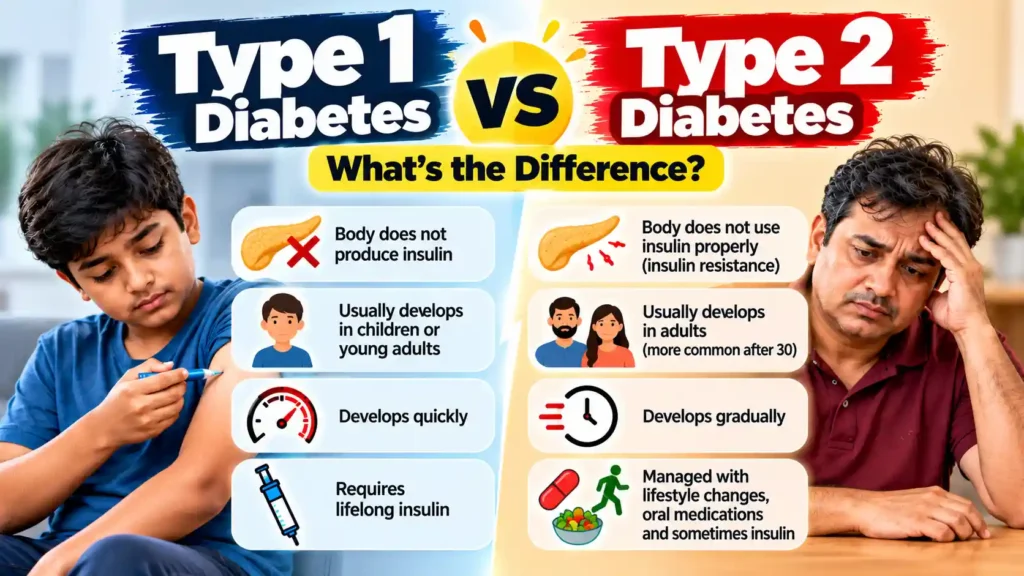
In Type 1 diabetes, the immune system destroys the insulin-producing cells of the pancreas, so the
body makes little or no insulin. In Type 2 diabetes, the body does not respond well to insulin, and the
pancreas eventually cannot keep up. Type 2 accounts for the large majority of cases, especially in
adults, but Type 1 can appear at any age.
Type 1 Diabetes
Type 1 is an autoimmune condition. It often begins in childhood or young adulthood, though adults can
develop it too. Symptoms usually appear over days to weeks: intense thirst, frequent urination, rapid
weight loss, tiredness, and sometimes nausea. People with Type 1 diabetes need insulin from the start
and for life. It is not caused by eating sugar or by lifestyle, and it cannot be prevented or reversed with
diet.
Type 2 Diabetes
Type 2 develops gradually, often over years, and many people have no symptoms at first. It is strongly
linked with insulin resistance, abdominal obesity, inactivity, poor sleep, family history, and ageing, and it
is increasingly seen in younger adults. Treatment combines lifestyle change with medicines when
needed, and some people can achieve remission through significant weight loss.
Key Differences at a Glance
- Cause: Type 1 is autoimmune, while Type 2 involves insulin resistance and relative insulin
deficiency. - Onset: Type 1 is usually sudden, and Type 2 is usually gradual.
- Typical body build: Type 1 is often lean, while Type 2 is often associated with excess weight,
although lean people can have it. - Insulin: Always required in Type 1, and needed in Type 2 only when other treatments are not
enough. - Prevention: Type 1 cannot be prevented, while Type 2 can often be prevented or delayed.
- Reversal: Remission is possible in some people with Type 2, but not in Type 1.
LADA, MODY and Other Types
Latent autoimmune diabetes in adults (LADA) is a slowly progressing autoimmune diabetes that can
look like Type 2 at first but usually needs insulin within a few years. Maturity-onset diabetes of the young
(MODY) is a rare inherited form that appears in young, often lean people with a strong family history.
Diabetes can also result from pancreatic disease, steroids, or other conditions, and gestational diabetes
occurs in pregnancy.
Why the Right Diagnosis Matters
Treating Type 1 or LADA as Type 2 can lead to delayed insulin, poor control, and ketoacidosis.
Conversely, assuming Type 2 diabetes in a young lean person without testing may miss MODY. If you
are young, lean, losing weight, or not responding to tablets, ask your doctor about antibody tests and
C-peptide levels to confirm the type.
Warning Signs of Ketoacidosis
Diabetic ketoacidosis, mainly a risk in Type 1, is an emergency. Signs include nausea, vomiting,
abdominal pain, rapid deep breathing, fruity-smelling breath, drowsiness, and confusion. Seek
emergency care immediately.
Common Myths
Eating too much sugar does not cause Type 1 diabetes. Type 2 diabetes is not only a disease of
overweight people. Insulin does not mean failure. And neither type is contagious.
What Both Types Share
Healthy eating, regular activity, good sleep, stress management, and regular screening for eye, kidney,
nerve, and heart problems matter in every type of diabetes. Blood sugar monitoring and a plan for low
sugar are essential, especially in people using insulin.
Care at Dr. Rajender’s Lifestyle Clinic
Dr. Rajender’s Lifestyle Clinic focuses on lifestyle-related conditions, especially Type 2 diabetes, thyroid
disorders, hypertension, PCOS, obesity, and metabolic conditions, through a structured,
evidence-based approach with personalised nutrition, physical activity, and continuous medical
guidance. Type 1 diabetes needs insulin therapy under a diabetes specialist, and lifestyle guidance can
complement that care.
Book a Consultation
Visit https://www.drrajenderslifestyleclinic.com/ to learn more and book a consultation.
Frequently Asked Questions
Can Type 2 diabetes become Type 1?
No. They are different conditions. However, Type 2 diabetes may eventually need insulin if the pancreas
can no longer produce enough.
Can adults get Type 1 diabetes?
Yes. Type 1 and LADA can appear in adults, especially if weight loss, ketones, or poor response to
tablets are present.
Is Type 1 diabetes hereditary?
Genes play a role, but most people with Type 1 have no close relative with it. Environmental triggers are
also involved.
Which type is more serious?
Both need lifelong attention. Type 1 carries a higher immediate risk of ketoacidosis, while Type 2 carries
long-term risks that can be reduced with good control.
Read Also:

One Response