
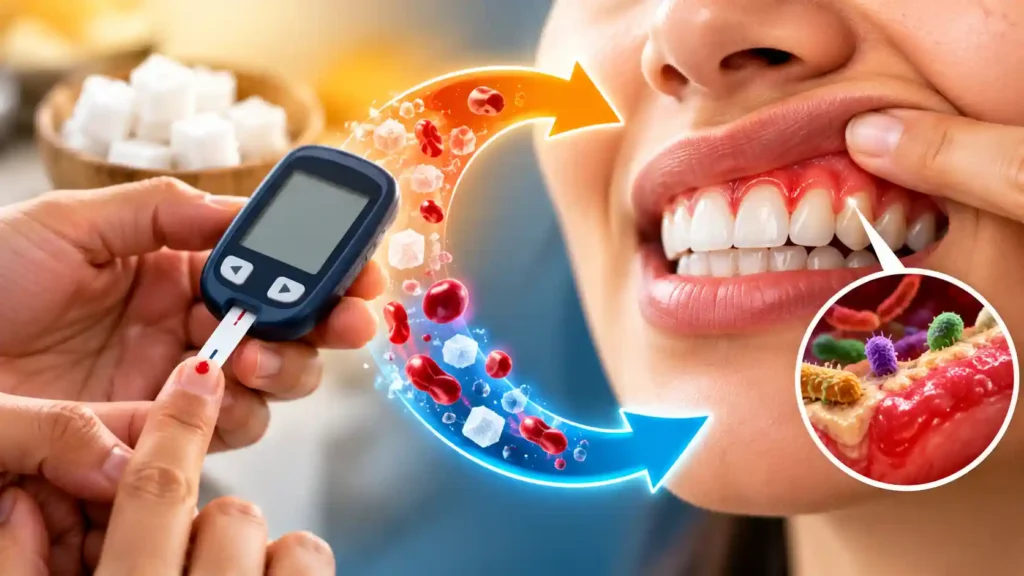
Diabetes and Gum Disease: A Practical Oral Health Guide
Many people with diabetes carefully watch their sugar, their feet, and their eyes, but forget their mouth.
Yet gum disease is one of the most common complications of diabetes. The relationship works both
ways: high blood sugar makes gum infections more likely, and gum infections can make blood sugar
harder to control. Caring for your teeth is therefore part of diabetes care.
Why Diabetes Affects the Mouth
High sugar in the blood and saliva feeds bacteria that form plaque. Diabetes also weakens the body’s
defence against infection, reduces blood flow to the gums, and can cause dry mouth, which removes
the natural protection of saliva. The result is inflamed, bleeding gums that can progress to periodontitis,
a serious infection of the tissues holding the teeth.
Warning Signs
- Red, swollen, or tender gums.
- Bleeding while brushing or flossing.
- Persistent bad breath or a bad taste.
- Gums pulling away from the teeth, making teeth look longer.
- Loose teeth or a change in how your teeth fit together.
- A dry mouth, or a burning sensation.
- White patches or soreness in the mouth, which can signal a fungal infection called thrush.
- Slow healing of mouth sores or after extractions.
How Gum Disease Affects Blood Sugar
Chronic gum infection produces inflammation throughout the body, which worsens insulin resistance.
Studies suggest that treating periodontitis can modestly improve blood sugar control. Poor control, in
turn, increases the risk of tooth loss and slows healing after dental treatment.
Daily Care That Works
- Brush twice a day with a soft brush and fluoride toothpaste, for two minutes each time.
- Clean between the teeth daily with floss or interdental brushes.
- Brush or scrape the tongue gently.
- Rinse your mouth with water after meals and snacks.
- Drink water regularly if your mouth feels dry, and ask your doctor if medicines may be the cause.
- Replace your toothbrush every three months.
- Clean dentures daily and remove them at night.
Dental Visits
See a dentist at least every six months, or more often if you have gum disease. Tell the dentist that you
have diabetes, and share your medicines and latest HbA1c. Schedule appointments after a meal and
take your medicines as usual, so that low sugar does not occur during a procedure. Carry glucose. For
extractions, implants, or surgery, ask the dentist and your doctor to coordinate, because high sugar
delays healing and increases infection risk.
Tobacco, Paan and Gutka
Smoking and smokeless tobacco, including gutka, khaini, and betel quid with tobacco, greatly increase
the risk of gum disease and oral cancer, and they make diabetes harder to manage. Quitting is one of
the best steps for your mouth and your overall health.
Food Choices for Healthy Teeth
Limit sweets, sugary drinks, and sticky snacks, and avoid frequent grazing throughout the day. Choose
crunchy vegetables, nuts, and unsweetened curd. If you need a sweet, have it with a meal instead of
between meals, and rinse afterwards.
When to Seek Urgent Care
Seek urgent dental or medical care for facial swelling, severe tooth pain, pus, fever, or difficulty
swallowing. Infections in diabetes can spread quickly.
Care at Dr. Rajender’s Lifestyle Clinic
The clinic offers structured, evidence-based care for Type 2 diabetes and related conditions, with
personalised nutrition, physical activity, lifestyle correction, and continuous medical guidance aimed at
keeping blood sugar in range to protect your whole body, including your gums.
Book a Consultation
Visit https://www.drrajenderslifestyleclinic.com/ to learn more and book a consultation.
Frequently Asked Questions
Can diabetes cause tooth loss?
Yes. Poorly controlled diabetes raises the risk of severe gum disease, which is a leading cause of tooth
loss. Good control and dental care lower this risk.
Why is my mouth always dry?
High blood sugar and some medicines can cause dry mouth. Sip water, avoid sugary drinks, and talk to
your doctor and dentist.
Can I get dental work done if I have diabetes?
Yes, ideally when sugar is well controlled. Tell the dentist about your diabetes and medicines.
Can treating gum disease improve my sugar?
It may help modestly, along with other measures. It also reduces infection and inflammation.
Read Also:

One Response