

Yoga and Diabetes: Control Blood Sugar Naturally
The connection between yoga and diabetes is becoming more important today. Many people with high blood sugar are looking for natural ways to control diabetes. Research and clinical experience show that yoga helps improve insulin sensitivity, reduce stress, support weight loss, and stabilize blood sugar levels.
At lifestyle clinics and diabetes reversal centers, yoga is now included as part of daily diabetes management. Let us understand how yoga and diabetes are connected and how you can use yoga safely for better sugar control.
How Yoga and Diabetes Are Connected
The link between yoga and diabetes works through three main mechanisms:
- Stress reduction
- Hormonal balance
- Improved insulin function
When stress levels rise, cortisol increases. Cortisol raises blood sugar. Yoga reduces stress hormones and helps balance blood glucose naturally.
Yoga also improves blood circulation, digestion, and muscle activity. When muscles work properly, they use more glucose for energy. This reduces high blood sugar levels.
So yoga and diabetes management go hand in hand.
How Yoga Helps Lower Blood Sugar

1. Improves Insulin Sensitivity
Insulin helps move sugar into cells. In Type 2 diabetes, insulin resistance develops.
Yoga improves insulin sensitivity by:
- Activating muscles
- Reducing belly fat
- Improving metabolism
Better insulin sensitivity means lower fasting sugar and better HbA1c.
2. Reduces Stress Hormones
Stress increases blood sugar.
Yoga lowers:
- Cortisol
- Adrenaline
- Anxiety
Less stress = better sugar control.
This is one major reason why yoga and diabetes treatment are connected.
3. Supports Weight Loss
Obesity increases insulin resistance.
Yoga helps:
- Burn calories
- Improve digestion
- Reduce emotional eating
Weight reduction improves diabetes control.
4. Improves Pancreas Function
Certain yoga poses stimulate abdominal organs including the pancreas.
Better pancreas function supports insulin production.
Best Yoga Asanas for Diabetes

Here are the best yoga poses for diabetes control:
1. Surya Namaskar
- Improves circulation
- Burns calories
- Activates whole body
Doing 5–10 rounds daily improves metabolism.
2. Bhujangasana (Cobra Pose)
- Stimulates pancreas
- Improves abdominal function
- Reduces belly fat
3. Ardha Matsyendrasana
- Twisting pose improves digestion
- Stimulates insulin secretion
4. Dhanurasana (Bow Pose)
- Activates abdominal organs
- Improves metabolism
5. Vajrasana
- Best pose after meals
- Helps digestion
- Reduces post-meal sugar spikes
Practicing these poses regularly strengthens the connection between yoga and diabetes control.
Pranayama for Diabetes

Breathing exercises are powerful tools in yoga and diabetes management.
1. Anulom Vilom
- Reduces stress
- Improves oxygen flow
- Balances hormones
2. Kapalbhati
- Improves metabolism
- Reduces belly fat
- Enhances digestion
3. Bhramari
- Calms nervous system
- Lowers cortisol
Daily pranayama improves insulin sensitivity and lowers blood sugar.
How Often Should Diabetics Practice Yoga?

For best results:
- 30 minutes daily
- 5–6 days per week
- Combine asanas + pranayama
Morning practice is ideal.
Consistency is more important than intensity.
Regular practice strengthens the effect of yoga and diabetes control.
Can Yoga Reverse Diabetes?
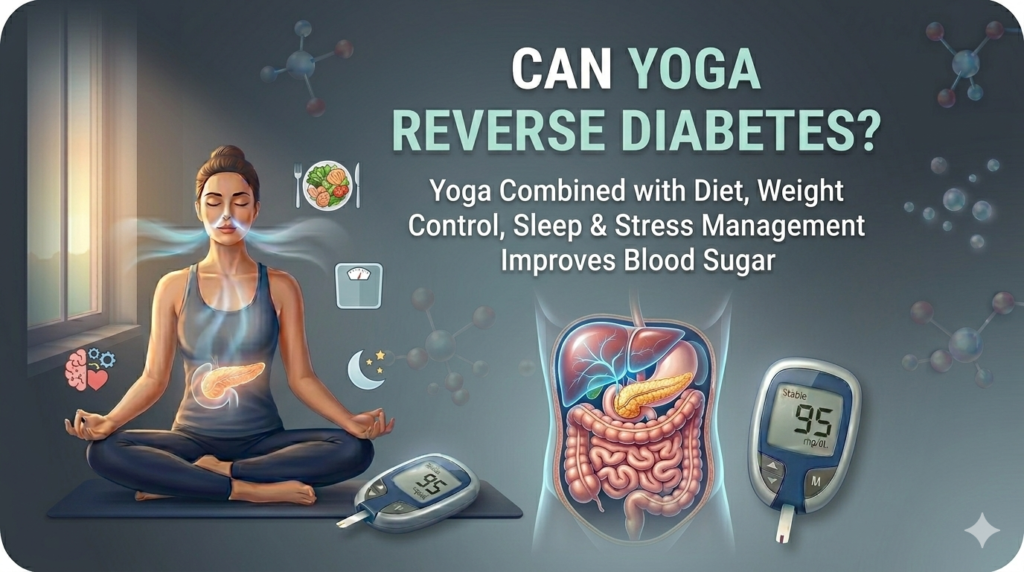
Yoga alone may not completely reverse diabetes.
But yoga combined with:
- Healthy diet
- Weight control
- Proper sleep
- Stress management
can significantly improve blood sugar levels.
Many patients see:
- Lower fasting sugar
- Reduced HbA1c
- Reduced medication need
So yoga plays a powerful role in natural diabetes management.
Safety Tips for Diabetics Doing Yoga
Check blood sugar before exercise
- Avoid intense poses if sugar is very high
- Stay hydrated
- Do not skip meals
- Practice under guidance if elderly
People with complications like neuropathy or retinopathy should consult a doctor.
Common Mistakes in Yoga and Diabetes
- Practicing irregularly
- Expecting instant results
- Ignoring diet
- Skipping medication without advice
Yoga works best when combined with lifestyle correction.
Benefits of Yoga and Diabetes Control
Regular yoga practice helps:
- Lower fasting blood sugar
- Reduce HbA1c
- Improve insulin resistance
- Reduce belly fat
- Improve sleep
- Reduce anxiety
- Increase energy
- Improve heart health
Yoga improves both physical and mental health.
Yoga and Diabetes Prevention

Even people with prediabetes benefit from yoga.
Yoga helps:
- Prevent Type 2 diabetes
- Control weight
- Reduce stress eating
- Improve metabolism
Early lifestyle correction prevents future complications.
Simple Daily Yoga Plan for Diabetics
Morning (20–30 minutes):
- 5 rounds Surya Namaskar
- Bhujangasana
- Ardha Matsyendrasana
- Vajrasana (after meals)
- 10 minutes Anulom Vilom
Even this simple routine improves sugar control.
Frequently Asked Questions (FAQ)
1. Can yoga reduce blood sugar immediately?
Yoga may not reduce sugar instantly but improves long-term control.
2. How long does yoga take to show results?
Most people see improvement in 4–8 weeks.
3. Can yoga reduce HbA1c?
Yes, regular yoga improves long-term blood sugar control.
4. Is yoga safe for elderly diabetics?
Yes, with simple poses and proper guidance.
5. Can yoga replace diabetes medication?
No. Yoga supports treatment but should not replace medication without doctor advice.
6. Which time is best for yoga?
Morning is best for metabolism and hormone balance.
7. Can yoga reduce stress-related high sugar?
Yes. Yoga lowers cortisol and improves emotional balance.
Conclusion
The connection between yoga and diabetes is strong and scientifically supported. Yoga improves insulin sensitivity, reduces stress hormones, supports weight loss, and helps control blood sugar naturally.
When combined with proper diet, sleep, and medical care, yoga becomes a powerful tool for diabetes management and prevention.
Start with 20–30 minutes daily. Stay consistent. Small daily steps create long-term health improvements.