
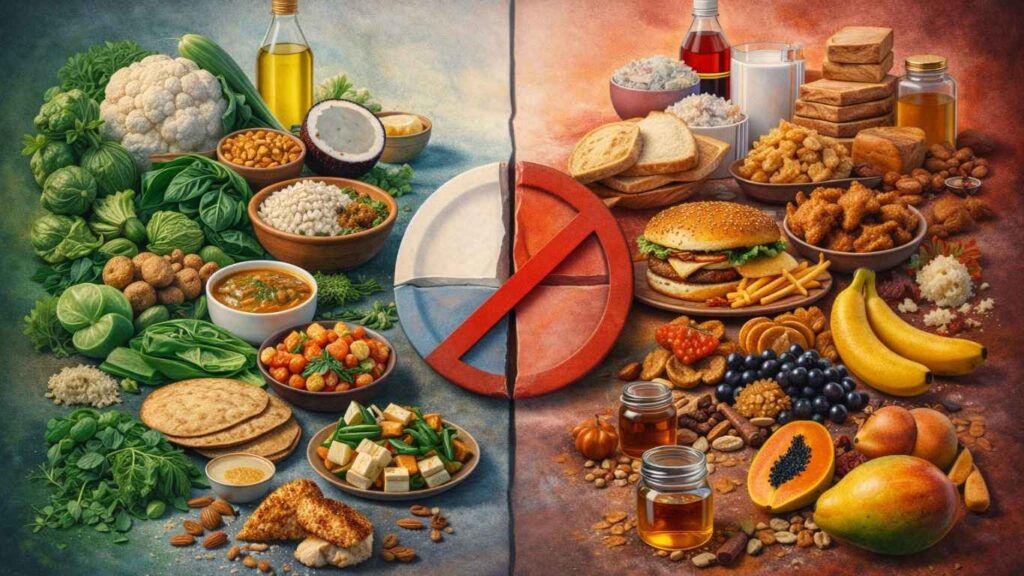
Diet plays a central role in diabetes management—especially in India, where traditional meals are often high in carbohydrates. Many people believe controlling diabetes means giving up all their favorite foods, but that’s not true. A well-planned Indian diet can effectively control blood sugar, improve insulin sensitivity, and even support diabetes reversal.
This blog explains what a diabetes-friendly Indian diet looks like, which foods help stabilize blood sugar, and which common dietary habits silently worsen diabetes.
A diabetes-friendly Indian diet is not about avoiding food—it’s about choosing the right balance.
When carbohydrates are paired with protein, fiber, and healthy fats, blood sugar spikes reduce and insulin sensitivity improves naturally.
Understanding the Indian Diet–Diabetes Connection
Kinesi’s approach blends traditional manual therapy with modern rehabilitation techniques like dry needling, therapeutic exercise, and mobility training. We Most Indian meals are:
- High in refined carbohydrates
- Low in protein
- Heavy on oils and sugars
This pattern causes repeated blood sugar spikes, leading to insulin resistance over time. The goal of a diabetes diet is not to eliminate carbs but to balance meals for stable glucose release.
Core Principles of a Diabetes-Friendly Indian Diet
Doctors recommend focusing on:
- Low glycemic load
- High fiber
- Adequate protein
- Healthy fats
- Portion control
Consistency matters more than extreme restrictions.
Foods to Eat for Better Blood Sugar Control
1. Non-Starchy Vegetables (Unlimited)
Vegetables slow sugar absorption and improve gut health.
Best choices:
- Bottle gourd, ridge gourd
- Spinach, methi, amaranth
- Cauliflower, cabbage
- Beans, carrots (moderate portions)
Aim for vegetables in every major meal.
2. Protein-Rich Foods (Every Meal)
Protein prevents sudden sugar spikes and keeps you full longer.
Indian protein sources:
- Dal, chana, rajma (controlled portions)
- Paneer, curd
- Eggs
- Fish, chicken
- Sprouts (properly cooked)
Protein should cover ¼ of your plate.
3. Healthy Fats (In Moderation)
Fats slow digestion and stabilize blood sugar.
Recommended options:
- Groundnut oil, mustard oil
- Coconut (small amounts)
- Ghee (limited)
- Nuts and seeds
Avoid mixing high fat with high sugar foods.
4. Whole Grains (Portion-Controlled)
Replace refined grains with whole grains.
Better alternatives:
- Brown rice (small portions)
- Millets (ragi, jowar, bajra)
- Whole wheat chapati (1–2 per meal)
Avoid eating grains alone—combine with protein and fiber.
5. Low-Glycemic Fruits (Controlled Servings)
Fruits are healthy but must be eaten correctly.
Safer options:
- Guava
- Apple
- Berries
- Papaya (small portion)
Avoid fruit juices completely.
Foods to Avoid or Limit Strictly
1. Refined Carbohydrates
These cause instant sugar spikes.
❌ White rice
❌ Maida products
❌ White bread
❌ Bakery items
2. Sugar & Sweetened Foods
Even “natural” sugars increase glucose.
❌ Jaggery
❌ Honey
❌ Sweets
❌ Sweetened beverages
3. Fried & Processed Foods
They worsen insulin resistance.
❌ Pakoras
❌ Chips
❌ Fast food
❌ Packaged snacks
4. High-Sugar Fruits
❌ Banana
❌ Mango
❌ Grapes
❌ Chikoo
Sample Diabetes-Friendly Indian Meal Plan
Morning
- Warm water + soaked nuts
Breakfast
- Vegetable omelette / paneer bhurji
- 1 millet roti
Lunch
- Mixed vegetable sabzi
- Dal or curd
- 1 chapati or small brown rice portion
Evening Snack
- Roasted chana / sprouts
Dinner
- Protein + vegetables
- Minimal grains
Common Diet Mistakes Diabetics Make
- Skipping meals
- Overeating fruits
- Eating carbs alone
- Late-night dinners
- Believing “diabetic-friendly” labels blindly
Can Diet Alone Control Diabetes?
Diet is the foundation—but best results come when diet is combined with:
- Strength training
- Weight management
- Sleep regulation
- Stress control
Many patients reduce medication when all factors work together.
Final Thoughts
A diabetes-friendly Indian diet is not about deprivation—it’s about smart food combinations, portion control, and consistency. Small changes practiced daily create long-term sugar control and better metabolic health.