
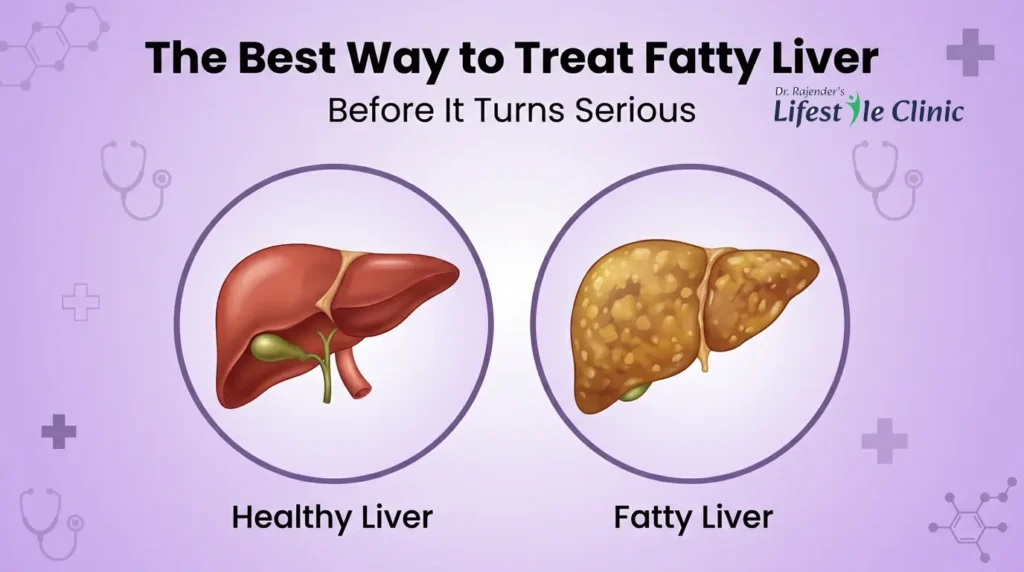
The Best Way to Treat Fatty Liver Before It Turns Serious
Fatty liver disease has become one of the most common lifestyle-related health conditions worldwide. The alarming part is that many people develop fatty liver silently without noticeable symptoms. By the time it is detected through scans or advanced tests, the liver may already be under significant stress.
Understanding the best way to treat fatty liver early is crucial because early-stage fatty liver is often reversible. With the right dietary changes, insulin control, and lifestyle improvements, liver health can be restored before it progresses into serious complications such as liver fibrosis or cirrhosis.
What Is Fatty Liver Disease?
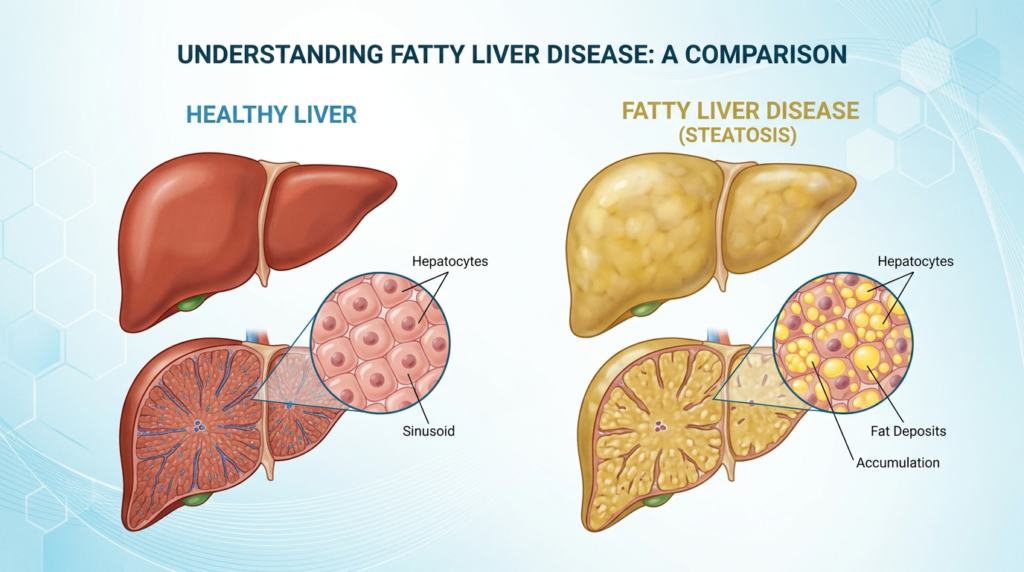
Fatty liver disease occurs when excess fat accumulates inside liver cells. Normally, the liver contains small amounts of fat, but when fat exceeds 5–10% of the liver’s weight, it is classified as fatty liver.
There are two major types:
1. Non-Alcoholic Fatty Liver Disease (NAFLD)
Common in people with obesity, diabetes, or metabolic syndrome.
2. Alcoholic Fatty Liver Disease
Caused by excessive alcohol consumption.
Today, non-alcoholic fatty liver disease is rapidly increasing due to poor dietary habits, sedentary lifestyles, and high carbohydrate intake.
Can Fatty Liver Be Detected Without a Scan?
Many people believe that fatty liver can only be detected through ultrasound or liver scans. However, blood tests can also provide early warning signs.
One important indicator is the SGPT SGOT ratio. When this ratio becomes greater than 1, it often suggests fat accumulation in the liver.
This means you do not always need to wait for a sonography scan before taking corrective action. Early blood markers are enough to begin lifestyle intervention.
Why Fat Builds Up in the Liver

Understanding why fat accumulates in the liver helps identify the best way to treat fatty liver effectively.
1. Excess Carbohydrate Consumption
In many Indian diets, large quantities of rice, wheat, and refined grains are consumed daily.
These carbohydrates are converted into glucose in the body. When glucose intake exceeds the body’s energy needs, it is converted into fat and stored in the liver.
Over time, this leads to fat accumulation and fatty liver disease.
2. Excess Oil and Ghee Intake
Many households unknowingly consume too much cooking oil and ghee.
Daily consumption often reaches 5–8 teaspoons per person, which is far above recommended limits. Excess fats increase metabolic stress on the liver and worsen fatty liver.
Reducing oil intake is therefore an important step in fatty liver treatment.
3. High Insulin Levels
One of the most important yet overlooked factors in fatty liver is insulin resistance.
Insulin is a hormone responsible for regulating blood sugar levels. However, when insulin levels remain high for long periods, it actively pushes fat into liver cells.
Unless insulin levels are controlled, fatty liver may continue to worsen even with other lifestyle changes.
The Best Way to Treat Fatty Liver: A 3-Step Approach
The best way to treat fatty liver involves a combination of dietary changes and metabolic correction.
1. Reduce Carbohydrates (Short-Term Action)
The first step is reducing grain intake, not starving the body.
For example:
- If you eat two chapatis, reduce to one or one-and-a-half
- If you eat rice and chapati together, eliminate one
- Increase vegetables, dal, and salads
Even two months of reduced grain consumption can significantly improve liver enzymes and metabolic markers.
2. Control Oil and Ghee Intake (Medium-Term Action)
Excess oil is a major contributor to fatty liver progression.
A safer recommendation is:
Maximum 2 teaspoons of oil per person per day
Foods to avoid with fatty liver include:
- Deep-fried foods
- Heavy gravies
- Processed snacks
- Excess ghee or butter
Limiting unhealthy fats supports liver detoxification and recovery.
3. Lower Insulin Levels (Long-Term Action)
Insulin resistance is the core driver of fatty liver disease.
Many people with fatty liver have fasting insulin levels above 10 μIU/mL.
Lifestyle strategies to reduce insulin include:
- Structured intermittent fasting
- Regular exercise
- Low refined carbohydrate diet
- Increased fiber intake
When insulin levels fall, the liver can begin releasing stored fat naturally.
Foods That Help Improve Fatty Liver
Diet plays a powerful role in liver recovery.
Some of the best foods for fatty liver include:
- Leafy green vegetables
- Garlic
- Turmeric
- Green tea
- Nuts and seeds
- Omega-3 rich foods like flaxseeds
These foods reduce inflammation and support natural liver detoxification.
Why Early Treatment Is Critical
One of the biggest mistakes people make is ignoring fatty liver until symptoms appear.
Early-stage fatty liver is completely reversible with proper lifestyle interventions.
However, if untreated, fatty liver can progress into:
- Liver fibrosis
- Non-alcoholic steatohepatitis (NASH)
- Liver cirrhosis
- Liver failure
This is why early treatment is considered the best strategy for long-term liver health.
Simple Lifestyle Tips for Liver Health

Along with dietary changes, several lifestyle habits support liver recovery.
Exercise Regularly
Physical activity improves insulin sensitivity and reduces liver fat.
Maintain Healthy Weight
Weight loss of 5–10% can significantly improve fatty liver.
Stay Hydrated
Water supports liver detoxification and metabolic balance.
Improve Sleep
Poor sleep increases metabolic stress and insulin resistance.
Conclusion
The best way to treat fatty liver is early and structured lifestyle intervention. Reducing carbohydrates, controlling oil intake, and lowering insulin levels are the most effective strategies for reversing fatty liver naturally.
Since fatty liver often develops silently, early detection through blood tests and timely lifestyle changes can prevent serious complications.
By adopting healthy dietary habits, maintaining metabolic balance, and prioritizing liver health, fatty liver can be reversed before it becomes dangerous.
FAQs
How can fatty liver be reversed naturally?
Fatty liver can be reversed by reducing carbohydrates, controlling oil intake, improving insulin sensitivity, and maintaining a healthy lifestyle.
Can fatty liver be detected without a scan?
Yes. Blood tests showing an SGPT SGOT ratio greater than 1 can indicate fatty liver even before ultrasound confirmation.
What is the best Indian diet for fatty liver?
A fatty liver diet should include vegetables, dal, salads, whole foods, and limited grains while avoiding excess oil and processed foods.
How much oil is safe for fatty liver?
During fatty liver recovery, around 2 teaspoons per person per day is considered a safer limit.
Does fasting help in reversing fatty liver?
Structured fasting can help lower insulin levels and support the liver in releasing stored fat.