
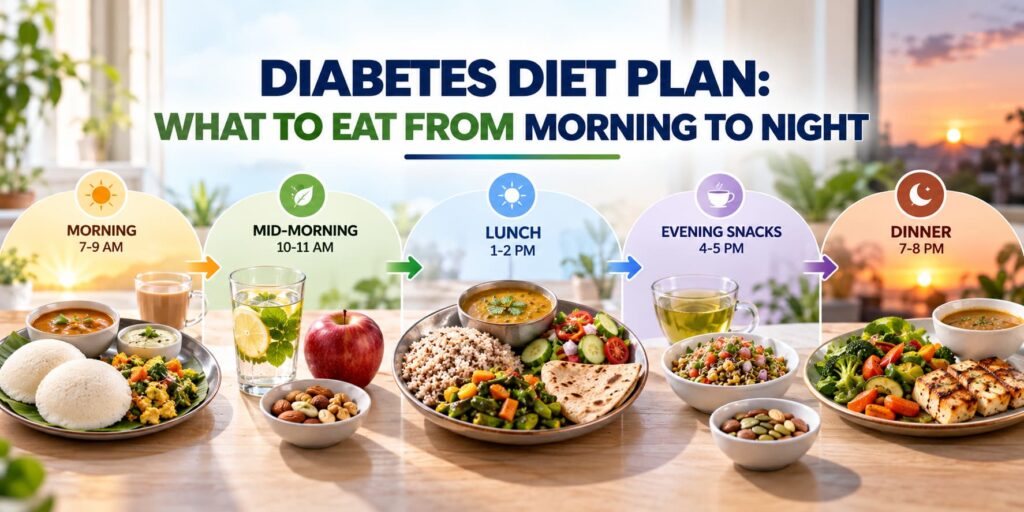
Bumper Diet Plan for Diabetes: Managing diabetes is not only about avoiding sugar. A consistent diabetes diet plan should focus on food quality, portion sizes, meal timing, fiber, protein, healthy fats, physical activity, and individual blood glucose responses.
Many people become confused about whether they should completely stop eating rice, fruits, carbohydrates, or traditional Indian foods after being diagnosed with diabetes. In reality, dietary needs can vary from person to person. A practical approach is to build balanced meals and make gradual, sustainable changes.
Start the Day With Hydration
Drinking water during the day is important for maintaining normal hydration. Instead of forcing a large quantity of water immediately after waking, drink according to your thirst, activity, weather, and individual needs.
People with certain kidney, heart, or other medical conditions may have specific fluid restrictions, so individual medical advice should be followed.
Choose a Balanced Breakfast
Breakfast can include traditional foods such as idli, dosa, or other Indian options, but portion size and the overall meal composition matter.
Adding a source of protein, vegetables, or fiber can make the meal more balanced. For example, vegetables, sprouts, eggs, or unsweetened protein-rich accompaniments can be considered depending on individual dietary preferences.
A diabetes diet plan does not necessarily require eliminating carbohydrates completely. Instead, choosing appropriate portions and combining carbohydrates with protein and fiber may help create a more balanced meal.
Include Whole Fruits in Appropriate Portions
People with diabetes can often include whole fruit as part of a balanced diet. Fruits such as apples, guava, papaya, and pomegranate provide fiber and other nutrients.
However, fruit portions still matter because fruits contain naturally occurring carbohydrates. Whole fruit is generally preferable to fruit juice because it retains its fiber and is usually consumed more slowly.
Instead of adding sugar, honey, or jaggery to fruit or beverages, choose naturally unsweetened options.
Healthy Mid-Morning or Evening Snacks
If you feel hungry between meals, choose a nutrient-dense snack rather than biscuits, sweets, fried foods, or sugary drinks.
Some options include:
- A small portion of nuts
- Boiled eggs
- Sprouts
- Buttermilk without added sugar
- A portion of whole fruit
- Vegetable-based snacks
The right snack depends on your total daily diet, medication schedule, hunger levels, and blood glucose targets.
Build a Balanced Lunch
Lunch can include vegetables, a protein source, and an appropriate portion of carbohydrate such as rice or other whole-grain foods.
You do not necessarily need to completely remove rice to manage diabetes. Portion control and the overall composition of the meal are important.
Foods such as vegetables, pulses, legumes, eggs, fish, or other protein sources can help make a meal more balanced according to your dietary preferences.
Avoid Highly Processed Foods
One of the practical principles of a diabetes diet plan is reducing highly processed foods.
Biscuits, refined-flour products, sweets, sugary beverages, packaged snacks, and deep-fried foods can add substantial amounts of refined carbohydrates, sugar, salt, or calories.
Checking the ingredient list on packaged foods can help identify added sugars and refined ingredients.
Plan Dinner Carefully
Dinner does not need to be skipped simply because you have diabetes. This is particularly important for people taking insulin or certain glucose-lowering medications, because suddenly changing meal patterns can affect blood glucose.
A balanced dinner can include cooked vegetables, protein, and an appropriate portion of carbohydrate.
Some people may find an earlier dinner easier to manage, but the ideal timing depends on their daily routine, medication schedule, sleep pattern, and individual needs.
Add Regular Physical Activity
Diet is only one part of diabetes management. Regular physical activity can support blood glucose control, fitness, weight management, and overall metabolic health.
Even a short walk after a meal can be a practical way to add movement to your daily routine. People who are inactive should gradually increase their activity according to their fitness level and medical advice.
Final Takeaway
A sustainable diabetes diet plan does not have to mean completely avoiding rice, fruits, or carbohydrates. Instead, focus on balanced meals, appropriate portions, minimally processed foods, adequate protein and fiber, regular physical activity, and consistent meal patterns.
At Dr. Rajender Lifestyle Clinic, personalized nutrition and lifestyle strategies can be incorporated into a structured approach to diabetes and metabolic health.
If your blood glucose remains high despite dietary changes, discuss your readings, medications, meal pattern, and lifestyle routine with your healthcare professional rather than changing medication on your own.
FAQs About Diabetes Diet Plan
1. What is the best diet plan for diabetes?
A diabetes diet plan should be individualized, but generally focuses on vegetables, appropriate portions of carbohydrate, protein-rich foods, fiber, healthy fats, and minimally processed foods.
2. Can diabetes patients eat rice?
Rice can often be included in a diabetes meal plan in an appropriate portion. The overall meal composition and individual blood glucose response are also important.
3. Can diabetics eat fruits?
Many people with diabetes can include whole fruits in appropriate portions. Fruit juice and fruits with added sugar should generally be limited.
4. Which fruits are good for diabetes?
Whole fruits such as guava, apple, papaya, and pomegranate can be included in suitable portions. Individual responses and total carbohydrate intake should be considered.
5. What are healthy snacks for diabetes?
Nuts, boiled eggs, sprouts, unsweetened buttermilk, vegetables, and appropriate portions of whole fruit can be considered as snack options.
6. Should diabetics completely stop eating carbohydrates?
Not necessarily. Carbohydrates are an important source of energy. The focus should be on appropriate portions, food quality, and combining carbohydrates with protein and fiber.
7. Should diabetics skip dinner?
Skipping dinner is not automatically necessary for diabetes management. People taking insulin or glucose-lowering medication should be especially careful about major changes to meal timing and should discuss them with their healthcare professional.
8. Can walking help with blood sugar control?
Regular physical activity, including walking, can support blood glucose management and overall metabolic health. The appropriate amount depends on individual fitness and health status.
9. What foods should diabetics limit?
Highly processed foods, sugary drinks, sweets, refined-flour products, and frequent deep-fried snacks are generally foods to limit as part of a balanced diabetes eating pattern.
10. Is a diabetes diet plan the same for everyone?
No. A suitable diet can vary according to medications, blood glucose levels, body weight, activity, food preferences, other health conditions, and individual goals. A personalized plan can therefore be more appropriate than a one-size-fits-all diet.
Read Also:

One Response