
Can Obesity Cause Diabetes? Understanding the Link Between Obesity and Type 2 Diabetes
Introduction
Can obesity cause diabetes? This is one of the most frequently asked questions in modern healthcare. With rising obesity rates worldwide, doctors and researchers are increasingly concerned about its direct impact on metabolic diseases like type 2 diabetes.
Obesity is not just about body weight or appearance—it significantly affects how the body processes sugar, insulin, and energy. Excess body fat, especially around the abdomen, can disrupt normal metabolic processes and lead to insulin resistance, the main cause of type 2 diabetes.
In this article, we will explore how obesity causes diabetes, why excess fat affects blood sugar regulation, and what lifestyle changes can help prevent both conditions.
What Is Obesity?
Obesity is a medical condition characterized by excessive body fat accumulation that increases the risk of several chronic diseases. It is usually diagnosed using Body Mass Index (BMI).
BMI categories include:
- Normal weight: 18.5 – 24.9
- Overweight: 25 – 29.9
- Obese: 30 or higher
However, obesity is not only about BMI. Abdominal or visceral fat—fat stored around internal organs—is particularly dangerous because it interferes with hormone regulation and metabolism.
When a person carries excess fat for a long time, it can disturb the body’s insulin function and increase the likelihood of developing diabetes.
Can Obesity Cause Diabetes?
Yes, obesity can cause diabetes, particularly type 2 diabetes. Studies show that people with obesity are significantly more likely to develop type 2 diabetes compared to individuals with a healthy weight.
Obesity contributes to diabetes mainly through a condition called insulin resistance.
Normally:
- The pancreas produces insulin
- Insulin helps glucose enter cells
- Cells use glucose for energy
However, when obesity develops:
- Fat cells release inflammatory substances
- These substances interfere with insulin signaling
- Cells stop responding to insulin properly
As a result, glucose remains in the bloodstream instead of entering cells, leading to high blood sugar levels, which eventually causes type 2 diabetes.
How Obesity Leads to Insulin Resistance
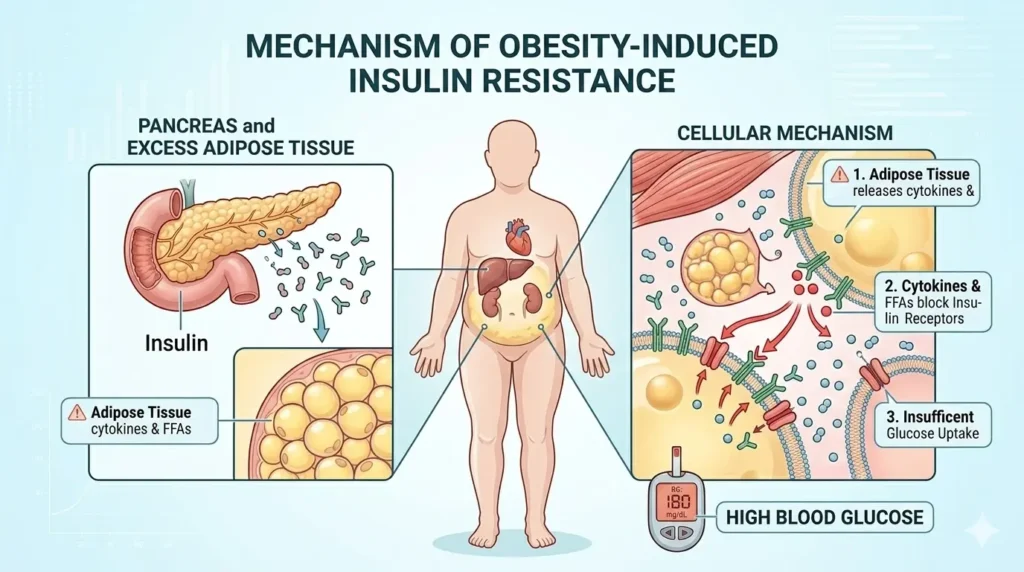
To understand the connection between obesity and diabetes, it is important to understand insulin resistance.
1. Increased Fat Around Organs
Visceral fat around the liver and pancreas interferes with insulin function.
2. Chronic Inflammation
Fat tissue releases inflammatory chemicals that reduce insulin sensitivity.
3. Hormonal Imbalance
Obesity affects hormones like leptin and adiponectin, which regulate appetite and metabolism.
4. Increased Free Fatty Acids
High fat levels in the bloodstream disrupt glucose metabolism.
Over time, the pancreas tries to produce more insulin to compensate, but eventually it cannot keep up, leading to type 2 diabetes.
Risk Factors That Increase Diabetes in Obese Individuals
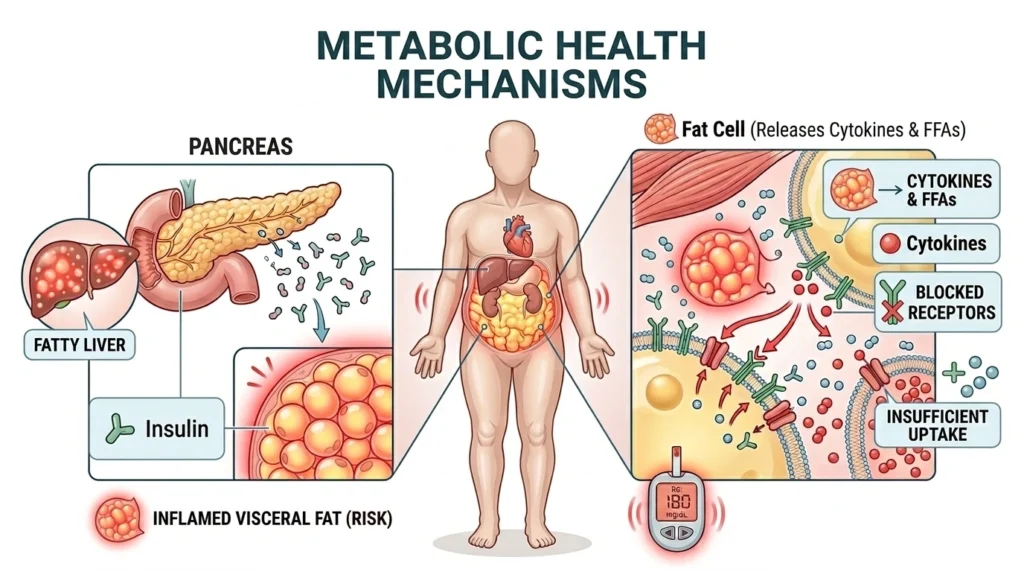
Although obesity is a major cause of diabetes, certain factors increase the risk even more.
1. Sedentary Lifestyle
Lack of physical activity reduces insulin sensitivity.
2. Unhealthy Diet
Diets high in refined carbohydrates, sugar, and processed foods worsen insulin resistance.
3. Family History
Genetics also influence the likelihood of developing diabetes.
4. Age
People over 40 have a higher risk of developing type 2 diabetes.
5. Abdominal Fat
Central obesity (belly fat) is strongly linked with diabetes.
These risk factors combined with obesity significantly raise the chances of developing diabetes.
Signs That Obesity Is Affecting Blood Sugar
Many people do not realize they are developing insulin resistance until diabetes is diagnosed. However, certain warning signs may appear earlier.
Common symptoms include:
- Increased thirst
- Frequent urination
- Fatigue
- Increased hunger
- Slow wound healing
- Dark patches of skin around the neck (acanthosis nigricans)
If these symptoms appear, it is important to check blood sugar levels and consult a healthcare professional.
Health Complications of Obesity and Diabetes
When obesity leads to diabetes, the risk of several serious health problems increases.
These complications include:
- Heart disease
- Stroke
- Kidney damage
- Nerve damage (neuropathy)
- Eye problems and vision loss
- Fatty liver disease
According to the World Health Organization, obesity is one of the leading causes of preventable diseases worldwide.
External resource: https://www.who.int/news-room/fact-sheets/detail/obesity-and-overweight
Managing body weight is therefore crucial for preventing these complications.
Can Weight Loss Prevent Diabetes?
The good news is that weight loss can significantly reduce the risk of diabetes.
Even losing 5–10% of body weight can improve insulin sensitivity and lower blood sugar levels.
Weight loss benefits include:
- Improved insulin function
- Reduced inflammation
- Better hormone balance
- Lower blood pressure
- Improved cholesterol levels
Studies show that lifestyle changes are often more effective than medication in preventing diabetes in high-risk individuals.
Lifestyle Changes to Prevent Obesity and Diabetes
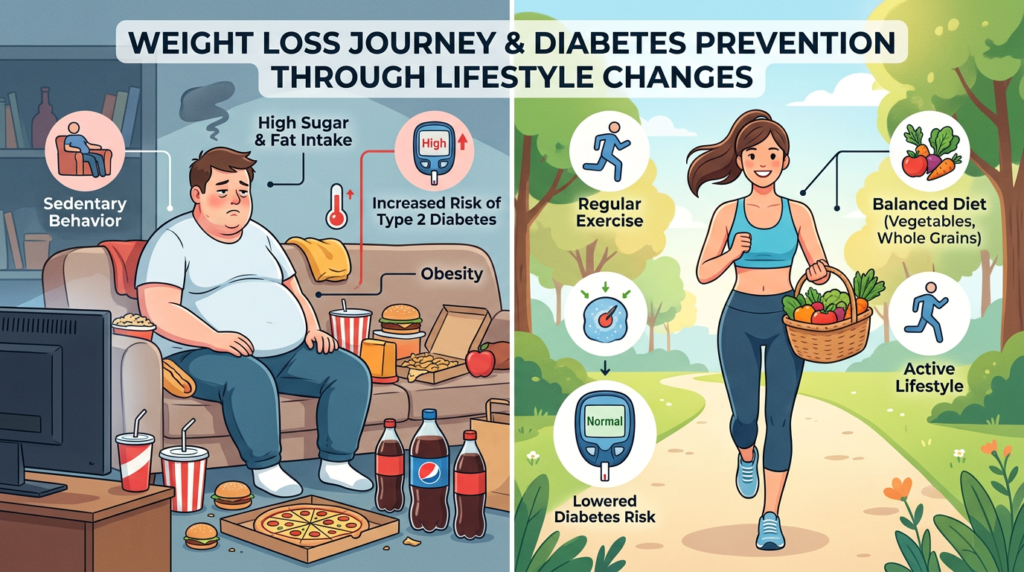
Preventing obesity and diabetes requires consistent lifestyle habits.
1. Eat a Balanced Diet
Focus on whole foods such as:
- Vegetables
- Fruits
- Whole grains
- Lean protein
- Healthy fats
Avoid processed foods, sugary drinks, and refined carbohydrates.
2. Exercise Regularly
Aim for at least 150 minutes of physical activity per week.
Examples include:
- Walking
- Cycling
- Swimming
- Strength training
3. Improve Sleep Quality
Poor sleep affects hormones that regulate appetite and blood sugar.
4. Manage Stress
Chronic stress increases cortisol levels, which can worsen insulin resistance.
5. Monitor Body Weight
Regular weight tracking helps detect unhealthy weight gain early.
The Role of Nutrition in Diabetes Prevention
Nutrition plays a critical role in preventing obesity-related diabetes.
Healthy dietary habits include:
- High fiber intake
- Low glycemic index foods
- Adequate protein intake
- Healthy fats such as nuts, seeds, and olive oil
A balanced diet helps regulate blood sugar levels and prevents excessive weight gain.
For more information on diabetes management strategies, you can read our guide on Diabetes Lifestyle Management.
Conclusion
So, can obesity cause diabetes? The answer is yes. Obesity is one of the most significant risk factors for developing type 2 diabetes. Excess body fat disrupts insulin function, leading to insulin resistance and high blood sugar levels.
However, diabetes caused by obesity is largely preventable. By maintaining a healthy weight, eating nutritious foods, staying physically active, and adopting a balanced lifestyle, individuals can significantly reduce their risk.
Early awareness and lifestyle modifications are key to preventing obesity-related diabetes and maintaining long-term health.
FAQ Section
1. Can obesity cause diabetes directly?
Yes, obesity can directly contribute to type 2 diabetes by causing insulin resistance, where the body’s cells stop responding properly to insulin.
2. Does losing weight reduce diabetes risk?
Yes. Losing even 5–10% of body weight can significantly improve insulin sensitivity and reduce the risk of developing diabetes.
3. Is belly fat linked to diabetes?
Yes. Abdominal fat is strongly associated with insulin resistance and is considered one of the major risk factors for type 2 diabetes.
4. Can a healthy diet prevent obesity-related diabetes?
A balanced diet rich in fiber, whole grains, lean protein, and healthy fats helps regulate blood sugar and prevent excessive weight gain.
5. Is exercise important for preventing diabetes?
Absolutely. Regular physical activity improves insulin sensitivity and helps maintain a healthy body weight.