
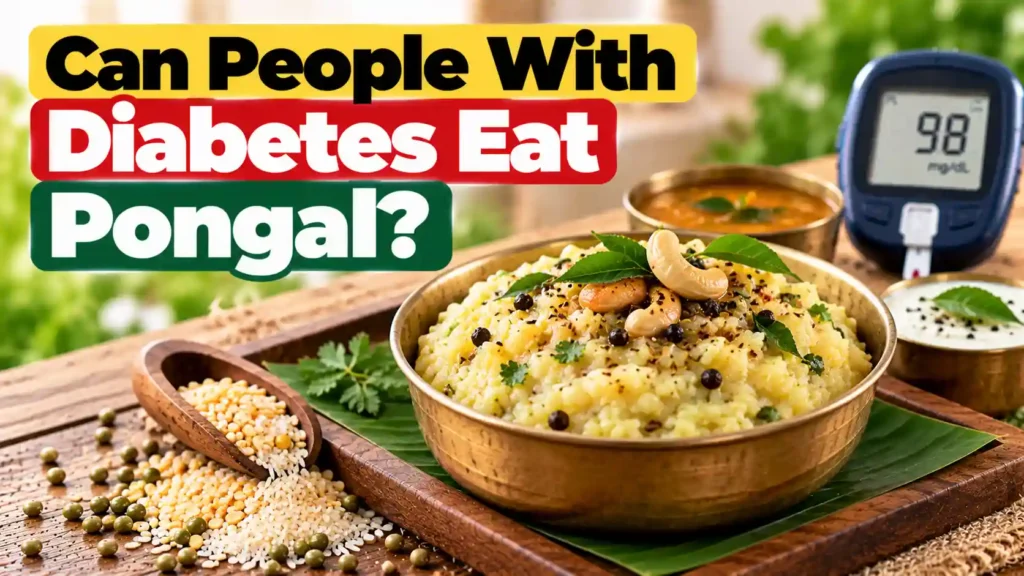
Can People With Diabetes Eat Pongal?: Pongal is a popular South Indian dish commonly made with rice, moong dal, water, and seasonings. Ven pongal often includes black pepper, cumin, ginger, and ghee, while sweet pongal typically contains jaggery or sugar.
People with diabetes may wonder whether they need to avoid pongal because rice is a major ingredient.
People with diabetes can sometimes include savoury pongal in their meal plan, but the portion and recipe are important. Rice contributes carbohydrates, while moong dal provides protein and other nutrients. Ghee can add substantial calories and saturated fat.
Sweet pongal requires additional consideration because jaggery or sugar increases the amount of added sugar and carbohydrates.
What Does Pongal Contain?
1. Rice Provides Carbohydrates
Rice supplies much of the carbohydrate in traditional pongal. The amount of rice used and the serving size influence the meal’s total carbohydrate content.
A large bowl may contain considerably more carbohydrates than a smaller serving.
2. Moong Dal Provides Protein and Fibre
Moong dal contributes plant-based protein, fibre, and other nutrients. Including dal can improve the nutritional balance compared with a dish made from rice alone.
However, dal also contains carbohydrates, so it does not eliminate the carbohydrate content of pongal.
3. Ghee Adds Fat and Calories
Ghee gives ven pongal its familiar taste and texture. However, using large quantities can increase calorie and saturated fat intake.
People managing weight or high LDL cholesterol may benefit from using ghee in moderation and considering their overall fat intake.
Does Pongal Raise Blood Sugar?
Yes, pongal can raise blood glucose because it contains rice and lentils, both of which contribute carbohydrates. The amount eaten, the ratio of rice to dal, and the rest of the meal all matter.
Savoury pongal and sweet pongal are not nutritionally identical. Sweet pongal usually contains added sweeteners, which increase the carbohydrate content.
Consider the following:
- The bowl size.
- The quantity of rice and dal used.
- Added jaggery or sugar.
- The amount of ghee.
- Whether other carbohydrate-rich foods are eaten alongside the pongal.
A meal containing pongal, chutney, sambar, and other foods should be considered as a whole.
How Can People With Diabetes Make Pongal More Balanced?
You may be able to adjust the recipe to suit your meal plan.
1. Review the Rice-to-Dal Ratio
Using a suitable proportion of moong dal can increase the contribution of protein and fibre. However, the total carbohydrate content still depends on the quantities of both ingredients.
2. Control the Serving Size
Serve a measured portion rather than eating a large bowl automatically. Your ideal portion depends on your dietary requirements and glucose targets.
3. Use Ghee in Moderation
A smaller amount can provide flavour without adding as much fat and energy as a heavily enriched recipe.
4. Add Vegetables to the Meal
Vegetables can contribute fibre and nutrients. You may serve pongal with vegetable-rich sambar or another suitable vegetable dish.
5. Be Mindful of Sweet Pongal
Jaggery is still a source of sugar. Although it is traditionally used and has a distinctive flavour, it should not be treated as a diabetes-safe sweetener.
Is Pongal Suitable for Breakfast?
It can fit into some breakfast plans, depending on portion size and ingredients. A balanced breakfast should be considered in relation to the person’s total daily nutrition, medications, activity, and individual glucose response.
People using insulin or certain glucose-lowering medicines should follow their prescribed meal timing and medication instructions.
Frequently Asked Questions
1. Can people with Type 2 diabetes eat ven pongal?
Some can include it in moderate portions as part of a balanced meal plan. Rice quantity, dal quantity, ghee, and accompanying foods matter.
2. Is sweet pongal suitable for diabetes?
Sweet pongal often contains jaggery or sugar, which adds carbohydrates. It may be difficult to fit into some meal plans, so portion size and individual glucose targets should be considered.
3. Does adding moong dal make pongal diabetes-friendly?
Moong dal adds protein and fibre, but it does not remove the carbohydrates in the dish. The overall recipe and portion still matter.
4. Can pongal be eaten every day?
Whether daily consumption is suitable depends on the recipe, portion size, dietary variety, and individual needs. Rotating among balanced breakfast options can provide variety.
5. Should people with diabetes avoid ghee in pongal?
Not everyone needs to avoid it completely, but using ghee in moderation can help manage saturated fat and calorie intake.
Conclusion
Pongal can fit into some diabetes meal plans when portions and ingredients are considered carefully. Savoury pongal made with rice and moong dal differs from sweet pongal prepared with jaggery or sugar. Adjust the portion, moderate the ghee, and consider the complete meal.
Looking for practical ways to enjoy South Indian breakfast foods while managing diabetes? Dr. Rajender’s Lifestyle Clinic, Banjara Hills, Hyderabad, offers personalised nutrition guidance and evidence-based lifestyle support.
Read Also:
