
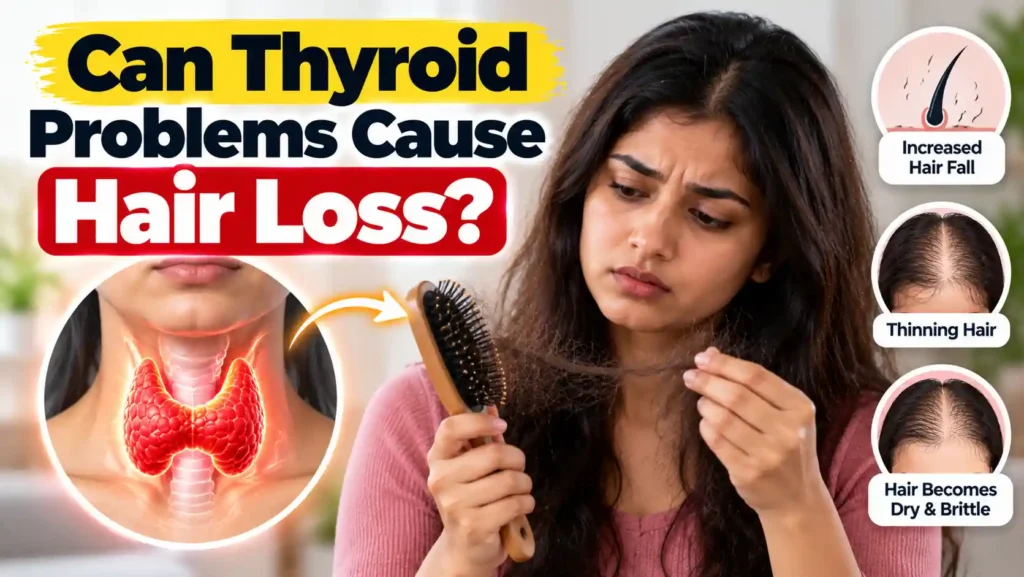
Can Thyroid Problems Cause Hair Loss: Hair shedding is common, but noticeable thinning, excessive hair fall, or changes in hair texture can be worrying. Although hair loss is often associated with genetics, stress, or nutritional deficiencies, thyroid disorders can also contribute.
The thyroid gland produces hormones that influence metabolism and the normal activity of many tissues, including hair follicles. When thyroid hormone levels are too low or too high, the normal hair growth cycle may be disrupted.
Both hypothyroidism and hyperthyroidism can contribute to diffuse hair thinning. However, hair loss has many possible causes, so it is important not to assume that the thyroid is responsible without an appropriate assessment.
How Does the Thyroid Affect Hair Growth?
Hair grows through a cycle involving three main phases:
- Anagen: The active growth phase.
- Catagen: A short transition phase.
- Telogen: The resting phase, after which the hair eventually sheds.
Thyroid hormones help regulate normal body functions, and abnormal thyroid hormone levels can interfere with the hair growth cycle. This may cause more hairs than usual to enter the resting and shedding phases.
Hair changes may develop gradually, and improvement can take time after the underlying cause is treated.
How Can Hypothyroidism Cause Hair Loss?
Hypothyroidism occurs when the body has insufficient thyroid hormone.
Possible hair-related changes include:
1. Diffuse hair thinning
Hair may become thinner across the scalp rather than falling out in one distinct patch. Some people notice more hair than usual on a pillow, in the shower, or while brushing.
2. Dry or coarse hair
Low thyroid hormone levels can be associated with changes in hair texture, including dryness, coarseness, or brittleness.
3. Changes in eyebrow hair
Some people with hypothyroidism experience thinning of the outer portion of the eyebrows. However, this finding is not specific to thyroid disease.
4. Slower recovery of hair growth
Even after thyroid hormone levels return to the recommended range, hair follicles may need time to return to their usual growth cycle. Hair improvement is often gradual rather than immediate.
Can Hyperthyroidism Also Cause Hair Loss?
Yes. Hyperthyroidism occurs when thyroid hormone activity is excessive.
An overactive thyroid can speed up several body processes and disrupt the normal hair cycle. Some people notice:
- Diffuse thinning across the scalp.
- Fine or softer hair texture.
- Increased shedding.
- Hair changes alongside symptoms such as heat intolerance, tremors, palpitations, or unintended weight loss.
The extent of hair loss varies. Treating the thyroid disorder may help, but other causes of hair loss may need to be investigated as well.
What Other Conditions Can Cause Hair Loss?
Thyroid dysfunction is only one possible cause. Other common contributors include:
Iron deficiency
Low iron stores can contribute to hair shedding in some people. Testing may be appropriate when the medical history or symptoms suggest iron deficiency.
Stress or recent illness
Significant physical or emotional stress, high fever, surgery, or major illness can trigger telogen effluvium, a type of temporary diffuse hair shedding. The shedding may become noticeable several months after the trigger.
Genetic hair loss
Androgenetic alopecia can cause gradual thinning in characteristic patterns. It can occur independently of thyroid function.
Nutritional problems
Inadequate protein intake and certain nutritional deficiencies may affect hair health. However, taking supplements without identifying a deficiency is not always helpful and can sometimes be harmful.
Scalp conditions and medicines
Scalp inflammation, certain skin disorders, and some medications can contribute to hair loss. Sudden patchy hair loss may have a different cause from diffuse shedding.
Which Tests May Help Identify the Cause?
A healthcare professional may review your symptoms, family history, diet, recent illnesses, medications, and the pattern of hair loss.
Possible tests include:
TSH: Often used as an initial test to assess thyroid function.
Free T4: Helps evaluate thyroid hormone levels, especially when TSH is abnormal.
Complete blood count and iron studies: May be appropriate if anaemia or iron deficiency is suspected.
Other tests may be considered based on your history and examination. Not everyone with hair loss needs every test.
If you have sudden patchy hair loss, scalp pain, redness, scaling, or scarring, a dermatologist may be needed to assess for a scalp disorder.
How Can You Manage Thyroid-Related Hair Loss?
Treat the underlying thyroid condition
If thyroid dysfunction is confirmed, appropriate treatment can help restore hormone levels to the recommended range. Medication should be taken exactly as prescribed.
Do not increase thyroid medication to try to speed up hair growth. Excess thyroid hormone can cause additional health problems and may worsen hair shedding.
Eat a balanced diet
Include adequate protein and a variety of nutrient-rich foods. If a nutritional deficiency is suspected, discuss testing and treatment with a healthcare professional.
Be gentle with your hair
Avoid excessive heat styling, harsh chemical treatments, and tight hairstyles that pull on the hair. These practices will not treat thyroid disease, but they may reduce additional hair damage.
Allow time for recovery
Hair growth is gradual. Even after thyroid tests improve, it may take several months to notice meaningful changes in shedding and hair density.
Seek further assessment if hair loss continues
If your thyroid levels are within the recommended range but hair loss persists, your clinician may investigate other causes rather than assuming the thyroid treatment has failed.
Frequently Asked Questions
1. Can hair grow back after thyroid treatment?
Hair growth may improve when thyroid dysfunction is treated, but recovery varies. Other causes of hair loss can prevent complete regrowth unless they are also addressed.
2. Does high TSH cause hair loss?
A high TSH may indicate an underactive thyroid, particularly when free T4 is low. If hypothyroidism is responsible for hair changes, appropriate treatment may help over time.
3. Can a normal TSH result rule out every cause of hair loss?
No. A normal TSH makes some forms of primary thyroid dysfunction less likely, but hair loss can result from iron deficiency, genetics, stress, scalp disorders, and other conditions.
4. Should I take biotin for thyroid-related hair loss?
Do not assume biotin will help unless a deficiency or another appropriate indication is identified. High-dose biotin can interfere with certain laboratory tests, including thyroid tests. Tell your healthcare professional if you take it and ask whether it should be paused before testing.
5. How long does thyroid-related hair loss take to improve?
Improvement may take several months after thyroid hormone levels are adequately treated. The timeline depends on the cause, severity, and individual hair growth cycle.
Conclusion
Thyroid problems can disrupt the hair growth cycle and contribute to diffuse hair thinning, dryness, and increased shedding. Both an underactive and an overactive thyroid can affect hair, but other causes—including iron deficiency, stress, genetics, and scalp conditions—must also be considered.
Appropriate testing and treatment can help identify the cause and support recovery. Avoid self-medicating with thyroid hormones or high-dose supplements for hair growth.
Concerned about hair loss and thyroid health?
Dr. Rajender’s Lifestyle Clinic in Banjara Hills, Hyderabad, provides medical guidance for thyroid and other metabolic conditions. Book a consultation to discuss your symptoms, thyroid tests, and appropriate next steps.
Read Also:

One Response