
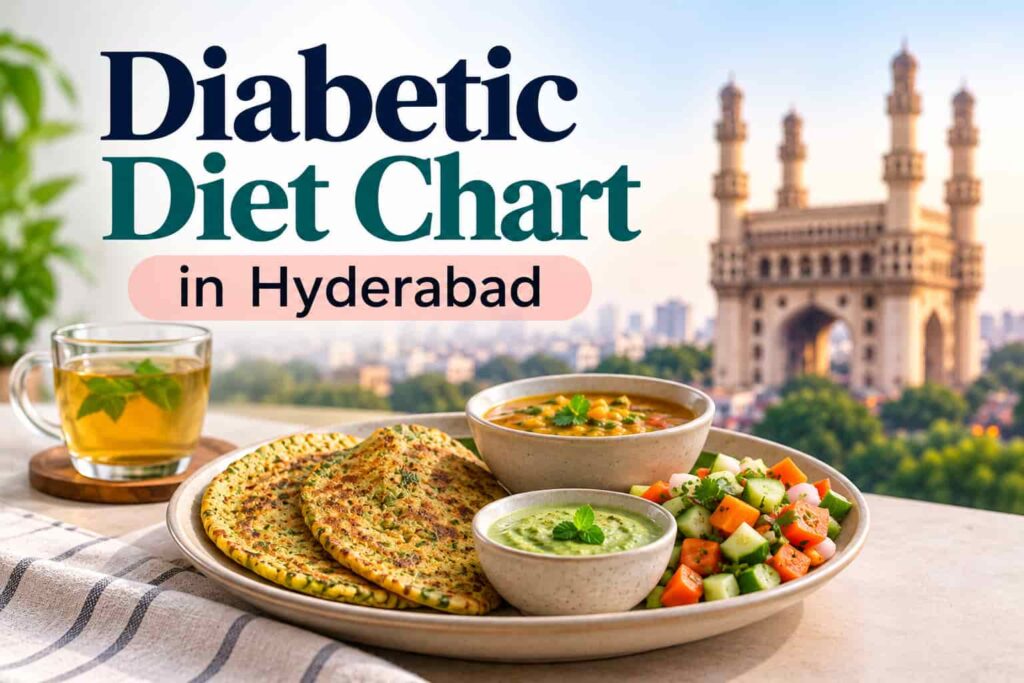
Diabetic Diet Chart in Hyderabad: Veg and Non-Veg Plan: People often ask for a ready-made diabetic diet chart. A sample chart can be a helpful starting point, but it should never replace a plan built around your reports, medicines, activity, and preferences. This article offers an illustrative Indian day plan, for vegetarians and non-vegetarians, and explains how to adapt it with your doctor or nutritionist.
Before You Use Any Chart
Different people need different amounts of food. Your body size, activity, kidney health, medicines, and
blood sugar pattern decide your portions. If you use insulin or sulfonylureas, meal timing matters to
avoid low sugar. Treat any chart as a template and adjust it after discussing with your doctor.
The Plate Method
At lunch and dinner, fill half the plate with non-starchy vegetables, a quarter with protein, and a quarter
with grains or millets. Add a small portion of healthy fat. This simple structure works across cuisines and
avoids the need for counting.
Sample Day: Vegetarian
- Early morning: Water, or unsweetened tea or coffee.
- Breakfast: Moong dal chilla with vegetables and mint chutney, and a cup of curd.
- Mid-morning: A small fruit such as guava or apple, with a few almonds.
- Lunch: Salad, vegetable curry, dal, one or two jowar or whole-wheat rotis or a small bowl of rice, and
buttermilk. - Evening: Roasted chana, sprouts chaat, or unsweetened tea with a handful of nuts.
- Dinner: Grilled paneer or tofu with sauteed vegetables, one roti, and a salad or clear vegetable soup.
- Bedtime (if needed): A cup of warm milk without sugar.
Sample Day: Non-Vegetarian
- Early morning: Water, or unsweetened tea or coffee.
- Breakfast: Vegetable omelette or egg bhurji with one multigrain roti.
- Mid-morning: Buttermilk or a small fruit.
- Lunch: Salad, chicken or fish curry with minimal oil, a vegetable side, dal, and a small portion of rice
- or millet.
- Evening: Roasted chana, or a boiled egg with cucumber slices.
- Dinner: Grilled or tandoori chicken or fish, sauteed vegetables, salad, and one roti.
Foods to Limit
Sugary drinks, sweets, refined flour products, bakery items, fried snacks, large portions of white rice,
and fruit juices raise sugar quickly. Hyderabadi biryani, haleem, and heavy gravies can be enjoyed
occasionally in small portions with salad and raita, and with a short walk afterwards.
Cooking Tips
- Use less oil, and prefer steaming, grilling, pressure cooking, and sauteing.
- Add vegetables to rice, dal, and curries.
- Soak and sprout pulses.
- Choose whole grains and millets over polished grains.
- Read labels and avoid hidden sugar.
Hydration and Salt
Drink adequate water, limit salt, especially if you also have high blood pressure, and avoid packaged
snacks and pickles that are high in salt.
Personalising Your Chart
Track your post-meal sugar for common meals, adjust portions based on readings, ask your doctor
about your protein needs, and update the plan every few months. People with kidney disease,
pregnancy, or other conditions need specific changes.
Support at Dr. Rajender’s Lifestyle Clinic
The clinic offers personalised nutrition as part of structured, evidence-based care for Type 2 diabetes
and related conditions, with physical activity, lifestyle correction, and continuous medical guidance.
Book a Consultation
Visit https://www.drrajenderslifestyleclinic.com/ to learn more and book a consultation.
Frequently Asked Questions
Is there one diet chart for all diabetics?
No. Plans depend on medicines, weight, activity, kidney health, and food habits.
Can diabetics eat biryani?
Occasionally, in a small portion with salad, raita, and a post-meal walk. Monitor your sugar response.
How many meals should I eat in a day?
Many people do well with three meals and one or two small snacks, but it depends on your medicines
and sugar pattern.
Do I need to count calories?
Not necessarily. The plate method, portion awareness, and food quality are often enough, though some
people benefit from counting.
Read Also:

One Response