
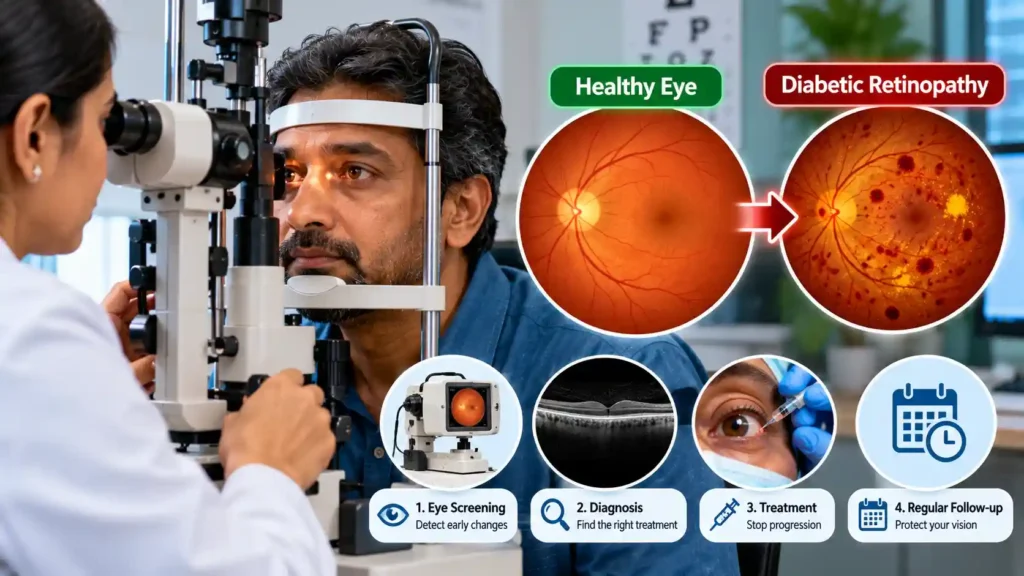
Diabetic Retinopathy: Eye Screening and Treatment Guide
Vision loss is one of the most feared complications of diabetes, and also one of the most preventable.
Diabetic retinopathy, damage to the light-sensitive tissue at the back of the eye, is a leading cause of
blindness in working-age adults. The reason it is so dangerous is that it usually causes no symptoms
until it is advanced. Regular eye screening can catch it early, when treatment works best.
How Diabetes Damages the Eyes
The retina is full of tiny blood vessels. Years of high blood sugar and high blood pressure weaken these
vessels, causing them to leak fluid and blood, or to close off. In response, the eye may grow fragile new
vessels that bleed easily. When fluid collects in the central part of the retina, called the macula, it
causes diabetic macular oedema, which blurs central vision.
Stages of Retinopathy
- Non-proliferative retinopathy (mild, moderate, severe): Leaking vessels, small bleeds, and fluid, often
without symptoms. - Proliferative retinopathy: New, fragile vessels grow and can bleed into the eye or pull on the retina,
threatening sight. - Diabetic macular oedema: Swelling of the macula, which can occur at any stage.
Symptoms: Often None at First
Early retinopathy usually causes no symptoms, which is why screening matters. Later signs include
blurred vision, spots or floaters, dark or empty areas in your vision, difficulty seeing at night, and
fluctuating vision. Sudden loss of vision or a curtain over the eye is an emergency.
Who Needs Screening and When - Type 2 diabetes: A dilated eye examination at diagnosis, and then at least once a year, or as your
eye specialist advises. - Type 1 diabetes: Usually starting about five years after diagnosis, and then yearly.
- Pregnancy with pre-existing diabetes: More frequent exams, as advised.
- Anyone with changes in vision, high HbA1c, high blood pressure, or known retinopathy: Closer
follow-up.
What Happens During an Eye Exam
The eye specialist puts in drops to widen the pupils, and examines the retina. Retinal photographs and
a scan called optical coherence tomography (OCT) may be used to look for swelling. The drops can blur
vision for a few hours, so bring someone with you and avoid driving afterwards.
Treatment Options
Early retinopathy is monitored, and the focus is on controlling sugar, blood pressure, and cholesterol.
When vision is threatened, treatments include laser therapy to seal leaking vessels or reduce abnormal
growth, injections into the eye of medicines that block vessel growth and leakage (anti-VEGF), steroid
treatments in selected cases, and surgery for bleeding or retinal detachment. Timely treatment can
greatly reduce the risk of severe vision loss, although it may not restore sight already lost.
How to Protect Your Eyes
- Keep HbA1c in your target range, and avoid wide swings.
- Control blood pressure and cholesterol.
- Stop smoking.
- Attend every scheduled eye exam, even if your vision seems fine.
- Tell your eye doctor about your diabetes duration, HbA1c, and medicines.
- Report vision changes promptly.
A Caution About Rapid Control
Very rapid lowering of blood sugar can temporarily worsen retinopathy in some people. If your sugar
has been high for a long time and your doctor plans to bring it down quickly, an eye examination
beforehand is wise.
Other Eye Problems in Diabetes
People with diabetes also have a higher risk of cataracts, glaucoma, and dry eye. Regular eye
check-ups detect these early. Blurred vision that comes and goes with sugar levels can be due to
changes in the lens, but should still be checked.
Care at Dr. Rajender’s Lifestyle Clinic
The clinic offers structured, evidence-based care for Type 2 diabetes and hypertension, with
personalised nutrition, physical activity, lifestyle correction, and continuous medical guidance aimed at
protecting your eyes through good control. Eye examinations and treatment are done by an
ophthalmologist or retina specialist.
Book a Consultation
Visit https://www.drrajenderslifestyleclinic.com/ to learn more and book a consultation.
Frequently Asked Questions
How often should I get my eyes checked if I have diabetes?
At least once a year with a dilated exam for most people with Type 2 diabetes, or more often if
retinopathy is found.
Can diabetic retinopathy be reversed?
Early changes may stabilise with better control, but established damage is usually managed rather than
reversed. Treatment can prevent further loss.
Does normal vision mean my eyes are healthy?
No. Retinopathy can be present without symptoms, so regular screening is essential.
Is eye injection treatment painful?
The eye is numbed beforehand, and most people feel only pressure. Your eye specialist will explain the
procedure.
Read Also:

One Response