
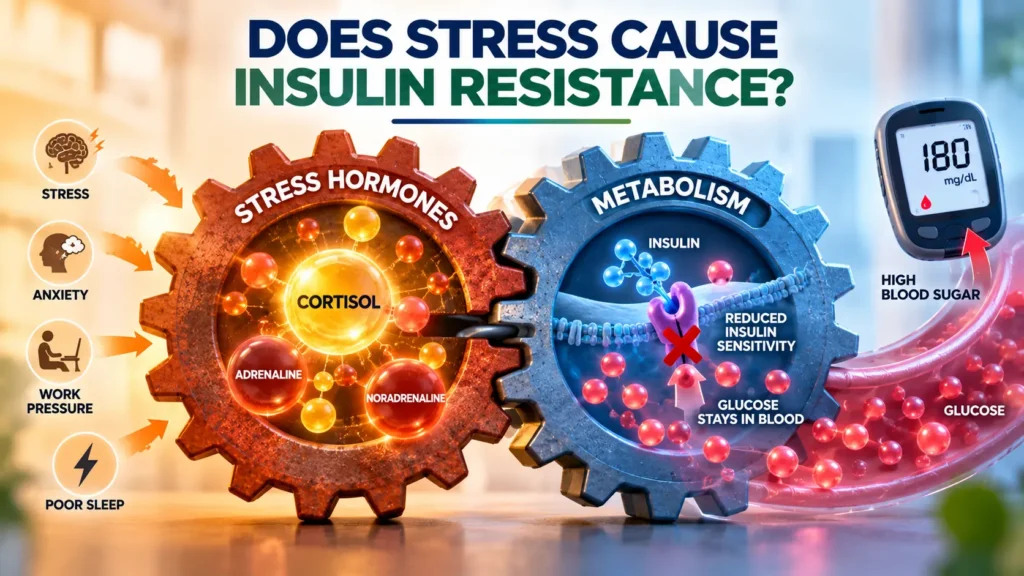
Does Stress Cause Insulin Resistance?: Stress and insulin resistance can be connected, but stress alone should not be considered the sole cause of insulin resistance.
Insulin resistance develops through multiple factors, including excess body fat, genetics, physical inactivity, diet, sleep, age, and other metabolic influences.
Chronic stress may contribute to the problem through hormonal changes and lifestyle effects.
What Happens During Stress?
When the body experiences stress, hormones such as cortisol and adrenaline are released.
These hormones help provide energy during stressful situations. One way they do this is by increasing the availability of glucose in the bloodstream.
This is useful during short-term stress. Persistent stress may create a different metabolic environment.
Stress and Insulin Sensitivity
Long-term stress has been associated with changes in glucose metabolism and insulin sensitivity.
However, the relationship is complex. Stress can also affect sleep, appetite, physical activity, and food choices, which may indirectly influence insulin resistance.
Stress Eating and Weight Gain
Some people respond to stress by eating more frequently or choosing foods high in sugar and calories.
If this pattern continues, it can contribute to weight gain and increased abdominal fat. Excess visceral fat is itself associated with insulin resistance.
Poor Sleep Can Add to the Problem
Stress can make it difficult to fall asleep or stay asleep.
Poor sleep may affect insulin sensitivity, appetite, and glucose regulation, creating another pathway through which chronic stress can influence metabolic health.
Ways to Reduce Stress
Practical strategies may include:
- Regular walking
- Strength or aerobic exercise
- Deep breathing
- Meditation
- Yoga
- Consistent sleep
- Time with family or friends
- Professional counseling when appropriate
There is no need to eliminate every stressful situation. The goal is to develop healthier ways to respond to ongoing stress.
At Dr. Rajender’s Lifestyle Clinic, Banjara Hills, Hyderabad, stress management can be incorporated into a broader lifestyle plan that also addresses nutrition, exercise, weight, sleep, and blood sugar control.
FAQs
1. Can stress directly cause insulin resistance?
Chronic stress may contribute to reduced insulin sensitivity, but insulin resistance usually has multiple contributing factors.
2. Does cortisol increase blood sugar?
Cortisol helps the body respond to stress and can increase blood glucose availability.
3. Can reducing stress improve insulin sensitivity?
Reducing chronic stress may support healthier metabolic function, especially when combined with good sleep, exercise, and nutrition.
4. Can stress cause Type 2 diabetes?
Stress alone does not necessarily cause diabetes, but chronic stress may contribute to several risk factors.
5. Is exercise good for stress and insulin resistance?
Regular physical activity can support stress management and improve insulin sensitivity.
Read Also:

One Response