Type 2 diabetes often develops silently over several years before it is formally diagnosed. By the time
most people notice obvious symptoms, insulin resistance may have already been present for a long
time. Recognizing the early warning signs can make a significant difference in how easily the condition
can be reversed.
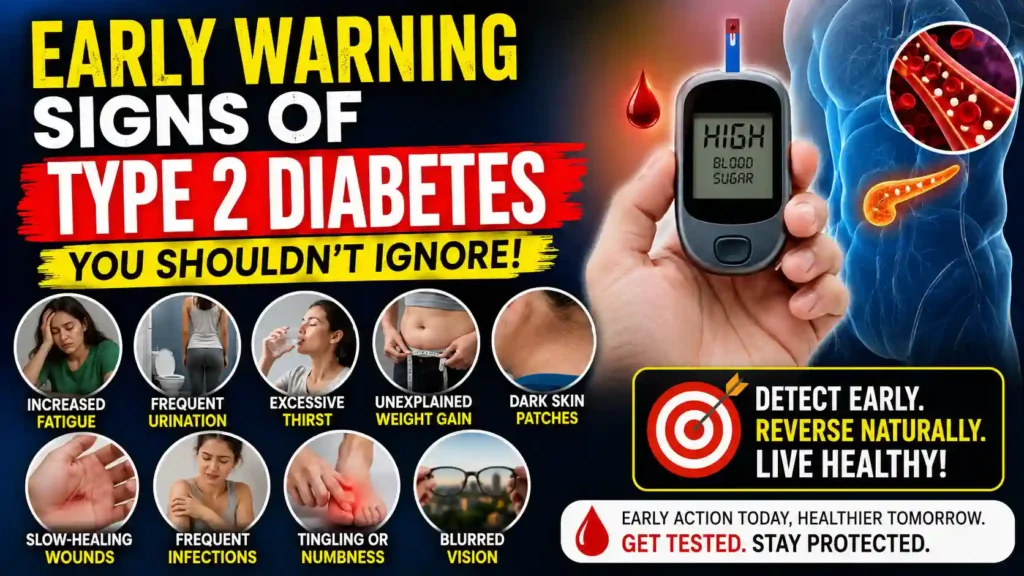
One of the earliest signs is increased fatigue, especially after meals. When cells become resistant to
insulin, glucose struggles to enter them for energy production, leaving a person feeling unusually tired
even after adequate rest. Frequent urination and excessive thirst are also classic indicators, as the body
tries to flush out excess sugar through urine.
Unexplained weight changes, particularly stubborn fat around the abdomen despite a normal diet, often
signal underlying insulin resistance. Many people also notice slow-healing cuts or wounds, frequent skin
infections, or unusual tingling and numbness in the hands and feet, which can indicate early nerve
involvement.
Blurred vision is another symptom that is frequently mistaken for simple eye strain, when in reality,
fluctuating blood sugar levels can affect the lens of the eye. Darkened patches of skin, especially around
the neck or armpits, known as acanthosis nigricans, are a strong visual indicator of insulin resistance
and are often seen well before a formal diabetes diagnosis.
Unfortunately, many of these symptoms are subtle and easy to dismiss as normal aging or stress. This is
why routine blood sugar and HbA1c testing, especially for individuals with a family history of diabetes,
obesity, or a sedentary lifestyle, is so important. Early detection at the prediabetic stage offers the best
opportunity for full reversal through lifestyle intervention, before the condition progresses to a stage
requiring lifelong medication.