
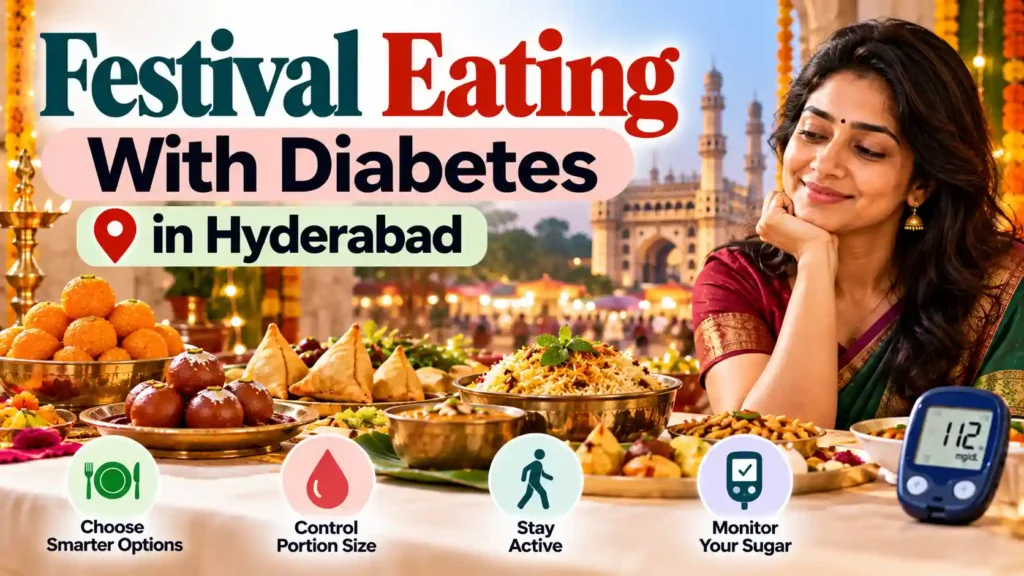
Festival Eating With Diabetes in Hyderabad: Festivals bring family, food, and joy, and in Hyderabad the food is a big part of the celebration. From haleem and sheer khurma during Ramzan to Ugadi pachadi, Sankranti sweets, and Diwali mithai, the
calendar is full of rich dishes. For people with diabetes, this can feel stressful. With some planning, you
can celebrate fully without losing control of your blood sugar.
Principles for Festive Meals
- Do not skip meals to save room for the feast, since that leads to overeating and sugar spikes.
- Eat a small, balanced meal or snack beforehand, with protein and vegetables.
- Take a small plate and fill it with salad and protein first.
- Take small portions of sweets and rich dishes, and eat slowly.
- Walk for fifteen minutes after the meal.
- Drink water instead of sweetened beverages.
- Keep taking your medicines on time.
Ramzan: Haleem, Dates and Sheer Khurma
Haleem combines wheat, lentils, and meat, so it is rich in carbohydrates, protein, and fat. Enjoy a small
bowl rather than a large helping, with salad and without extra ghee. Break the fast with water and one or
two dates rather than several, and keep sheer khurma, phirni, and fruit-based drinks small. Discuss
medicine timing with your doctor well before Ramzan if you plan to fast.
Ugadi, Sankranti and Dasara
Ugadi pachadi uses a small amount of jaggery, and a spoonful is fine. Sankranti sweets such as
sakinalu, ariselu, and sweet pongal are rich in sugar, flour, and ghee, so choose one small piece,
preferably after a balanced meal. During Dasara and Bathukamma, avoid large amounts of prasadam
sweets and carry healthy snacks.
Diwali and Gifting
Diwali brings boxes of sweets and dry fruits. Share sweets with neighbours and family instead of
keeping all of them at home. Choose roasted nuts or fresh fruit as gifts. Be careful with sugar-free
sweets, which may still contain flour, ghee, and dry fruit pastes that raise sugar.
Smart Swaps
- Roasted makhana or chana instead of fried namkeen.
- Fresh fruit or nuts instead of sugar-syrup sweets.
- Buttermilk or lemon water instead of cold drinks.
- Grilled or tandoori items instead of heavily fried starters.
- Raita and salad with biryani, with less rice.
Monitoring During Festivals
Check your sugar more often, especially after large meals. If it is higher than usual, avoid doubling
medicines and call your doctor if it stays high. Carry glucose if you take insulin or sulfonylureas.
Travel and Visits
Family visits mean being offered food repeatedly. It is fine to say you have had enough. Carry your
medicines and a healthy snack, and follow your usual timings when possible.
Return to Routine
One feast does not undo your progress. Return to your normal plan at the next meal, avoid guilt, and
increase activity for a day or two. Review your readings at your next follow-up.
Care at Dr. Rajender’s Lifestyle Clinic
The clinic offers personalised nutrition and continuous medical guidance as part of structured,
evidence-based care for Type 2 diabetes, thyroid disorders, hypertension, PCOS, obesity, and
metabolic conditions, so that you can enjoy every festival with confidence.
Book a Consultation
Visit https://www.drrajenderslifestyleclinic.com/ to learn more and book a consultation.
Frequently Asked Questions
Can I eat haleem if I have diabetes?
In a small portion, with salad and without added ghee, and monitor your sugar afterwards.
Are sugar-free sweets safe?
Not always. They may contain flour, ghee, and dry fruits that raise sugar and calories. Eat them in small
amounts.
How many dates can I eat to break a fast?
One or two dates are usually enough, followed by a balanced meal. Your doctor can advise your limit.
What if my sugar goes high after a feast?
Drink water, take a walk, and return to your routine. Contact your doctor if it stays high or you feel
unwell.
Read Also:

One Response