

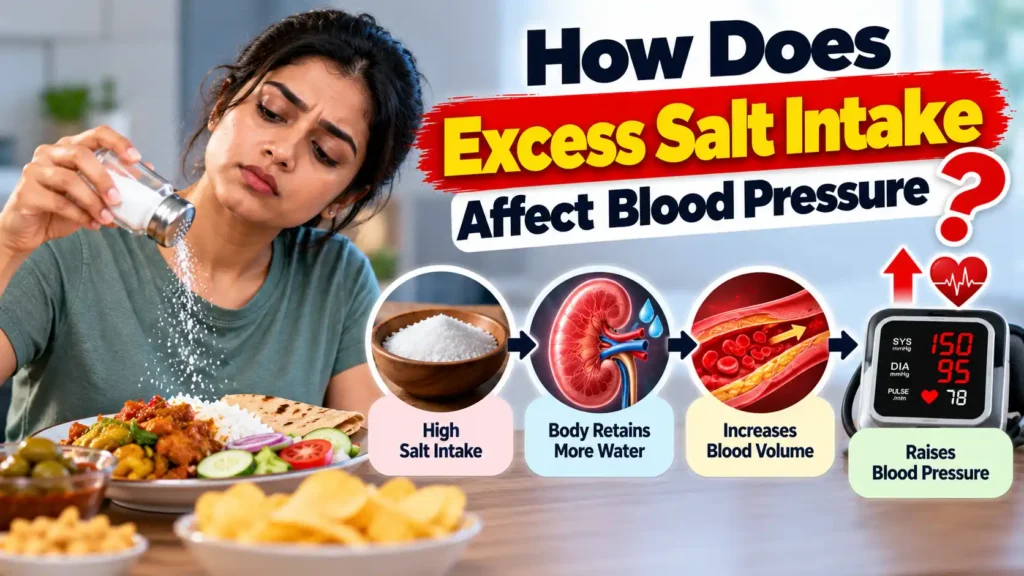
How Does Excess Salt Intake Affect Blood Pressure: Salt is a common ingredient in everyday cooking, from homemade curries and pickles to packaged snacks and restaurant meals. Although the body needs some sodium to maintain fluid balance, nerve function, and muscle activity, regularly consuming too much sodium can contribute to high blood pressure.
Salt contains sodium and chloride. Sodium influences how the body manages fluid and can affect the pressure inside blood vessels. Some people are more sensitive to sodium than others, meaning their blood pressure rises more noticeably when they consume excess salt.
Reducing excessive sodium intake is an important lifestyle step for people who want to support healthy blood pressure and cardiovascular health.
At Dr. Rajender’s Lifestyle Clinic, Banjara Hills, Hyderabad, balanced nutrition and sustainable lifestyle changes can be part of an individualised approach to blood pressure management.
How Does Salt Increase Blood Pressure?
1. It affects fluid balance
When sodium intake is high, the body may retain more water to maintain the right concentration of sodium in the blood. In susceptible people, this additional fluid can increase the volume of blood circulating through the body, contributing to higher blood pressure.
The kidneys help regulate sodium and fluid balance. If this regulation is impaired, the effect of excess sodium may be more pronounced.
2. It may affect blood vessel function
High sodium intake can also influence how blood vessels function. In some people, it may contribute to changes in blood vessel flexibility and the mechanisms that regulate blood pressure.
The response varies depending on age, genetics, kidney function, and other health factors.
3. It can increase cardiovascular risk over time
When excess salt intake contributes to persistently elevated blood pressure, it can increase the risk of heart disease, stroke, and kidney problems.
Reducing excess sodium can help lower blood pressure in many people, although the degree of improvement differs from person to person.
How Much Salt Is Too Much?
The World Health Organization recommends that adults consume less than 2,000 mg of sodium per day, equivalent to less than 5 grams of salt per day from all sources.
This includes salt added during cooking, salt added at the table, and sodium already present in packaged or prepared foods.
People may consume more salt than they realise because sodium is often hidden in foods that are not obviously salty. The goal is not to eliminate sodium completely, but to avoid excessive intake.
Common High-Sodium Foods to Watch
Packaged snacks
Chips, salted biscuits, savoury mixtures, crackers, and instant snacks can contribute substantial sodium, particularly when eaten frequently.
Pickles, papads, and salty accompaniments
These are common in many Indian meals. You may still enjoy them, but consider smaller portions and avoid combining several high-salt accompaniments at every meal.
Instant and packaged meals
Instant noodles, ready-made soups, packaged sauces, and convenience meals can contain high amounts of sodium.
Restaurant and takeaway food
Restaurant dishes may contain substantial salt, even when they do not taste particularly salty. Ask for less salt when possible and choose fresh preparations more often.
Processed foods
Processed meats, salty cheeses, and certain packaged foods can add to daily sodium intake. Reading nutrition labels helps you compare products.
Practical Ways to Reduce Salt in an Indian Diet
You do not need to make food bland to reduce excess sodium. Small adjustments can preserve flavour while lowering salt intake.
- Gradually reduce the amount of salt added during cooking.
- Use lemon, coriander, ginger, garlic, cumin, pepper, and other spices for flavour.
- Choose fresh or minimally processed foods more often.
- Reduce the frequency and portion size of high-salt snacks and pickles.
- Compare sodium values on packaged food labels.
- Taste food before adding extra salt at the table.
- Choose home-prepared meals when practical.
Be cautious with salt substitutes containing potassium chloride. They may be unsuitable for people with kidney disease or those taking certain medicines that increase potassium levels. Ask your healthcare professional before using them if you have relevant health conditions.
Does Reducing Salt Lower Blood Pressure?
For many people, reducing excessive sodium intake can lower blood pressure. The benefit may be greater for people who are salt-sensitive or already have hypertension.
However, blood pressure is influenced by multiple factors, including genetics, age, body weight, physical activity, alcohol intake, sleep, kidney function, and medications.
A lower-sodium diet should therefore be combined with other suitable lifestyle measures and medical treatment when prescribed.
Frequently Asked Questions
1. Can eating too much salt cause high blood pressure?
Yes. Excess sodium can increase blood pressure, particularly in people who are salt-sensitive. Not everyone responds to sodium in the same way.
2. Is rock salt or pink salt better for high blood pressure?
Rock salt, pink salt, and regular table salt all contain sodium. Switching salt types does not automatically reduce sodium intake. The amount used matters.
3. Should people with high blood pressure stop eating salt completely?
No. Sodium is an essential nutrient, but excessive intake should be avoided. Follow individual medical advice about sodium restriction.
4. How can I identify hidden sodium in food?
Check nutrition labels for sodium per serving and compare products. Remember that sauces, seasonings, packaged foods, and restaurant meals can all contribute sodium.
5. Can reducing salt replace blood pressure medication?
Not necessarily. Lowering sodium may help improve blood pressure, but some people still need medication. Never stop or change prescribed treatment without medical advice.
Conclusion
Excess salt intake can contribute to high blood pressure by affecting fluid balance and blood vessel function. Choosing fresh foods, reducing high-sodium packaged products, and adjusting cooking habits can help support healthier blood pressure levels.
If you have high blood pressure or want to improve your cardiovascular health through practical lifestyle changes, consult Dr. Rajender’s Lifestyle Clinic in Banjara Hills, Hyderabad for personalised nutrition and blood pressure management guidance.
Read Also:


One Response