
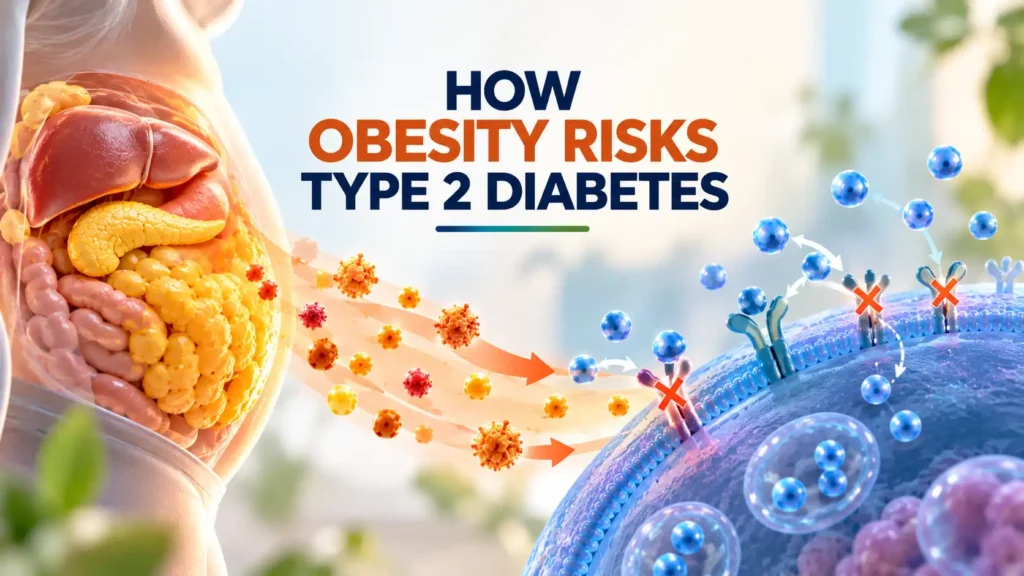
How Obesity Increases the Risk of Type 2 Diabetes: Obesity is an important risk factor for Type 2 diabetes. Excess body fat, particularly visceral fat around internal organs, can contribute to insulin resistance and metabolic dysfunction.
However, obesity does not mean that a person will definitely develop diabetes. Genetics, age, family history, physical activity, diet, sleep, and other factors also influence risk.
What Is Insulin Resistance?
Insulin helps glucose move from the bloodstream into cells. When cells become less responsive to insulin, the pancreas may produce more insulin to compensate.
Over time, the body may struggle to maintain normal blood glucose levels.
Why Does Excess Fat Matter?
Fat tissue is not simply an energy-storage system. It also produces biologically active substances that can influence inflammation and metabolism.
Excess visceral fat is particularly associated with insulin resistance and other metabolic abnormalities.
Belly Fat and Diabetes Risk
A larger waist circumference can be associated with increased metabolic risk.
This is one reason healthcare professionals may assess waist circumference, weight, blood pressure, blood glucose, and lipid levels when evaluating diabetes risk.
Weight Loss Can Help Reduce Risk
For people with excess weight, even moderate weight loss may improve insulin sensitivity and metabolic health.
Healthy weight management can include:
- Balanced nutrition
- Appropriate portion sizes
- More vegetables and fiber
- Adequate protein
- Regular physical activity
- Strength training
- Good sleep
- Reduced intake of sugary drinks and highly processed foods
Prevention Is About More Than Weight
Not everyone who develops Type 2 diabetes is obese, and not everyone with obesity develops diabetes.
Therefore, diabetes prevention should not focus on body weight alone. Blood glucose monitoring, family history, blood pressure, cholesterol, physical activity, and overall metabolic health also matter.
At Dr. Rajender’s Lifestyle Clinic, Banjara Hills, Hyderabad, individuals at risk of diabetes can receive guidance focused on nutrition, weight management, physical activity, and metabolic health.
FAQs
1. Does obesity always cause Type 2 diabetes?
No. Obesity increases risk but does not guarantee that someone will develop diabetes.
2. Why does belly fat increase diabetes risk?
Excess visceral fat is strongly associated with insulin resistance and metabolic dysfunction.
3. Can losing weight reduce diabetes risk?
For people with excess weight, healthy weight loss can improve metabolic health and may reduce Type 2 diabetes risk.
4. Can thin people develop Type 2 diabetes?
Yes. Diabetes can occur in people who are not overweight because genetics, age, insulin production, lifestyle, and other factors also matter.
5. What is the best way to prevent Type 2 diabetes?
A healthy eating pattern, regular physical activity, healthy weight management, adequate sleep, and appropriate health monitoring can help reduce risk.
Read Also:

One Response