
Tests Explained
Introduction
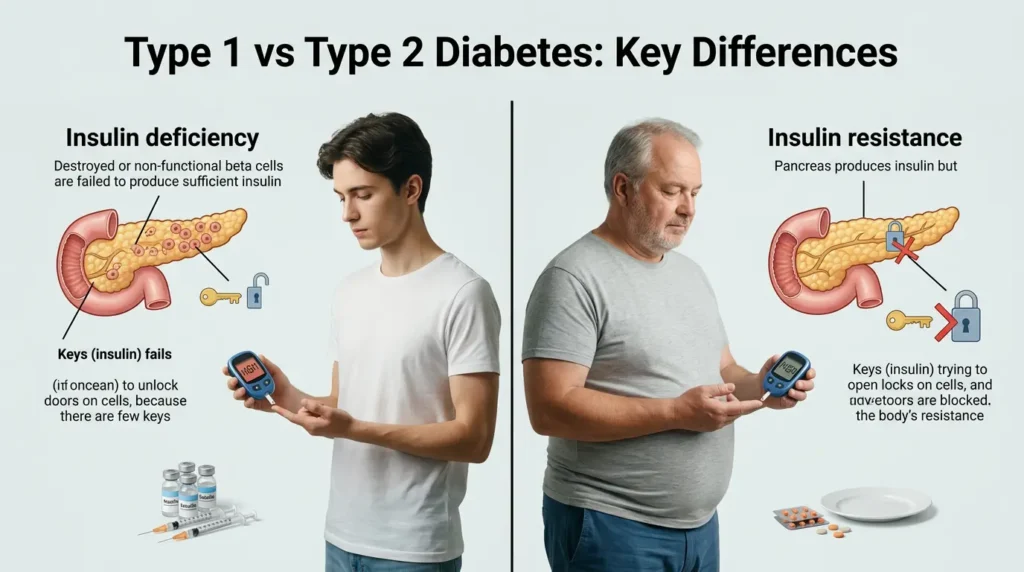
Diabetes is a common condition, but not all diabetes is the same. The two main types—Type 1 and Type 2 diabetes—have different causes, progression, and treatment approaches.
Correctly identifying the type of diabetes is essential because it directly affects management and long-term outcomes.
So, how do doctors differentiate between Type 1 and Type 2 diabetes? Let’s understand the key tests and indicators.
Why Differentiation Matters
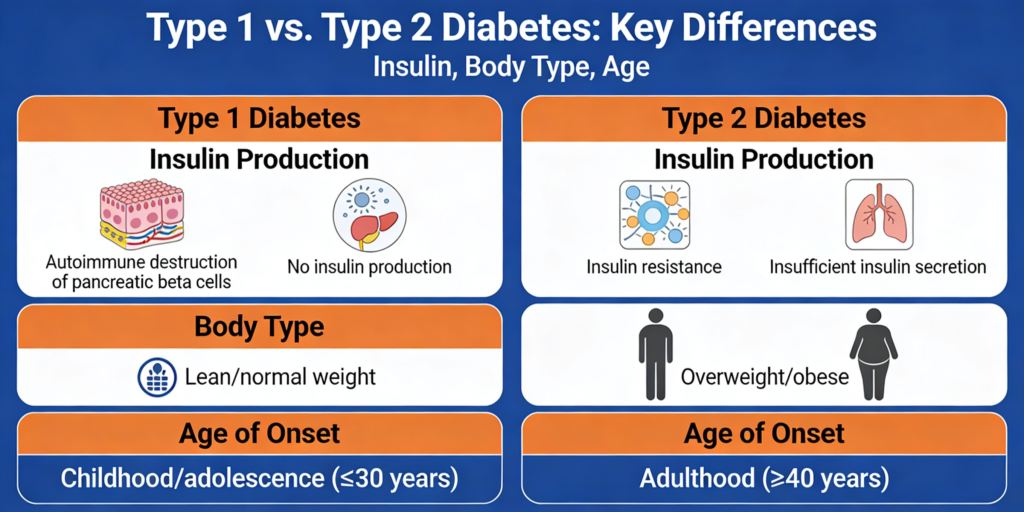
Type 1 diabetes is an autoimmune condition where the body stops producing insulin. Type 2 diabetes, on the other hand, is mainly due to insulin resistance.
👉 Treating them incorrectly can lead to poor blood sugar control and complications.
Key Tests to Differentiate Type 1 and Type 2 Diabetes
1. C-Peptide Test (Most Important)
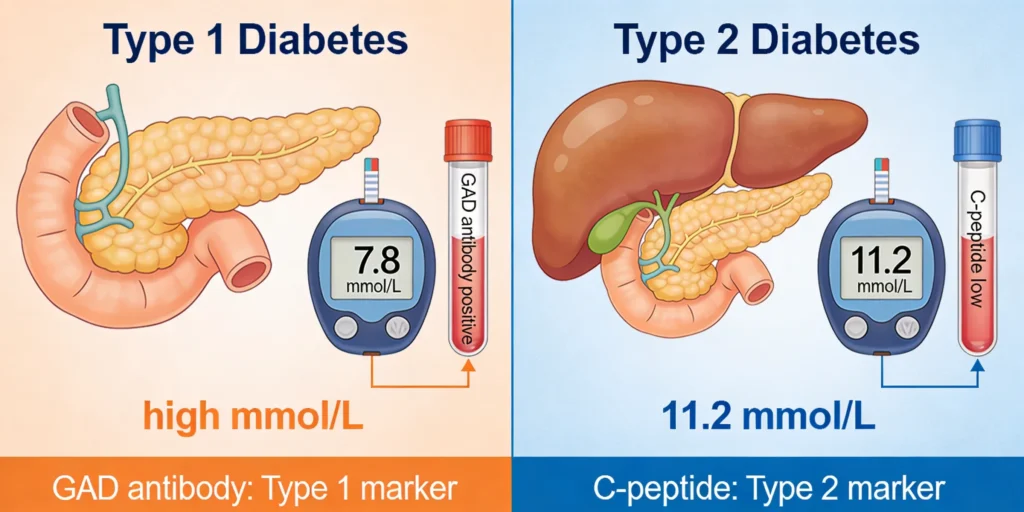
The C-peptide test measures how much insulin your body is producing.
- Low or undetectable levels → Suggest Type 1 diabetes
- Normal or high levels → Suggest Type 2 diabetes
👉 This test is crucial because it directly reflects insulin production.
2. Autoantibody Tests (Confirm Type 1)
These tests detect whether the immune system is attacking insulin-producing cells.
Common antibodies include:
- GAD (Glutamic Acid Decarboxylase)
- ICA (Islet Cell Antibodies)
- IA-2 antibodies
- Positive antibodies → Type 1 diabetes (or LADA)
- Negative antibodies → Likely Type 2 diabetes
👉 These tests help confirm autoimmune diabetes.
3. Fasting Insulin Levels
This test measures insulin levels in the blood.
- Low insulin levels → Type 1 diabetes
- High insulin levels (insulin resistance) → Type 2 diabetes
4. Blood Sugar Tests (Supportive Tests)
Tests like:
- Fasting blood glucose
- HbA1c
👉 These confirm diabetes but do not differentiate the type.
Clinical Differences Between Type 1 and Type 2
| Feature | Type 1 Diabetes | Type 2 Diabetes |
|---|---|---|
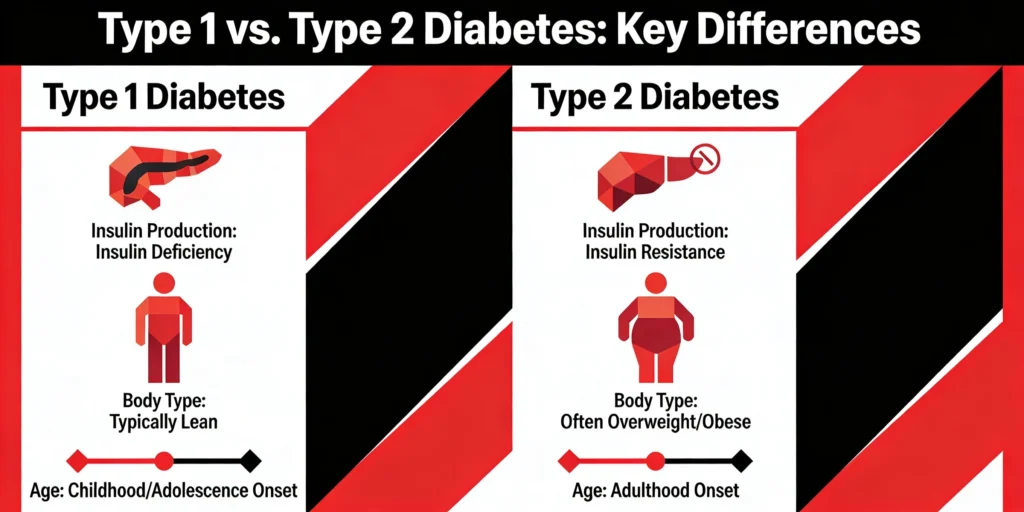
| Cause | Autoimmune | Insulin resistance |
| Age | Usually young | Usually adults |
| Body type | Lean | Overweight/obese |
| Onset | Sudden | Gradual |
| Insulin need | Immediate | May not be needed initially |
👉 These features support diagnosis but are not enough alone.
What About LADA?
Some adults may develop a slow-progressing autoimmune diabetes called LADA.
👉 It may initially appear like Type 2 diabetes but eventually requires insulin like Type 1.
This makes proper testing even more important.
Why Early Diagnosis Is Important
Correct diagnosis helps:
- Choose the right treatment
- Prevent complications
- Improve long-term blood sugar control
👉 Delayed or incorrect diagnosis can worsen health outcomes.
Conclusion
Differentiating between Type 1 and Type 2 diabetes is essential for proper treatment. While symptoms and clinical features provide clues, laboratory tests are the most reliable method.
👉 The most important tests are:
- C-peptide test
- Autoantibody tests
Together, they give a clear understanding of the type of diabetes and guide effective treatment.
🔹 Take the First Step Towards Accurate Diagnosis
If your diabetes is not well controlled or you are unsure about your diagnosis, getting the right tests can make a big difference.
At Dr. Rajender’s Lifestyle Clinic, we help identify the exact type of diabetes and provide personalized guidance for better management.
👉 Book your consultation today
📞 +91 8179630411
FAQs
1. Which test is best to differentiate diabetes type?
C-peptide and autoantibody tests are the most important.
2. Can blood sugar tests identify the type?
No, they only confirm diabetes.
3. What is LADA?
A slow-progressing autoimmune diabetes in adults.
4. Can Type 2 become Type 1?
No, but misdiagnosis can happen.
5. Why is correct diagnosis important?
It ensures proper treatment and better outcomes.