
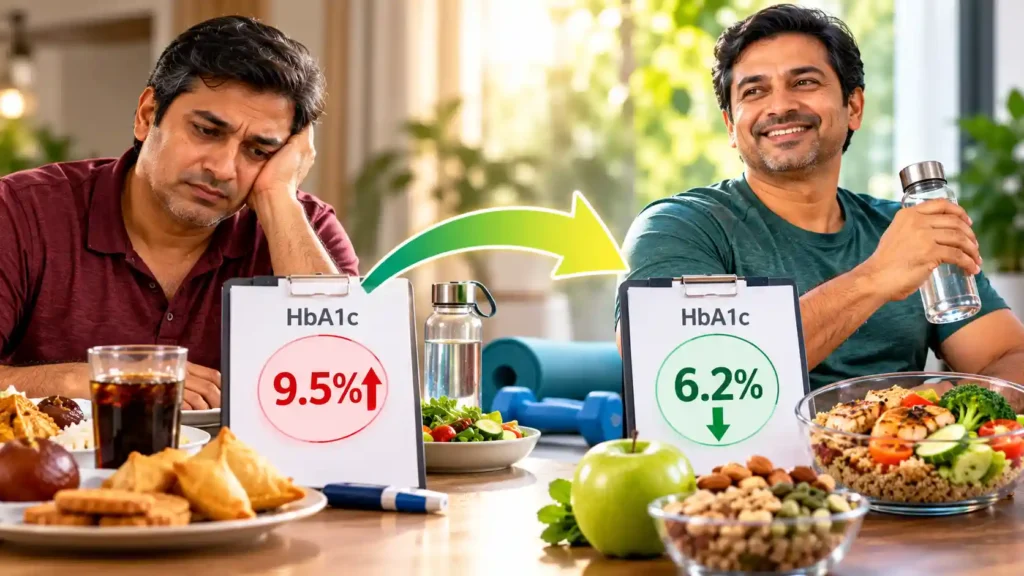
How to Lower HbA1c: An Evidence-Based Plan
HbA1c is the number that matters most in long-term diabetes care, and many people feel anxious when
it stays high. The good news is that HbA1c responds to consistent changes. Because it reflects the
average of about three months, it improves gradually, and a structured plan can bring it down safely.
This guide explains how.
What HbA1c Measures
Glucose sticks to haemoglobin in red blood cells. The more sugar in your blood, the more sticks. Since
red blood cells live for about three months, HbA1c shows your average sugar over that time. It is not
affected by a single meal, but it is influenced by every high reading.
HbA1c and Your Average Sugar
- HbA1c 6 percent corresponds to an average of about 126 mg/dL.
- 6.5 percent corresponds to about 140 mg/dL.
- 7 percent corresponds to about 154 mg/dL.
- 8 percent corresponds to about 183 mg/dL.
- 9 percent corresponds to about 212 mg/dL.
These are estimates, and individual values vary. Your doctor sets a personal target, often around 7
percent, but it may be lower or higher depending on age, health, and risk of low sugar.
Step 1: Find Your Pattern
Before changing everything, find out where your highs occur. Check fasting sugar and sugar two hours
after meals for a week or two, or use a continuous glucose monitor if advised. High fasting readings
suggest overnight or evening issues, while high post-meal readings point to meal composition and
portion. This pattern guides the treatment.
Step 2: Improve Food Quality
- Replace sugary drinks, juices, and sweets with water and unsweetened options.
- Fill half your plate with vegetables, and add a good source of protein.
- Choose whole grains and millets over refined flour and polished rice, and keep portions modest.
- Eat vegetables and protein before starches.
- Keep fried snacks and bakery items occasional.
- Eat at regular times, and avoid late, heavy dinners.
Step 3: Move After Meals
A ten to fifteen minute walk after meals lowers post-meal sugar. Add strength training twice a week to
build muscle and improve insulin sensitivity. Aim for about 150 minutes of moderate activity a week.
Step 4: Weight, Sleep and Stress
Losing five to ten percent of body weight can lower HbA1c noticeably in people with excess weight.
Sleep seven to eight hours, and get snoring checked. Chronic stress raises sugar through hormones, so
build in relaxation, walks, and social time.
Step 5: Take Medicines Correctly
Missed doses and irregular timing are among the most common reasons for a high HbA1c. Use
reminders, pill organisers, and refills to stay consistent. If your HbA1c remains high despite good habits,
your doctor may adjust or add medicines. This is a normal part of Type 2 diabetes care, not a failure.
Step 6: Look for Hidden Causes
Infections, steroids, thyroid problems, untreated sleep apnoea, and other illnesses can raise sugar.
Also, HbA1c can be misleading in people with anaemia, iron or B12 deficiency, kidney disease, or
certain blood disorders. In such cases, your doctor may use other tests such as fructosamine or glucose
monitoring data.
How Quickly Can It Fall?
With consistent changes, many people see a drop of 0.5 to 1 percentage point in three months, and
more when starting from a very high level or when medicines are adjusted. Recheck HbA1c every three
months until stable. Avoid extreme crash diets, which can cause low sugar and muscle loss.
Care at Dr. Rajender’s Lifestyle Clinic
The clinic offers structured, evidence-based care for Type 2 diabetes, with personalised nutrition,
physical activity, lifestyle correction, and continuous medical guidance aimed at bringing HbA1c to a
safe, sustainable target.
Book a Consultation
Visit https://www.drrajenderslifestyleclinic.com/ to learn more and book a consultation.
Frequently Asked Questions
What is a good HbA1c for people with diabetes?
Many adults aim for below 7 percent, but your doctor sets a personal target based on your age, health,
and risk of low sugar.
How often should HbA1c be checked?
Usually every three months until stable, and then every three to six months, as your doctor advises.
Can I lower HbA1c in one month?
Daily readings can improve within weeks, but HbA1c reflects about three months, so the full change
takes longer.
Why is my HbA1c high when my fasting sugar is normal?
Post-meal sugar may be high. A pattern of readings after meals will show this.
Read Also:

One Response