
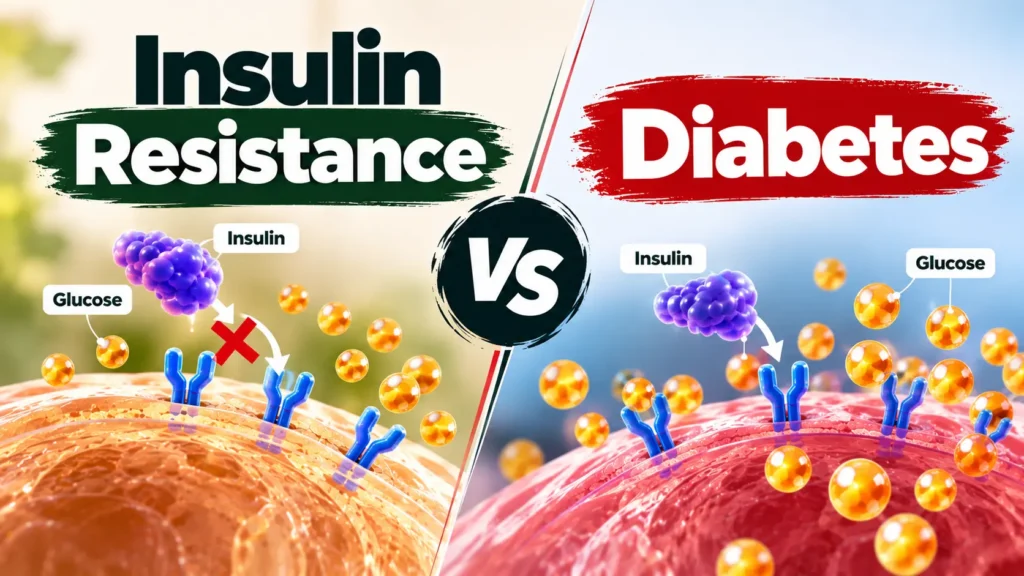
Insulin Resistance vs Diabetes: What’s the Difference?: Insulin resistance and diabetes are closely related but they are not the same condition. Understanding the difference can help people recognize metabolic risk and take appropriate steps toward better health.
What Is Insulin Resistance?
Insulin resistance occurs when the body’s cells do not respond to insulin as effectively as they should.
The pancreas may compensate by producing more insulin. During the early stages, this compensation can help keep blood glucose within a normal range.
A person can therefore have insulin resistance without having diabetes.
What Is Diabetes?
Diabetes is a condition characterized by persistently elevated blood glucose levels. There are different types of diabetes, but type 2 diabetes is commonly associated with insulin resistance.
When the body cannot produce enough insulin to overcome insulin resistance, blood glucose can rise.
How Are They Connected?
Insulin resistance can contribute to the development of prediabetes and type 2 diabetes. However, insulin resistance does not mean that diabetes is inevitable.
Lifestyle factors, genetics, age and other health conditions can influence whether and how quickly metabolic problems progress.
Insulin Resistance vs Prediabetes
Prediabetes means blood glucose is higher than the normal range but not yet in the diabetes range.
Insulin resistance can be one of the underlying processes associated with prediabetes. Some people may have insulin resistance before measurable blood glucose abnormalities develop.
Common Risk Factors
Risk factors for insulin resistance and type 2 diabetes can include:
- Excess body weight
- Abdominal fat
- Physical inactivity
- Family history
- Increasing age
- Unhealthy dietary patterns
- Certain hormonal or metabolic conditions
Having one or more risk factors does not automatically mean that a person has diabetes.
How Can Lifestyle Help?
Regular physical activity can increase muscle glucose use and improve insulin sensitivity. A balanced diet can support healthy blood glucose and body weight.
For people with excess weight, gradual weight loss may also improve metabolic health.
Adequate sleep and stress management can further support healthy lifestyle habits.
Why Testing Matters
Symptoms alone cannot reliably distinguish insulin resistance, prediabetes and diabetes. Healthcare professionals may use blood glucose tests and HbA1c, along with medical history and other assessments, to evaluate metabolic health.
Conclusion
Insulin resistance means that the body’s cells respond less effectively to insulin, while diabetes involves persistently elevated blood glucose. The two conditions are related, but they should not be used interchangeably.
Early attention to lifestyle and regular health assessment can support better metabolic health.
For personalized guidance on insulin resistance, prediabetes, diabetes management and lifestyle-based care, consult Dr. Rajender’s Lifestyle Clinic, Banjara Hills, Hyderabad.
Read Also:

One Response