
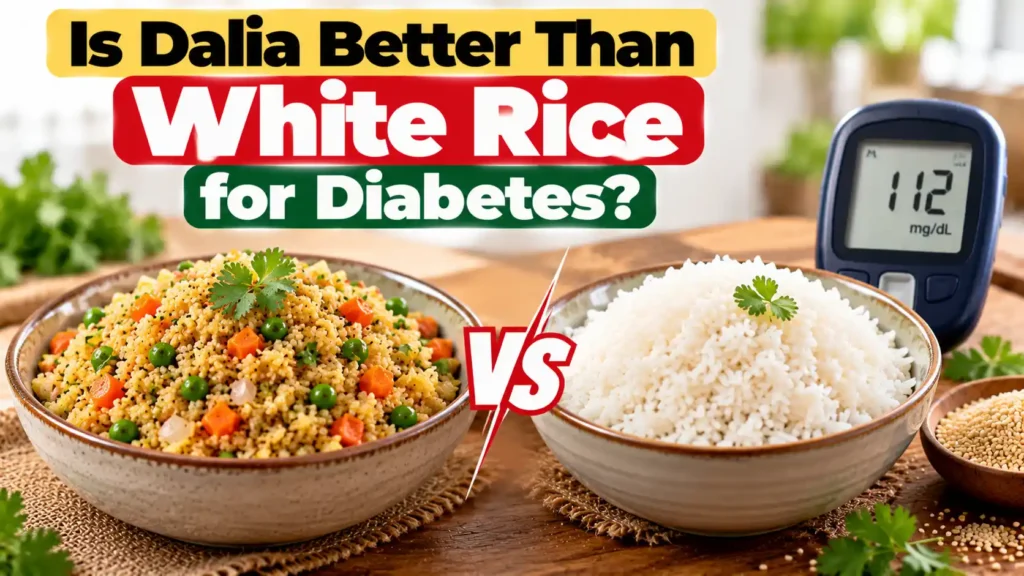
Is Dalia Better Than White Rice for Diabetes: Dalia, also known as broken wheat, is commonly used to prepare porridge, upma, khichdi, and other Indian dishes. White rice is another staple food eaten regularly in many Indian households.
For people managing diabetes, choosing carbohydrate sources can be confusing. Dalia is often recommended as a healthier alternative to white rice, but does it always lead to better blood sugar control?
Dalia may be a useful alternative to white rice for many people because it generally contains more fibre, but portion size and preparation still matter. Both foods contain carbohydrates and can raise blood glucose.
The best choice depends on the type of meal, individual glucose response, nutritional requirements, and personal preferences.
What Is Dalia?
Dalia is commonly made by breaking whole wheat grains into smaller pieces. Depending on how it is processed, it can retain parts of the grain that provide fibre and other nutrients.
Dalia is used in dishes such as:
- Vegetable dalia upma.
- Savoury dalia khichdi.
- Dalia porridge.
- Dalia cooked with lentils and vegetables.
Its nutritional profile varies depending on the product and the ingredients added during cooking.
Because dalia is wheat-based, it is not suitable for people who need to avoid gluten, including those with coeliac disease.
Is Dalia Better Than White Rice for Diabetes?
Dalia can be a useful option because less-refined whole-grain products generally retain more fibre than polished white rice. Fibre can support digestive health and may influence how quickly carbohydrates are digested.
However, both foods contain carbohydrates. Eating a large bowl of dalia can still raise blood glucose, just as a large serving of white rice can.
The comparison also depends on how the foods are prepared. Dalia cooked with vegetables and lentils may offer a different nutritional balance from plain dalia porridge made with sugar. Similarly, rice served with dal, vegetables, and protein may be more balanced than rice eaten alone.
Rather than focusing only on the grain, consider the whole meal.
How Does Fibre Help With Blood Sugar Management?
Fibre is a type of carbohydrate that the body does not fully digest. Certain types of fibre can slow digestion and help moderate the rise in blood glucose after meals.
Fibre-rich foods may also support fullness and bowel health.
Dalia made from whole wheat can provide fibre, although the exact amount varies by processing and preparation. White rice usually contains less fibre because the outer layers of the grain are removed during milling.
Including a variety of vegetables, legumes, and other fibre-rich foods can help improve overall dietary quality.
How to Prepare Dalia for Better Blood Sugar Control
1. Add Vegetables
Prepare dalia with vegetables such as carrots, beans, peas in suitable portions, cauliflower, spinach, or other seasonal vegetables.
This improves the nutritional variety of the meal and adds fibre.
2. Include a Protein Source
Dalia can be cooked with lentils or paired with suitable foods such as plain curd, eggs, tofu, or another protein source.
Protein helps make a meal more balanced, although it does not cancel out the carbohydrates in dalia.
3. Avoid Excess Added Sugar
Sweet dalia porridge prepared with substantial sugar or sweetened condensed milk may contribute more added sugar and carbohydrates.
If you prefer sweet porridge, consider unsweetened preparation and appropriate portions, while accounting for the carbohydrates from grains and any fruit or milk added.
4. Control the Serving Size
Even whole grains can increase blood glucose when eaten in large quantities.
Choose a serving that fits your individual meal plan and consider the total amount of carbohydrate in the meal.
Can People With Diabetes Eat White Rice?
Yes. People with diabetes do not necessarily need to eliminate white rice completely.
Rice can be included in a balanced meal plan, but portion size, cooking method, accompanying foods, and individual glucose response are important.
Practical strategies include:
- Choosing an appropriate rice portion.
- Eating rice with vegetables and a suitable protein source.
- Including dal or other legumes.
- Avoiding meals that consist almost entirely of rice.
- Monitoring glucose according to professional guidance.
Brown rice and other less-refined grains may provide more fibre than white rice, but they still contain carbohydrates.
Does Dalia Have a Low Glycaemic Index?
The glycaemic index (GI) describes how quickly a carbohydrate-containing food raises blood glucose under standard testing conditions. GI values can vary with the variety of grain, processing, cooking, and other factors.
Dalia should not automatically be considered a low-GI food in every preparation. Cooking until very soft, changing the grain structure, and eating a large portion can affect the overall glucose response.
For people with diabetes, total carbohydrate intake, portion size, and meal composition are often more practical considerations than relying on a GI number alone.
Frequently Asked Questions
1. Can people with diabetes eat dalia every day?
Dalia may be included regularly if it fits your nutritional requirements and meal plan. Varying whole grains and other carbohydrate sources can help provide a wider range of nutrients.
2. Is dalia healthier than white rice?
Whole-wheat dalia generally offers more fibre than polished white rice. However, the overall health value of a meal depends on portions, ingredients, and nutritional balance.
3. Does dalia increase blood sugar?
Yes. Dalia contains carbohydrates, so it can raise blood glucose. The amount and speed of the rise depend on portion size, preparation, accompanying foods, and individual metabolism.
4. Is vegetable dalia good for diabetes?
Vegetable dalia can be a balanced meal when prepared with an appropriate portion of broken wheat and a variety of vegetables. Adding lentils or another suitable protein source can improve the nutritional balance.
5. Can I replace rice with dalia completely?
You can choose dalia more often if you enjoy it and it suits your nutritional needs, but completely replacing rice is not necessary for everyone with diabetes. A varied, balanced eating pattern is usually more sustainable.
Conclusion
Dalia may offer a fibre advantage over polished white rice, making it a useful choice for many people managing diabetes. However, it still contains carbohydrates and can raise blood glucose, especially in large portions.
Choose appropriate serving sizes, add vegetables and protein, and consider your individual glucose response. You can also include rice in a balanced meal plan when it suits your needs.
Personalised Nutrition at Dr. Rajender’s Lifestyle Clinic
At Dr. Rajender’s Lifestyle Clinic, Banjara Hills, Hyderabad, diabetes management includes evidence-based medical guidance, personalised nutrition, and sustainable lifestyle changes.
Book a consultation to receive support with choosing grains, balancing Indian meals, and managing blood sugar according to your individual health needs.
Read Also:

One Response