
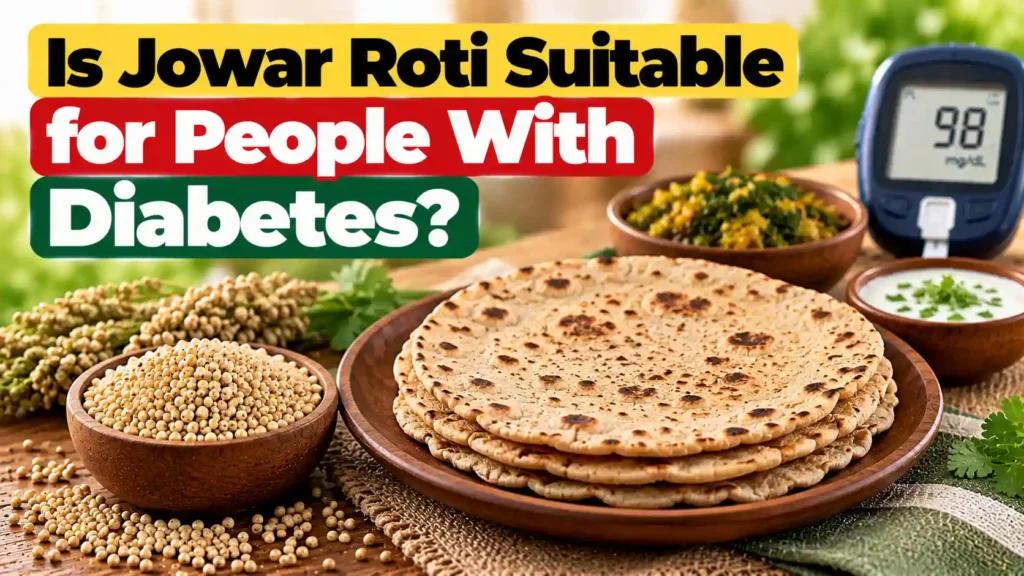
Is Jowar Roti Suitable for People With Diabetes?
Jowar roti is a popular Indian flatbread made from sorghum flour. It is often eaten with vegetable curries, dal, leafy greens, and other traditional dishes.
People with diabetes sometimes switch from wheat roti or rice to jowar roti because millets are considered healthier grains.
Jowar roti can fit into a diabetes-friendly diet, but portion size still matters. Sorghum provides carbohydrates and can raise blood glucose. Its suitability depends on how much you eat, the preparation, and what accompanies it.
No single grain is automatically safe in unlimited quantities.
What Are the Benefits of Jowar?
1. It Provides Fibre
Whole-grain sorghum contains dietary fibre, although the amount in the final roti depends on the flour and preparation. Fibre supports digestive health and contributes to a balanced eating pattern.
2. It Is a Source of Plant-Based Nutrients
Jowar provides carbohydrates, some protein, and minerals. Whole-grain flour retains more of the grain’s components than highly refined flour.
3. It Can Add Variety to the Diet
Rotating grains such as jowar, wheat, oats, and other suitable options can add variety to meals. Dietary variety may help people maintain a balanced eating pattern over time.
Does Jowar Roti Increase Blood Sugar?
Yes. Jowar contains starch, which is broken down into glucose during digestion. The effect depends on the serving size, flour characteristics, cooking method, and foods eaten with the roti.
A small jowar roti served with vegetables and a suitable protein source may fit into a balanced meal. Several large rotis eaten alongside rice or other starchy foods can contribute a substantial amount of carbohydrate.
Jowar should not be considered a treatment for diabetes, and switching to it does not remove the need to monitor overall carbohydrate intake.
How Much Jowar Roti Can People With Diabetes Eat?
There is no universal number of rotis suitable for every person. The correct amount depends on individual energy requirements, glucose targets, medication, activity, and the rest of the meal.
To manage portions:
- Consider the size and thickness of each roti.
- Avoid automatically eating the same number of rotis you would eat if they were much smaller.
- Include vegetables in the meal.
- Add an appropriate protein source, such as dal, curd, paneer, eggs, or another food that suits your dietary needs.
- Consider whether rice, potatoes, or other carbohydrate-rich foods are also being served.
If your clinician has recommended carbohydrate counting or glucose monitoring, use that guidance when adjusting grain portions.
What Is a Balanced Meal With Jowar Roti?
A balanced meal may include a moderate portion of jowar roti, non-starchy vegetables, and an appropriate protein source.
For example, you might have jowar roti with vegetable curry and dal. However, dal also contains carbohydrates, so the amounts of the different foods should be considered together.
Try to limit excessive oil, butter, and rich gravies if you are managing calorie intake or cardiovascular risk.
Is Jowar Roti Better Than Wheat Roti?
Neither grain is universally best for every person with diabetes. Whole-grain jowar and whole-wheat flour can both contribute fibre and nutrients. The amount of carbohydrate consumed, the type of flour, the size of the roti, and the overall meal are important.
Personal preference also matters. A food pattern that is nutritious and practical enough to maintain is often more useful than frequently switching between foods based on health claims.
Frequently Asked Questions
1. Can people with Type 2 diabetes eat jowar roti every day?
Some people can include it regularly, provided the portion fits their overall meal plan. Variety among suitable grains and other foods is also beneficial.
2. Does jowar roti have fewer carbohydrates than wheat roti?
The carbohydrate content varies by flour and serving size. Jowar roti should not automatically be assumed to contain fewer carbohydrates than wheat roti.
3. Is jowar roti better than rice for diabetes?
Jowar roti and rice have different nutritional profiles. Both contain carbohydrates, and the effect depends on the amount eaten and the complete meal.
4. Can jowar roti help reverse diabetes?
No individual food reverses diabetes on its own. Jowar can be included in a broader plan involving nutrition, physical activity, medical treatment, and weight management when appropriate.
5. Can jowar roti be eaten at dinner?
Yes, if it fits your individual dietary requirements. Portion size and meal balance matter more than the time alone.
Conclusion
Jowar roti can be included in many diabetes meal plans. Whole-grain sorghum provides fibre and nutrients, but it still contains carbohydrates. Pay attention to roti size, total carbohydrate intake, and the vegetables and protein served alongside it.
For guidance on choosing between jowar, wheat, rice, and other grains, consult Dr. Rajender’s Lifestyle Clinic, Banjara Hills, Hyderabad. The clinic offers personalised nutrition and lifestyle support for diabetes management.
Read Also:

One Response