
Common Nutritional Deficiencies in Diabetes: Causes, Effects & Management
Introduction
Diabetes is not just a condition of high blood sugar. It also affects how the body absorbs and uses nutrients.
Many people with diabetes develop vitamin and mineral deficiencies, which can worsen their overall health and delay recovery.
These deficiencies often go unnoticed but can lead to serious complications if not addressed early.
Understanding the causes, effects, and management of nutritional deficiencies is essential for better diabetes control and long-term health.
Why Do Nutritional Deficiencies Occur in Diabetes?
People with diabetes are at higher risk of nutrient deficiencies due to several reasons.
These include:
- Poor dietary habits
- Increased loss of nutrients through urine
- Effects of medications
- Chronic inflammation and metabolic changes
Frequent urination, which is common in diabetes, leads to the loss of water-soluble vitamins like B-complex and vitamin C.
Additionally, certain medications can interfere with nutrient absorption.
Most Common Nutritional Deficiencies in Diabetes
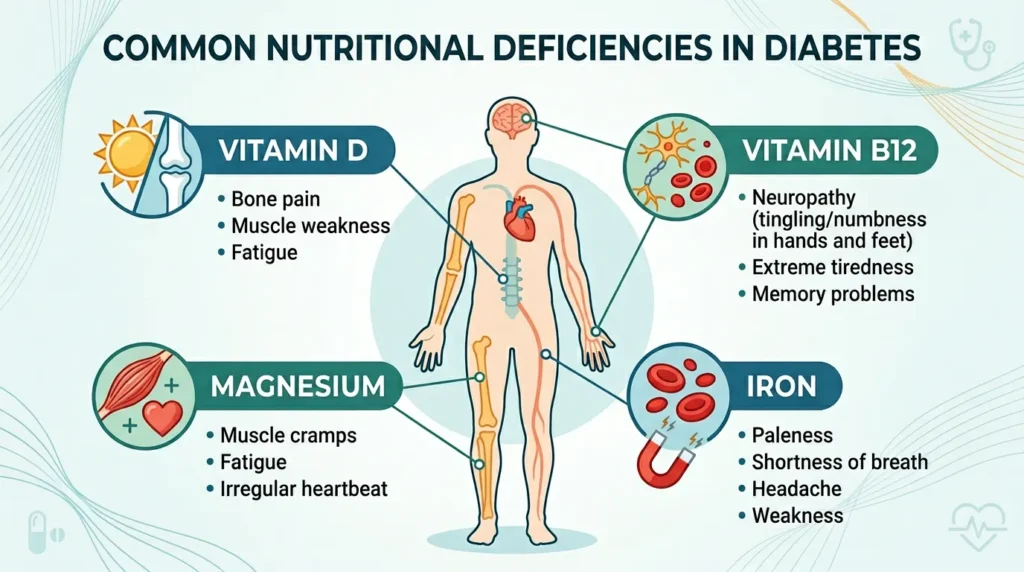
Several key nutrients are commonly deficient in individuals with diabetes.
1. Vitamin D
Vitamin D deficiency is one of the most common, affecting a large number of people with type 2 diabetes.
It plays an important role in:
- Insulin function
- Bone health
- Immunity
Low levels can worsen blood sugar control and increase the risk of complications.
2. Magnesium
Magnesium deficiency is also very common.
It helps in:
- Glucose metabolism
- Insulin sensitivity
- Muscle and nerve function
Low magnesium levels are linked to poor blood sugar control.
3. Vitamin B12
Vitamin B12 deficiency is frequently seen in people taking metformin.
It is important for:
- Nerve health
- Red blood cell formation
- Brain function
Deficiency can lead to fatigue, weakness, and nerve-related issues.
4. B-Complex Vitamins (B1, B2, B6)
These are water-soluble vitamins that are easily lost from the body.
They are essential for:
- Energy production
- Nerve function
- Metabolism
Stress and frequent urination can reduce their levels.
5. Vitamin C and Antioxidants
Vitamin C and other antioxidants like vitamins A and E are often reduced in diabetes.
They help:
- Reduce oxidative stress
- Protect cells
- Support immunity
Low levels can increase inflammation in the body.
6. Iron
Iron deficiency is also common, especially in people with long-term diabetes.
It can lead to:
- Anemia
- Weakness
- Reduced oxygen supply to tissues
Short-Term Effects of Nutritional Deficiencies

Nutrient deficiencies can quickly affect daily health and energy levels.
Common short-term effects include:
- Poor blood sugar control
- Fatigue and low energy
- Nerve pain or tingling
- Weakness
Deficiencies in magnesium, vitamin D, and B vitamins can impair glucose metabolism, making diabetes harder to manage.
Long-Term Effects of Nutritional Deficiencies
If left untreated, these deficiencies can lead to serious complications.
Long-term risks include:
- Increased risk of heart disease and stroke
- Damage to nerves, eyes, and kidneys
- Bone weakness and fractures
- Reduced immunity
- Cognitive decline
Deficiency of vitamin D and magnesium can affect bone health, leading to osteoporosis.
Low levels of vitamin B12 can increase the risk of memory issues and nerve damage.
Impact on Immunity and Healing
Nutritional deficiencies can also affect the body’s ability to heal and fight infections.
Effects include:
- Slower wound healing (due to low vitamin C and zinc)
- Increased risk of infections
- Weak immune response
This is especially important for people with diabetes, as they are already at higher risk of infections.
How to Manage Nutritional Deficiencies

Managing deficiencies requires a combination of diet, monitoring, and medical support.
1. Improve Diet Quality
A balanced diet is the foundation of good health.
Include:
- Green leafy vegetables
- Fruits rich in vitamins
- Nuts and seeds
- Whole grains
- Protein-rich foods
A varied diet helps provide essential nutrients naturally.
2. Include Nutrient-Rich Foods
Each nutrient has specific food sources.
Vitamin D:
- Sunlight exposure
- Eggs
- Fatty fish
- Fortified foods
Magnesium:
- Spinach
- Nuts and seeds
- Legumes
- Whole grains
Vitamin B12:
- Milk and dairy products
- Eggs
- Meat and fish
- Fortified foods
Vitamin C:
- Citrus fruits
- Tomatoes
- Bell peppers
- Green vegetables
Iron:
- Green leafy vegetables
- Meat and eggs
- Fortified foods
3. Supplementation (If Needed)
In many cases, diet alone may not be enough.
Supplements may be required:
- Especially for vitamin D
- In case of B12 deficiency
- For severe deficiencies
👉 Always take supplements under medical guidance.
4. Regular Screening
Early detection is very important.
Regular tests help:
- Identify deficiencies early
- Monitor improvement
- Prevent complications
5. Lifestyle Changes
Simple lifestyle habits can improve nutrient levels:
- Maintain regular meal timings
- Stay physically active
- Get adequate sunlight exposure
- Manage stress
- Stay hydrated
From Supplements to Sustainable Diet
Supplements are usually used initially to correct deficiencies.
Once levels improve, focus should shift to:
- Maintaining a balanced diet
- Long-term healthy eating habits
This ensures sustainable health benefits.
Conclusion
Nutritional deficiencies are common in people with diabetes and can significantly affect overall health.
Ignoring these deficiencies can lead to:
- Poor sugar control
- Increased complications
- Reduced quality of life
The key to managing diabetes effectively is not just controlling blood sugar but also maintaining proper nutrition.
👉 Focus on a balanced diet, regular monitoring, and timely intervention.
Small changes in daily habits can lead to better health outcomes and improved quality of life.
FAQs
1. Why are diabetics prone to nutrient deficiencies?
Due to increased nutrient loss, medications, and poor dietary habits.
2. Which deficiency is most common in diabetes?
Vitamin D, magnesium, and vitamin B12 are the most common.
3. Can diet alone correct deficiencies?
Mild deficiencies can be corrected through diet, but severe cases may need supplements.
4. How often should nutrient levels be checked?
Regular screening as advised by a healthcare professional is recommended.
5. Do deficiencies affect blood sugar control?
Yes, deficiencies can worsen glucose metabolism and make diabetes harder to manage.