
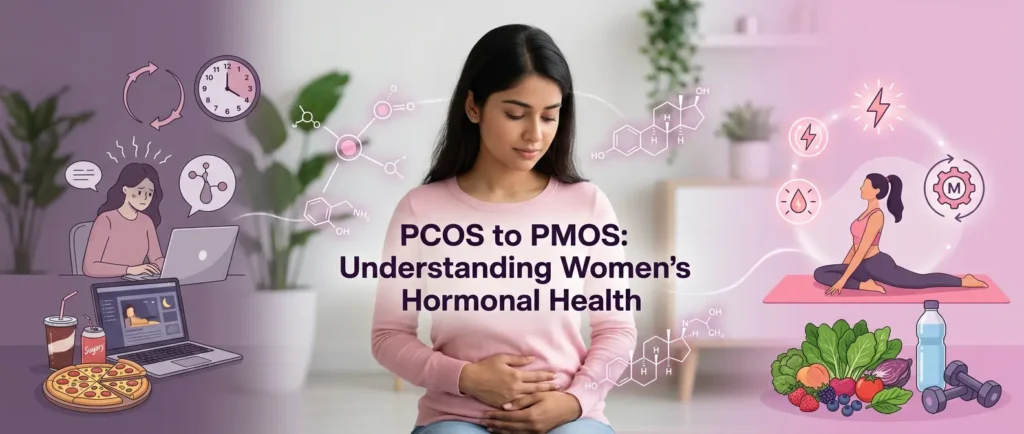
PCOS to PMOS: Understanding the Growing Hormonal Health Problem in Women
Introduction
Hormonal health problems among women are increasing rapidly, especially due to modern lifestyle changes. One of the most common conditions affecting young women today is PCOS (Polycystic Ovary Syndrome).
However, many experts now believe that the problem goes beyond just the ovaries. Due to metabolic dysfunction, insulin resistance, obesity, stress, and lifestyle imbalance, PCOS is increasingly being viewed as a broader metabolic condition, sometimes referred to as PMOS (Polymetabolic Ovary Syndrome).
This highlights that the condition is not only about irregular periods or fertility issues—it also affects overall metabolic health.

What is PCOS?
PCOS is a hormonal disorder that affects women of reproductive age.
Common features include:
- Irregular periods
- Weight gain
- Acne
- Hair fall
- Excess facial hair
- Difficulty conceiving
In PCOS, hormone imbalance affects ovulation and leads to multiple small cysts in the ovaries.
Why PCOS is Becoming PMOS
Earlier, PCOS was mainly considered a reproductive disorder. But today, many women with PCOS also experience:
- Insulin resistance
- Obesity
- Fatty liver
- High cholesterol
- Prediabetes
- Stress and sleep problems
This shows that the condition affects the entire metabolism, not just the ovaries.
That is why the term PMOS (Polymetabolic Ovary Syndrome) is becoming more relevant.
Main Causes Behind PCOS and PMOS
1. Insulin Resistance
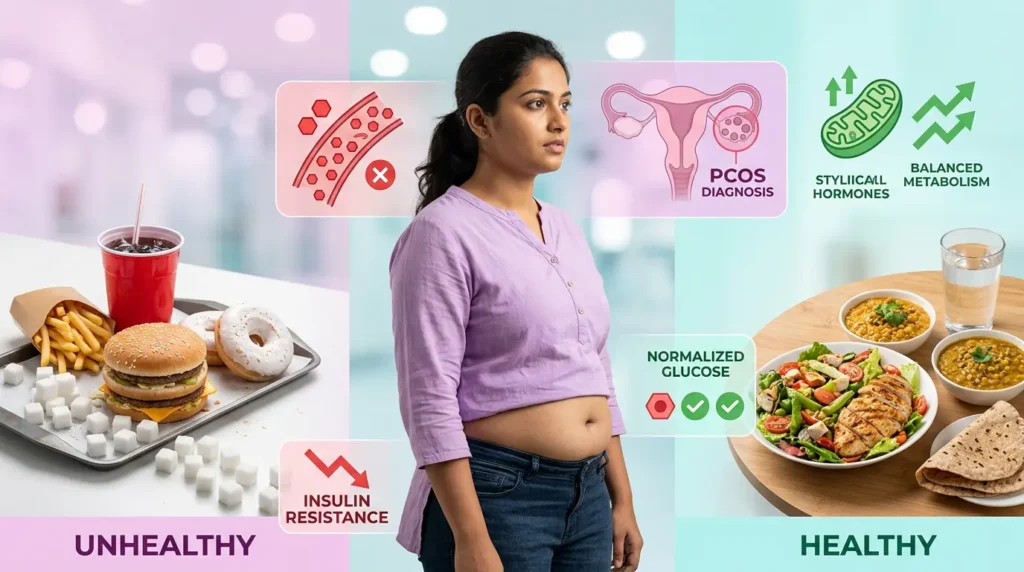
Insulin resistance is one of the biggest causes.
When the body stops responding properly to insulin:
- Blood sugar increases
- Fat storage increases
- Hormonal imbalance worsens
This directly affects ovulation and weight management.
2. Unhealthy Food Habits
Frequent intake of:
- Junk food
- Sugary drinks
- Refined carbohydrates
- Processed foods
can worsen inflammation and hormonal imbalance.
3. Stress and Poor Sleep
Modern stress levels significantly affect hormones.
Poor sleep and high cortisol levels can:
- Increase cravings
- Worsen insulin resistance
- Affect menstrual cycles
4. Sedentary Lifestyle
Lack of physical activity slows metabolism and promotes weight gain, especially abdominal fat.
This further worsens hormonal imbalance.
Common Symptoms of PCOS and PMOS
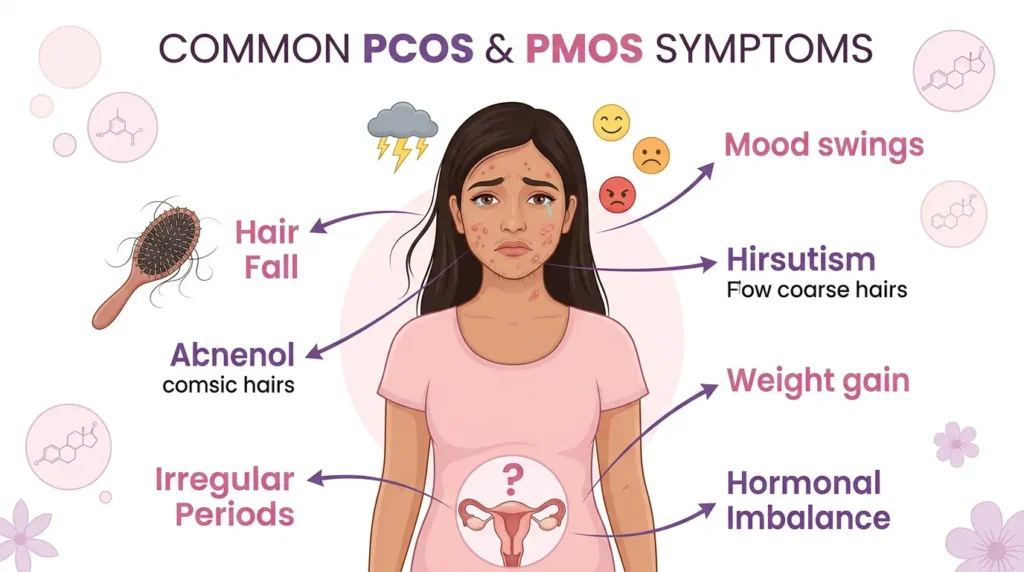
Symptoms may vary from person to person.
Common signs include:
- Irregular or missed periods
- Weight gain, especially around the abdomen
- Acne and oily skin
- Hair thinning or hair fall
- Excess facial or body hair
- Fatigue
- Mood swings
- Difficulty losing weight
Many women may also experience anxiety and low confidence due to these symptoms.
Why Early Management Is Important
Ignoring PCOS can increase the risk of:
- Type 2 diabetes
- Obesity
- Fatty liver
- Infertility
- High cholesterol
- Heart disease
Early intervention can help prevent long-term complications.
Can PCOS Be Reversed Naturally?

In many cases, symptoms can improve significantly with lifestyle changes.
The goal is not just symptom control but improving metabolic health.
Best Lifestyle Changes for PCOS
1. Focus on Balanced Nutrition
- Reduce sugar and refined carbs
- Increase protein and fibre intake
- Include healthy fats, seeds, and vegetables
2. Exercise Regularly
- Walking
- Strength training
- Yoga
- Cycling
Regular activity improves insulin sensitivity and hormone balance.
3. Improve Sleep
Aim for 7–8 hours of quality sleep daily.
4. Manage Stress
Meditation, yoga, and breathing exercises help regulate stress hormones.
5. Maintain Healthy Weight
Even 5–10% weight loss can improve:
- Period regularity
- Ovulation
- Insulin resistance
Conclusion
PCOS is no longer just an ovarian disorder. It is deeply connected to metabolism, lifestyle, and overall health, which is why many experts now refer to it as PMOS.
The good news is that early awareness and healthy lifestyle habits can significantly improve symptoms and prevent complications.
👉 The key is simple:
Healthy food, regular movement, better sleep, and stress management.
Small daily changes can create major improvements in hormonal and metabolic health.
FAQs
1. What is the difference between PCOS and PMOS?
PCOS mainly focuses on ovarian symptoms, while PMOS highlights the broader metabolic issues linked to the condition.
2. Can PCOS cause weight gain?
Yes, insulin resistance and hormonal imbalance can increase weight gain.
3. Is PCOS reversible naturally?
Symptoms can improve significantly with proper lifestyle changes.
4. Does stress affect PCOS?
Yes, stress hormones can worsen hormonal imbalance and irregular periods.
5. What is the best exercise for PCOS?
Walking, strength training, yoga, and regular physical activity are highly beneficial.