

What Is Peripheral Arterial Disease?
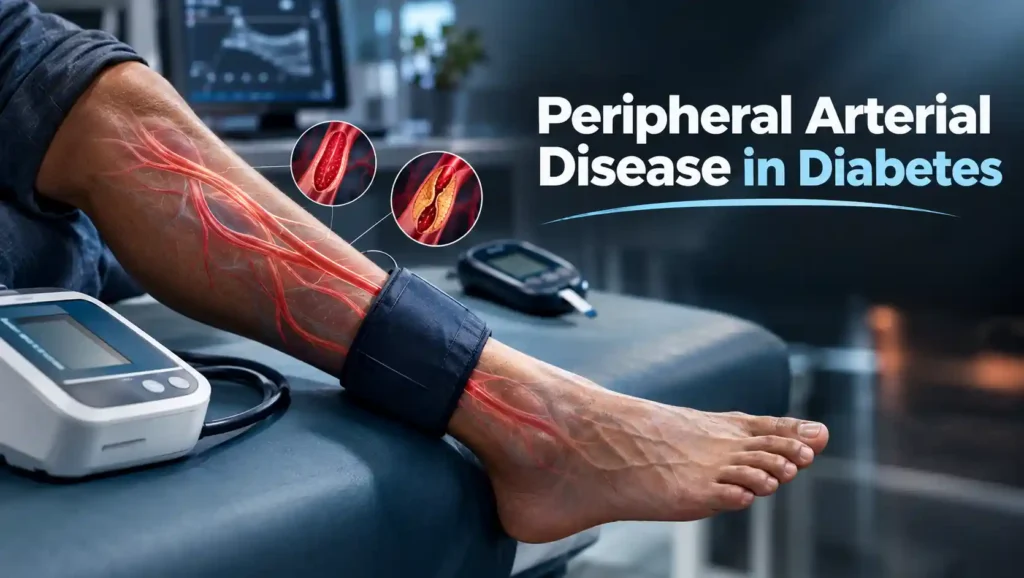
Peripheral Arterial Disease in Diabetes: Peripheral Arterial Disease (PAD) is a condition in which blood vessels supplying the legs become narrowed or blocked.
One of the major causes discussed is the buildup of cholesterol plaque inside the arteries. As the arteries become narrower, blood flow to the muscles of the legs can decrease.
People with diabetes are at increased risk of developing circulation-related problems, particularly when blood sugar and other cardiovascular risk factors are not well controlled.
Why Does Peripheral Arterial Disease Cause Leg Pain?
When blood flow to the leg muscles is reduced, the muscles may not receive enough oxygen during physical activity.
The muscles may then rely more on anaerobic metabolism, which can result in the production of lactic acid and contribute to pain and cramping.
This is why some people may experience:
- Leg pain after walking a certain distance
- Muscle cramps
- Difficulty walking longer distances
- Pain that develops with physical activity
This type of walking-related leg pain should not simply be considered a normal part of getting older.
Who Is at Higher Risk of Peripheral Arterial Disease?
Several factors can increase the risk of PAD in people with diabetes.
These include:
- Poorly controlled blood sugar
- Family history
- Obesity
- Smoking
- High cholesterol
- High blood pressure
Smoking is particularly highlighted as an important risk factor.
What Are the Symptoms of PAD in Diabetic Patients?
Leg pain during walking can be an early warning sign, but other changes may also occur.
Possible signs include:
Leg Pain and Muscle Cramping
Pain or cramping may appear after walking for some distance and may make it difficult to continue walking.
Slow Wound Healing
When blood supply is reduced, wounds on the legs or feet may take longer to heal.
Hair Loss on the Legs
Reduced blood flow may cause hair on the legs to become thinner or fall out.
Reduced Nail Growth
Slower blood circulation may also affect normal nail growth.
Cold Feet
The affected foot or leg may feel colder than the rest of the body because of reduced blood circulation.
Why Is PAD Especially Important in Diabetes?
Peripheral arterial disease is not only a problem affecting the legs.
People with diabetes who develop PAD may also have a higher risk of heart disease and stroke.
Identifying the condition early and managing the underlying risk factors can therefore be important for protecting both leg health and overall cardiovascular health.
How Can Diabetics Reduce the Risk of PAD?
The first step is to control the major risk factors.
Control Blood Sugar
Maintaining blood glucose within the recommended range can help reduce diabetes-related vascular complications.
Manage Blood Pressure and Cholesterol
High blood pressure and high cholesterol can contribute to blood vessel problems. Both should be monitored and managed appropriately.
Stop Smoking
People who smoke should make every effort to stop, as smoking significantly increases vascular risk.
Maintain a Healthy Weight
If you are overweight, gradual weight reduction can support better metabolic and cardiovascular health.
Exercise Regularly
Regular physical activity is an important part of maintaining circulation and cardiovascular health.
Choose Better Carbohydrates
The dietary approach discussed here recommends limiting highly refined carbohydrate foods such as:
- White rice
- Maida-based foods
- Sweets
- Cakes
- Biscuits
Instead, choose more complex carbohydrate sources such as:
- Brown rice
- Millets
The overall goal is to improve food quality while keeping blood sugar and metabolic health under control.
Reduce Excess Dietary Fat
High LDL cholesterol can contribute to cholesterol buildup in blood vessels.
Therefore, reduce excessive intake of:
- Cooking oils
- Deep-fried foods
- Red meat
- Other high-fat foods
Limiting these foods can help support healthier cholesterol management.
How Can HDL Cholesterol Be Supported?
HDL cholesterol, commonly known as good cholesterol, helps transport cholesterol for further processing in the body.
The dietary choices discussed include high-fiber foods such as:
- Millets
- Walnuts
- Almonds
- Apples
- Oats
Regular exercise can also support healthier HDL cholesterol levels.
Can PAD Be Treated With Medication?
Treatment depends on the individual’s condition and the degree of artery blockage.
Some people with diabetes and PAD may be prescribed blood-thinning or antiplatelet medicines to reduce clot-related risk.
Cholesterol-lowering medicines may also be used when necessary to manage elevated cholesterol levels.
These medicines should be taken only under appropriate medical supervision.
Protect Your Legs Before Problems Become Severe
Leg pain while walking should not always be ignored, especially in someone with diabetes.
If you notice repeated cramping, reduced walking ability, slow-healing wounds, hair loss on the legs, slow nail growth or unusually cold feet, medical evaluation may be appropriate.
Early recognition allows the underlying risk factors to be addressed before the condition becomes more severe.
Final Thoughts
Peripheral arterial disease can reduce blood flow to the legs and may cause walking-related pain, muscle cramps, slow wound healing, reduced hair growth, slower nail growth and cold feet.
People with diabetes can reduce their risk by focusing on:
Blood sugar control + blood pressure control + cholesterol management + smoking cessation + healthy weight + regular exercise + better food choices
At Dr. Rajender’s Lifestyle Clinic, diabetes care combines medical guidance with nutrition, physical activity and sustainable lifestyle changes to support long-term metabolic and cardiovascular health.
For personalized guidance on diabetes management, cholesterol control and circulation-related concerns, consult Dr. Rajender Ramagiri, Founder & Lead Physician at Dr. Rajender’s Lifestyle Clinic, Banjara Hills, Hyderabad.
Frequently Asked Questions
1. What is peripheral arterial disease?
Peripheral arterial disease is a condition in which arteries supplying the legs become narrowed or blocked, reducing blood flow to the lower limbs.
2. Why do diabetics get leg pain while walking?
Reduced blood flow to the leg muscles can limit oxygen supply during activity and may cause pain and muscle cramping.
3. What are the warning signs of PAD?
Leg pain while walking, muscle cramps, slow-healing wounds, hair loss on the legs, reduced nail growth and unusually cold feet can be warning signs.
4. Does smoking increase the risk of PAD?
Yes. Smoking is an important risk factor for peripheral arterial disease and other cardiovascular problems.
5. Can high cholesterol cause peripheral arterial disease?
High cholesterol can contribute to plaque buildup in arteries, which may narrow the blood vessels and reduce blood flow.
6. Can exercise help with PAD risk?
Regular exercise can support circulation, physical fitness and cardiovascular health and is an important part of managing diabetes-related risk factors.


One Response