

Introduction
Managing blood sugar is not only about reducing carbohydrates or sugar intake. One of the most effective yet often overlooked nutrients is protein.
Protein plays a key role in stabilizing blood sugar levels, improving satiety, and supporting overall metabolic health. Including the right amount of protein in your daily diet can make a significant difference in diabetes management and prevention.
Why Protein is Important for Blood Sugar Control
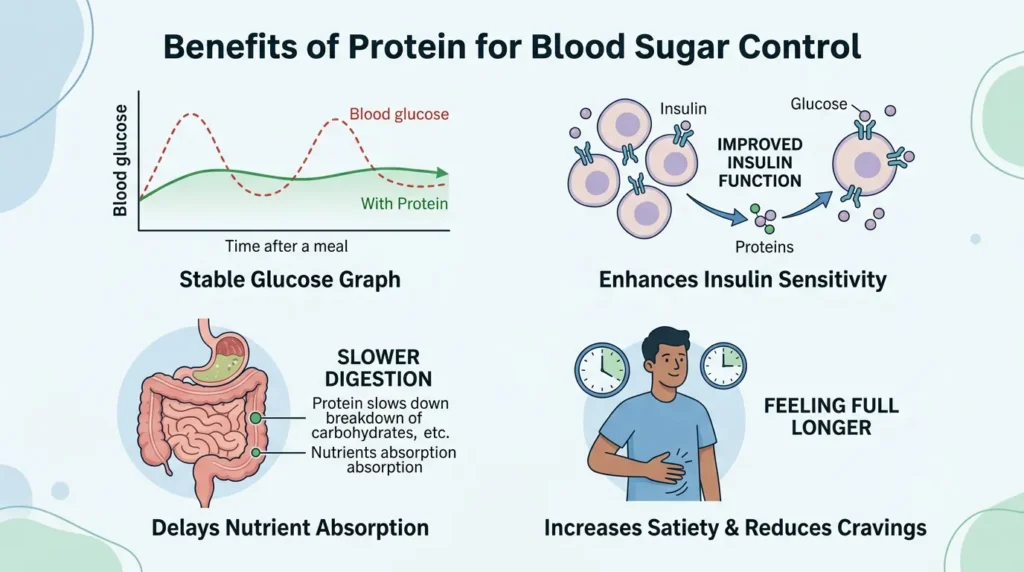
Unlike carbohydrates, protein does not cause rapid spikes in blood sugar.
Key Benefits:
- Slows down glucose absorption
- Prevents sudden sugar spikes
- Keeps you full for longer
- Reduces cravings and overeating
Protein also helps maintain muscle mass, which improves insulin sensitivity and supports better glucose utilization.
Best Protein-Rich Foods for Blood Sugar Control

1. Eggs
Eggs are a complete source of protein and very low in carbohydrates.
- Help control hunger
- Support muscle health
- Stabilize blood sugar
👉 Best consumed boiled or lightly cooked.
2. Lean ChickenSkinless chicken is rich in high-quality protein.
- Low in fat
- Supports weight management
- Helps maintain stable sugar levels
👉 Prefer grilled or boiled preparation.
3. Fish
Fish like salmon, mackerel, and sardines are rich in protein and omega-3 fatty acids.
- Reduce inflammation
- Improve heart health
- Support insulin sensitivity
4. Paneer (Cottage Cheese)
Paneer is a good vegetarian protein option.
- Low in carbohydrates
- Keeps you full
- Supports muscle and bone health
5. Lentils and Legumes
Dal, chickpeas, and beans are excellent plant-based protein sources.
- Rich in fibre
- Slow digestion
- Prevent sugar spikes
6. Nuts and Seeds
Almonds, walnuts, chia seeds, and flaxseeds provide protein and healthy fats.
- Reduce cravings
- Improve satiety
- Support metabolic health
7. Greek Yogurt / Curd
Curd is rich in protein and probiotics.
- Improves gut health
- Supports digestion
- Helps maintain stable blood sugar
How to Include Protein in Your Diet

Simple Tips:
- Add protein to every meal
- Combine protein with carbohydrates
- Start your day with a protein-rich breakfast
- Include snacks like nuts or boiled eggs
👉 Example:
Roti + dal + vegetables = balanced meal
Common Mistakes to Avoid
- Eating only carbohydrates without protein
- Skipping protein in breakfast
- Relying on processed protein foods
- Overeating protein without balance
👉 Balance is the key for better results.
How Much Protein Do You Need?
Protein requirements vary based on age, weight, and activity level.
👉 General guideline:
- Around 0.8–1.2 grams per kg body weight
Consult a healthcare professional for personalized advice.
Conclusion
Protein is an essential part of a diabetes-friendly diet. It helps stabilize blood sugar, reduces cravings, and supports overall health.
By including protein-rich foods like eggs, chicken, legumes, nuts, and dairy in your daily meals, you can improve blood sugar control and maintain better metabolic balance.
👉 Remember:
Balanced nutrition is the key to long-term health.
FAQs
1. Does protein increase blood sugar?
No, protein does not cause rapid blood sugar spikes.
2. What is the best protein for diabetes?
Eggs, fish, chicken, and plant-based proteins like lentils.
3. Can protein help reduce sugar cravings?
Yes, it keeps you full and reduces overeating.
4. Is paneer good for diabetes?
Yes, it is low in carbs and high in protein.
5. Should protein be included in every meal?
Yes, it helps maintain stable blood sugar levels.