
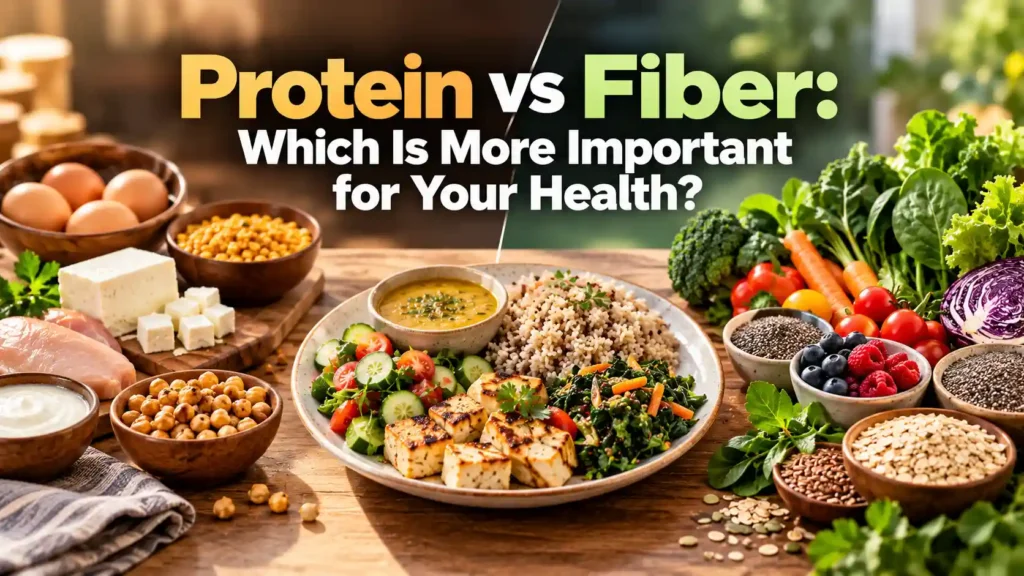
Protein vs Fiber: When planning a healthy diet, people often ask, “Is protein more important than fiber?” The answer is that both have different roles in the body. Instead of choosing one over the other, a balanced diet should include adequate amounts of protein and fiber.
Protein supports muscles, tissue repair, hormones and enzymes, while fiber supports digestion and gut health. Combining both can help create more balanced and satisfying meals.
Why Is Protein Important?
Protein is an essential nutrient required for several functions in the body. It contributes to:
- Muscle growth and maintenance
- Tissue repair
- Hormone production and function
- Enzyme function
- Supporting overall nutritional health
Insufficient protein intake may contribute to muscle loss, weakness and fatigue. Maintaining adequate protein intake is particularly important when trying to preserve muscle while losing weight.
Protein requirements vary from person to person depending on factors such as body weight, age, activity level and health status.
Why Is Fiber Important?
Fiber plays an important role in digestion and overall gut health. It can help support regular bowel movements and nourish beneficial bacteria in the gut.
Regularly including fiber-rich foods in the diet may also support healthy cholesterol levels and improve overall dietary quality.
Good sources of fiber include:
- Vegetables
- Leafy greens
- Beans and legumes
- Whole grains
- Fruits
- Seeds and other plant foods
Why Do You Need Both Protein and Fiber?
Eating only protein-rich foods while neglecting fiber can make it difficult to maintain a balanced diet. A diet heavily focused on foods such as chicken or protein shakes may lack the fiber needed for healthy digestion.
On the other hand, eating only fruits or other carbohydrate-rich foods may not provide enough protein for a balanced meal.
A simple question to ask before eating is:
“Does this meal contain a good source of protein and a good source of fiber?”
This approach can help make everyday meals more balanced.
How to Add Protein and Fiber to Indian Meals
Breakfast
A traditional breakfast such as idli with sambar can provide a combination of nutrients. Urad dal used in idli contributes protein, while vegetables and dal in sambar can add protein and fiber.
Adding vegetables to breakfast can further improve the nutritional balance of the meal.
Lunch
A simple healthy plate can include:
- ½ plate: Vegetables and leafy greens
- ¼ plate: Protein-rich foods
- ¼ plate: Complex carbohydrate sources
Vegetarian protein options can include dal, rajma, chana, paneer and mushrooms.
For carbohydrates, options such as brown rice, quinoa or millets can be included according to individual dietary needs.
Evening Snack
Instead of relying only on packaged snacks, consider options such as:
- Roasted chana
- Boiled chickpeas
- Sprouts
- Sprout salad with vegetables
A sprout salad can provide both protein and fiber, making it a practical snack option.
Dinner
Jowar roti or chapati can be combined with dal, vegetable sabzi, rajma, chickpeas or paneer to create a more balanced meal.
The goal is not to completely avoid carbohydrates but to combine them with protein and fiber.
Protein and Fiber for People With Diabetes
People with diabetes need to pay attention to the overall composition and portion size of meals.
Including protein and fiber along with carbohydrate-containing foods may help create a more balanced meal and can support better post-meal blood sugar management.
For example, instead of eating rice with a protein-only curry, adding vegetables or a fiber-rich side can make the meal more balanced.
When choosing snacks, eating fruit alone may not always be the most balanced option. Fruit can be paired with suitable foods such as plain curd or a small portion of nuts, depending on individual dietary needs.
Protein and Fiber for Weight Management
Both protein and fiber can contribute to feelings of fullness. Meals containing adequate protein and fiber may help you stay satisfied for longer and make it easier to manage overall food intake.
For people trying to lose weight, focusing on balanced meals rather than eating only protein or avoiding carbohydrates completely can support a more sustainable eating pattern.
How Much Protein and Fiber Do You Need?
Protein and fiber requirements are not identical for everyone. They depend on factors such as age, body weight, activity level, medical conditions and dietary pattern.
A commonly used starting point in the provided guidance is around 1 gram of protein per kilogram of body weight, but individual requirements can vary.
Fiber intake should also be adequate, with many adults benefiting from around 25–30 grams or more per day, depending on individual needs.
People with kidney disease or other medical conditions may require personalized dietary recommendations.
Final Takeaway
Protein and fiber are not competing nutrients. Your body needs both.
Protein supports muscles, tissue repair and several essential body functions, while fiber supports digestion, gut health and overall dietary quality.
Build meals around a combination of protein, vegetables, fiber-rich foods and appropriate portions of carbohydrates. This can be especially useful for people managing diabetes, weight or metabolic health.
At Dr. Rajender’s Lifestyle Clinic, personalized nutrition and lifestyle guidance can help you understand how to balance protein, fiber and other nutrients according to your health goals.
Frequently Asked Questions
Is protein better than fiber?
Neither is universally more important. Protein and fiber perform different functions, so a balanced diet should include both.
Can protein and fiber help with weight loss?
Both can contribute to fullness and help create more satisfying meals when included as part of an overall balanced diet.
Are protein and fiber important for diabetes?
Yes. Including appropriate amounts of protein and fiber can help create balanced meals and may support better post-meal blood sugar management.
What are some foods that contain protein and fiber?
Beans, chickpeas, lentils, sprouts and some plant-based foods can provide both protein and fiber.
Can I eat fruit if I have diabetes?
Fruit can be included in a diabetes-friendly diet, but portion size and the overall meal pattern matter. Some people may prefer pairing fruit with foods such as curd or nuts rather than eating a large fruit portion alone.
Read Also:

One Response