
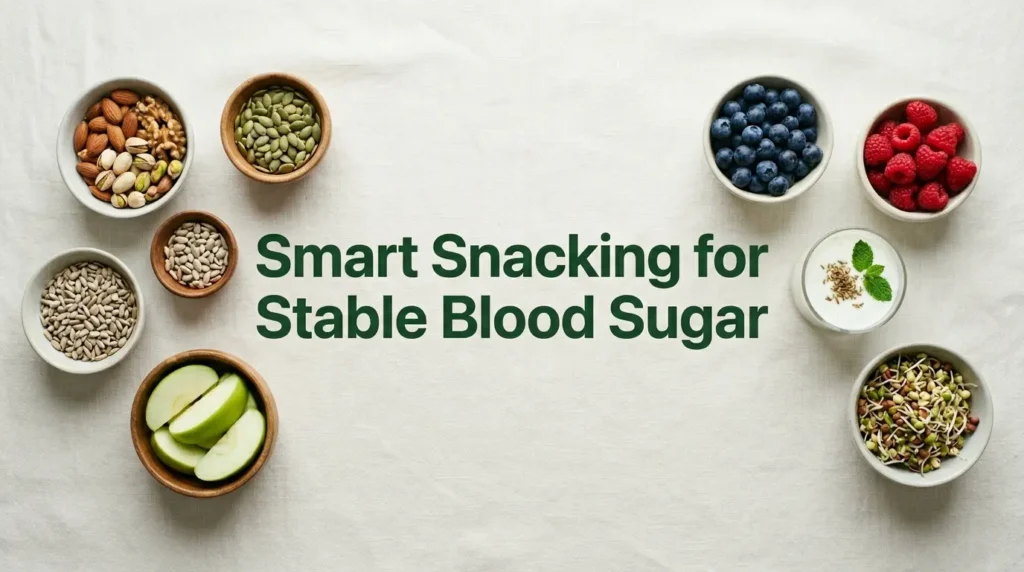
Introduction
Managing diabetes is not just about main meals—it is also about what you eat in between. Many people struggle with hunger, cravings, and confusion about snacks.
According to your webinar content, common issues include evening cravings, tea with biscuits, and frequent hunger between meals . These habits can lead to unstable blood sugar levels if not managed properly.
The good news is that smart snacking can help maintain steady blood sugar and improve overall health.
Why Snacking is Important in Diabetes
Healthy snacking plays a crucial role in diabetes management.
Right snacks help:
- Prevent sudden sugar drops
- Reduce overeating during meals
- Control cravings for sweets and fried foods
- Maintain steady energy levels
As highlighted in the session, protein and fiber-rich snacks can improve HbA1c levels and stabilize blood sugar .
The Truth About Snacks and Blood Sugar
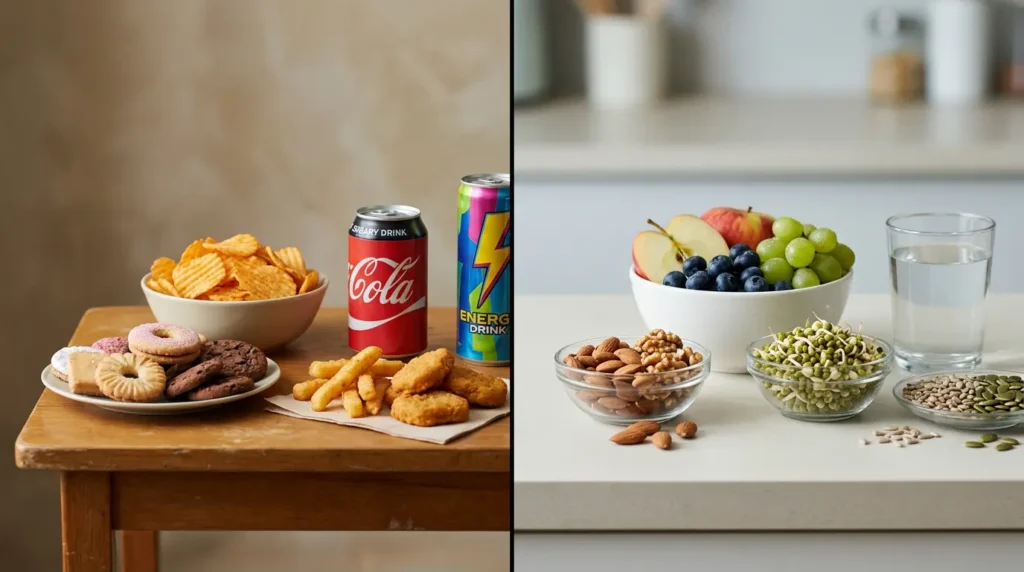
Not all snacks are equal.
Wrong snacks can cause:
- Sudden sugar spikes
- Energy crashes
- Increased cravings
Right snacks provide:
- Stable blood sugar levels
- Sustained energy
- Better control over hunger
Low glycemic index (GI) snacks with protein are the best choice for diabetes.
Ideal Snack Timing
Timing is just as important as the type of snack.
According to the webinar:
- Mid-morning: 10:30–11:30 AM
- Evening: 4:30–6:00 PM
- Eat every 3–4 hours
Following proper timing helps prevent sugar fluctuations and keeps energy stable throughout the day .
The Smart Snack Formula
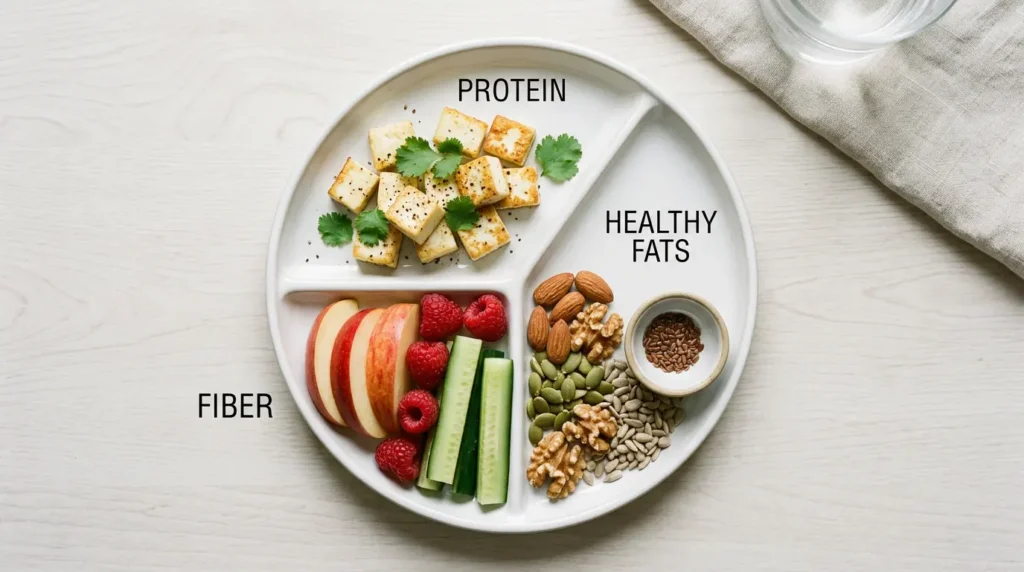
A simple rule to follow:
👉 Never eat carbs alone
Your snack should include at least one of the following:
- Protein
- Fiber
- Healthy fats
This combination slows down sugar absorption and prevents spikes.
Portion Control Made Easy
Portion size is very important in diabetes.
Use the simple hand method:
- Nuts/seeds = small fist
- Paneer/chicken = palm size
- Fruit = tennis ball size
This easy technique helps you avoid overeating while keeping nutrition balanced .
Best Snack Options for Diabetes
Mid-Morning Snacks
- Low GI fruits
- Fruit + nuts
- Sprouts chaat
- Buttermilk with chia seeds
- Paneer with cucumber
Evening Snacks
- Roasted makhana
- Besan chilla
- Vegetable soup
- Boiled peanuts
- Paneer tikka
These snacks are rich in protein and fiber, helping to control blood sugar levels.
Snacks to Avoid
Some common snacks can harm blood sugar control.
Avoid:
- Fruit juices
- Tea with biscuits
- Bakery items
- Sweetened yogurt
- Fried snacks
These foods cause rapid sugar spikes and should be limited.
Healthy Snack Swaps
Instead of unhealthy options, choose better alternatives:
- Biscuits → Khakhra
- Chips → Roasted makhana
- Pakoda → Besan chilla
- Juice → Whole fruit
These small swaps can make a big difference in blood sugar control.
Power of Seeds in Diabetes
Seeds are small but very powerful.
Benefits include:
- Slowing sugar absorption
- Improving insulin sensitivity
- Reducing cravings
Examples:
- Chia seeds
- Flaxseeds
- Pumpkin seeds
- Sunflower seeds
Adding them to buttermilk, salads, or meals can improve overall health.
Common Myths About Snacking
Many people have misconceptions about snacks in diabetes.
- Fruits are not allowed ❌ → Portion matters ✔
- Protein increases sugar ❌ → It helps control sugar ✔
- Skipping snacks helps ❌ → It can cause sugar fluctuations ✔
Understanding these myths helps in making better choices.
Conclusion
Smart snacking is a powerful tool for managing diabetes.
Focus on:
- Right timing
- Right combination
- Right portion
👉 Remember:
There are no forbidden snacks—only wrong timing, wrong portions, and wrong choices
By making simple changes, you can maintain stable blood sugar and improve your overall health.
FAQs
1. How often should diabetics snack?
Every 3–4 hours to maintain stable blood sugar.
2. What is the best snack for diabetes?
Protein and fiber-rich snacks like nuts, sprouts, and paneer.
3. Can diabetics eat fruits as snacks?
Yes, but in controlled portions and preferably with nuts.
4. Why should carbs not be eaten alone?
They can cause rapid sugar spikes without protein or fiber.
5. Are evening snacks necessary?
Yes, they help prevent cravings and overeating at dinner.