
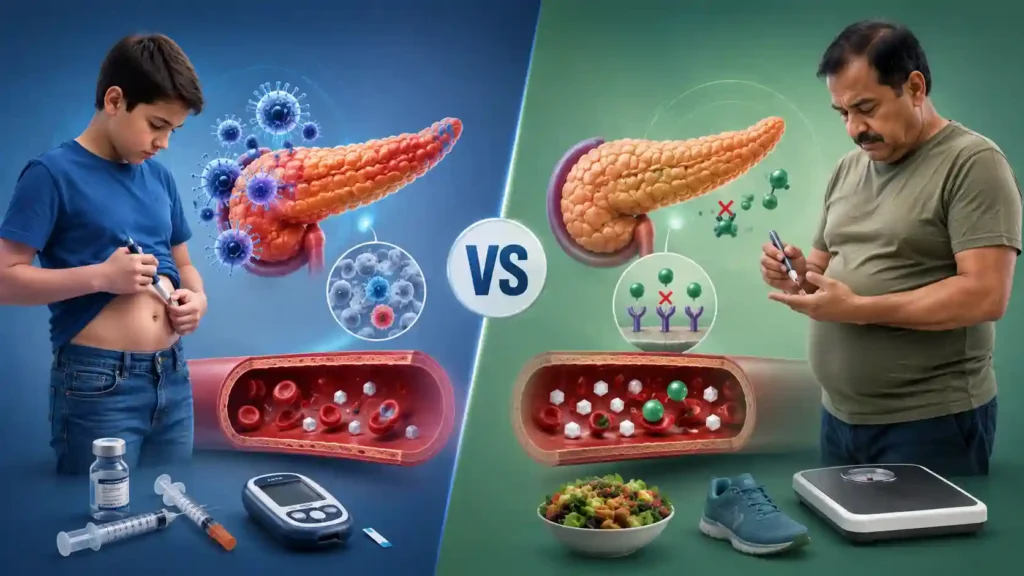
Although Type 1 and Type 2 diabetes both result in elevated blood sugar levels, they are fundamentally different conditions with distinct causes, onset patterns, and treatment approaches. Understanding these differences is essential for choosing the right management strategy. Type 1 diabetes is an autoimmune condition in which the body’s immune system mistakenly attacks and destroys the insulin-producing beta cells in the pancreas. As a result, the body produces little to no insulin at all. Type 1 diabetes usually develops in childhood, adolescence, or early adulthood, often appearing suddenly with noticeable symptoms. Since the pancreas can no longer produce insulin, patients with Type 1 diabetes require lifelong insulin therapy, as it cannot be reversed through diet or lifestyle changes alone.
Read Also : The Role of Sleep in Diabetes and Weight Management
Type 2 diabetes, in contrast, develops gradually and is primarily driven by insulin resistance, where the body’s cells become less responsive to insulin over time, often as a result of excess body fat, particularly visceral fat, combined with poor diet and inactivity. In the early stages, the pancreas compensates by producing more insulin, but this compensation eventually becomes insufficient, leading to elevated blood sugar levels. Type 2 diabetes typically develops in adulthood, though rising obesity rates have led to increasing numbers of younger patients being diagnosed as well.
Treatment approaches differ significantly between the two conditions. While insulin therapy is mandatory for Type 1 diabetes, Type 2 diabetes can often be effectively managed, and in many cases substantially reversed, through structured lifestyle intervention, including personalized nutrition, regular physical activity, and weight management, sometimes alongside oral medications rather than insulin.
Another key difference lies in prevention potential. Type 1 diabetes currently cannot be prevented, as it results from an autoimmune process not linked to lifestyle factors. Type 2 diabetes, however, is largely preventable and often reversible through sustained lifestyle changes, particularly when addressed early during the prediabetic stage.
At Dr. Rajender Lifestyle Clinic in Banjara Hills, Hyderabad, patients with Type 2 diabetes receive structured, medically supervised reversal programs designed to address the root causes of insulin resistance, helping many patients significantly reduce or eliminate their dependency on medication.