
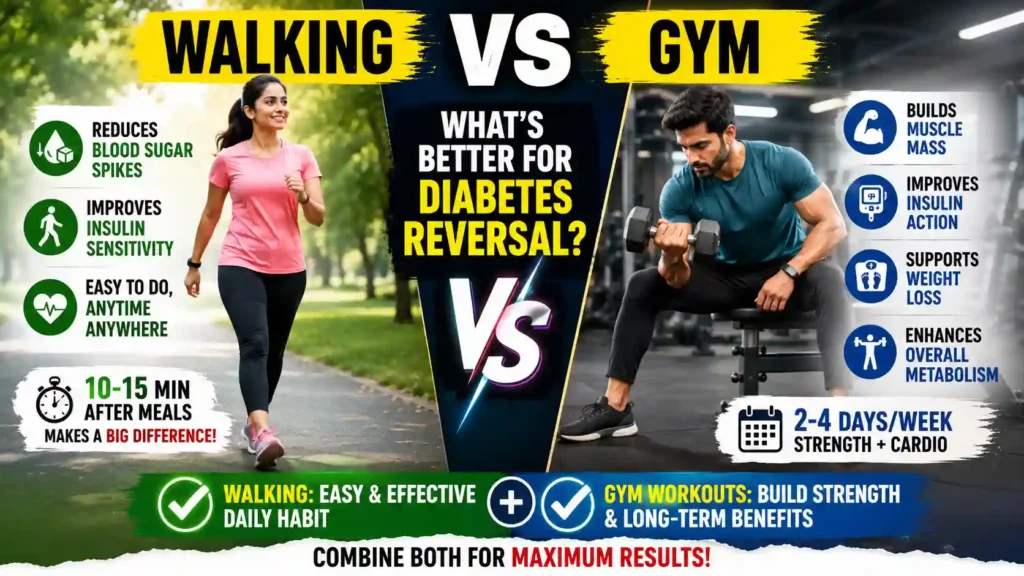
When it comes to managing and reversing Type 2 diabetes, one of the most common questions patients
ask is whether walking is sufficient, or whether structured gym-based workouts are necessary for
meaningful results. The answer, backed by research, is that both have valuable roles, and combining
them often produces the best outcomes.
Walking is an excellent, accessible form of aerobic exercise that has been shown to meaningfully
improve insulin sensitivity, particularly when done consistently after meals. A short walk of just ten to
fifteen minutes after eating can significantly reduce the post-meal blood sugar spike, as working muscles
draw glucose directly from the bloodstream for energy, independent of insulin. This makes walking a
practical, low-barrier tool that virtually anyone can incorporate into daily life.
Read also : 9 Simple Tips to Control Portion Sizes Naturally
However, gym-based strength training offers additional, distinct benefits that walking alone cannot fully
replicate. Building muscle mass through resistance exercises increases the body’s overall capacity to
store and utilize glucose, since muscle tissue is one of the primary sites for glucose uptake. Individuals
with greater muscle mass generally demonstrate better long-term blood sugar control, even at rest.
A combination approach, incorporating regular walking or other aerobic activity most days of the week,
along with strength training two to three times per week, tends to produce the most significant
improvements in insulin sensitivity, blood sugar control, and overall metabolic health. This combination
also supports better weight management, since strength training helps preserve and build muscle while
aerobic activity contributes to overall calorie expenditure.
The most important factor, however, is consistency. An exercise routine that a person can realistically
maintain long-term will always outperform an intense but unsustainable program abandoned after a few
weeks.
At Dr. Rajender Lifestyle Clinic, exercise plans are personalized based on each patient’s fitness level,
physical limitations, and lifestyle, ensuring a sustainable combination of activities that supports lasting
diabetes reversal.