
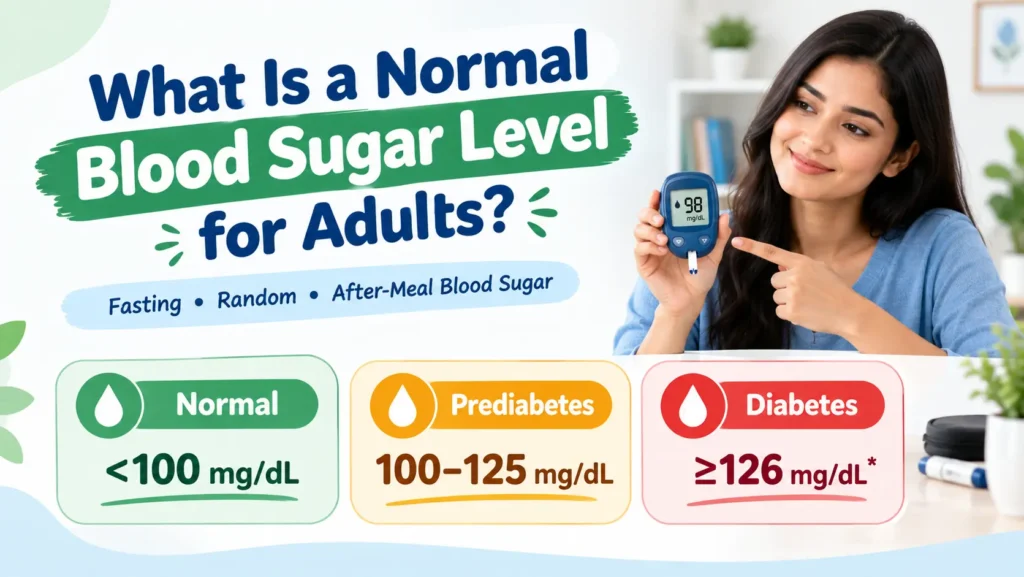
What Is a Normal Blood Sugar Level for Adults?: Blood sugar levels can vary depending on when the test is performed, whether a person has eaten recently, and whether they have diabetes. Common blood glucose tests include fasting, random, and post-meal measurements.
Understanding blood sugar ranges can help you interpret glucose readings, but a single home glucose reading does not diagnose diabetes. Diagnosis should be based on appropriate clinical testing and, when necessary, confirmation by a healthcare professional.
Normal Fasting Glucose
For non-pregnant adults without diabetes, a fasting plasma glucose level below 100 mg/dL is generally considered within the normal range.
A fasting test is usually performed after not eating for at least 8 hours. Water is generally permitted during the fasting period, although specific testing instructions may vary.
Fasting glucose provides information about how the body is regulating blood sugar when food has not been consumed for several hours.
Prediabetes and Diabetes Ranges
According to commonly used diagnostic criteria, a fasting plasma glucose level of:
- Below 100 mg/dL: Generally considered normal
- 100–125 mg/dL: Prediabetes range
- 126 mg/dL or higher: Diabetes diagnostic threshold when appropriately confirmed
A diagnosis should not usually be made from one isolated result. Your healthcare professional may recommend repeat testing or another diagnostic test depending on the situation.
These ranges apply to non-pregnant adults. Blood glucose criteria and management during pregnancy are different and should be discussed with an appropriate healthcare professional.
What About After-Meal Blood Sugar?
Blood sugar naturally rises after eating because carbohydrates are digested into glucose. The level reached after a meal depends on the type and amount of food, timing of the test, physical activity, insulin response, and other individual factors.
For people with diabetes, post-meal glucose targets may be individualized according to their overall health, treatment plan, age, and risk of low blood sugar.
Therefore, there is not one universal post-meal number that applies to every adult with diabetes.
Home Glucose Meter vs Laboratory Test
Home blood glucose meters are useful tools for monitoring glucose levels and identifying patterns. However, home meter readings are not identical to laboratory plasma glucose testing.
Factors such as the timing of the test, hand cleanliness, testing technique, meter performance, and other conditions can affect a home reading.
If a home reading appears unexpectedly high or low, follow the meter instructions and consider discussing repeated unusual results with your healthcare professional.
Blood Sugar Targets for People With Diabetes
People who already have diabetes may have different glucose targets depending on their individual circumstances. Treatment goals can be influenced by age, overall health, duration of diabetes, medications, risk of hypoglycemia, and other health conditions.
For this reason, a blood sugar number that is appropriate for one person may not be the correct target for another.
Your healthcare professional can help determine the glucose targets that are appropriate for your individual treatment plan.
When Should You Seek Medical Advice?
Repeatedly high or unusually low blood sugar readings should be discussed with a healthcare professional, particularly when they occur frequently or are accompanied by symptoms.
Do not change diabetes medication based solely on an individual home glucose reading. Persistent abnormal readings may require appropriate clinical testing and evaluation.
Conclusion
Knowing normal blood sugar levels for adults can help you understand glucose readings, but the meaning of a result depends on whether the test was fasting, random, or after a meal and whether the person has diabetes.
For non-pregnant adults without diabetes, fasting plasma glucose below 100 mg/dL is generally considered normal, while 100–125 mg/dL falls within the prediabetes range and 126 mg/dL or higher can meet the diabetes diagnostic threshold when appropriately confirmed.
Use blood sugar ranges as a guide, but interpret them together with appropriate laboratory testing and professional medical advice.
Need Help Understanding Your Blood Sugar?
At Dr. Rajender’s Lifestyle Clinic, you can discuss your blood glucose readings, nutrition, physical activity, lifestyle habits, and diabetes management with a healthcare professional.
If you are unsure what your blood sugar readings mean or are experiencing repeated high or low values, professional evaluation can help you understand your results and determine an appropriate management approach.
Book a consultation with Dr. Rajender’s Lifestyle Clinic for personalized guidance based on your individual health needs.
Frequently Asked Questions
What is a normal fasting blood sugar level for adults?
For non-pregnant adults without diabetes, a fasting plasma glucose level below 100 mg/dL is generally considered normal.
Is 100 mg/dL fasting blood sugar normal?
A fasting plasma glucose of exactly 100 mg/dL falls at the beginning of the prediabetes range under commonly used diagnostic criteria. A healthcare professional may recommend appropriate follow-up testing.
Is 126 mg/dL fasting blood sugar diabetes?
A fasting plasma glucose of 126 mg/dL or higher can meet the diagnostic threshold for diabetes when appropriately confirmed. Diagnosis should be made using appropriate clinical testing rather than relying on one home meter reading.
Are home glucose meter readings the same as laboratory results?
No. Home meters are useful for monitoring but are not identical to laboratory testing. Testing technique, timing, and other factors can influence readings.
What should blood sugar be after eating?
Post-meal glucose targets vary depending on the individual, whether they have diabetes, the timing of the test, and their treatment plan. People with diabetes should follow the targets recommended by their healthcare professional.
Read Also:
