
What Is Hashimoto’s Thyroiditis?
Hashimoto’s thyroiditis is an autoimmune condition that can gradually reduce the function of the thyroid gland and lead to hypothyroidism.
In an autoimmune condition, the body’s immune system mistakenly targets its own tissues. In Hashimoto’s thyroiditis, antibodies act against components of the thyroid gland, affecting its ability to produce thyroid hormones.
The thyroid produces hormones called T3 and T4, which help regulate several functions in the body. When thyroid hormone levels become low, different symptoms may develop.
What Are the Symptoms of Hashimoto’s Thyroiditis?
Hashimoto’s thyroiditis may cause symptoms associated with an underactive thyroid.
Common symptoms mentioned include:
- Weight gain
- Body aches
- Fatigue and weakness
- Reduced energy and motivation
- Hair fall
- Dry skin
- Memory problems
- Difficulty concentrating
- Reduced thinking ability
These symptoms can develop gradually. However, they are not specific to Hashimoto’s thyroiditis alone, so thyroid testing and medical evaluation are important.
How Does Hashimoto’s Thyroiditis Affect the Thyroid?
The immune system can produce antibodies that target thyroid-related proteins.
Two important antibodies associated with autoimmune thyroiditis are:
- Anti-TPO antibodies
- Anti-TG antibodies
TPO and thyroglobulin are involved in thyroid hormone production. In Hashimoto’s thyroiditis, immune cells can accumulate within the thyroid gland and gradually damage the follicles responsible for producing thyroid hormones.
As thyroid function decreases, T3 and T4 levels may fall, while thyroid-stimulating hormone (TSH) may rise as the pituitary gland attempts to stimulate the thyroid.
Blood tests help evaluate thyroid function and the presence of thyroid antibodies.
What Causes Hashimoto’s Thyroiditis?
There is no single cause identified in the supplied material. Two broad groups of factors are discussed.
1. Genetic Susceptibility
A family history of thyroid disease or other autoimmune conditions may increase the likelihood of developing autoimmune thyroiditis.
2. Environmental Factors
Environmental and lifestyle factors discussed include:
- High or prolonged stress
- Selenium deficiency
- Vitamin D deficiency
- Certain infections
- Smoking
These factors may be relevant to autoimmune health, but they do not mean that every person exposed to them will develop Hashimoto’s thyroiditis.
Who Is More Likely to Develop Hashimoto’s Thyroiditis?
Hashimoto’s thyroiditis is reported more frequently in women than in men. The supplied information describes women as having a higher risk, with the risk increasing with age.
A family history of thyroid or autoimmune disease can also be relevant.
Childhood overweight and obesity are additional factors mentioned in relation to the risk of developing autoimmune thyroid problems later in life.
How Can You Support Thyroid Health?
Lifestyle habits can support overall health and may form part of managing thyroid disease. They should not replace prescribed treatment when thyroid hormone levels are low.
Manage Stress
Stress management is an important lifestyle measure.
Useful habits mentioned include:
- Spending time with family
- Listening to enjoyable music
- Playing games or engaging in relaxing activities
- Getting around 6–8 hours of sleep each day
Include Selenium-Containing Foods
Selenium is a mineral involved in thyroid function.
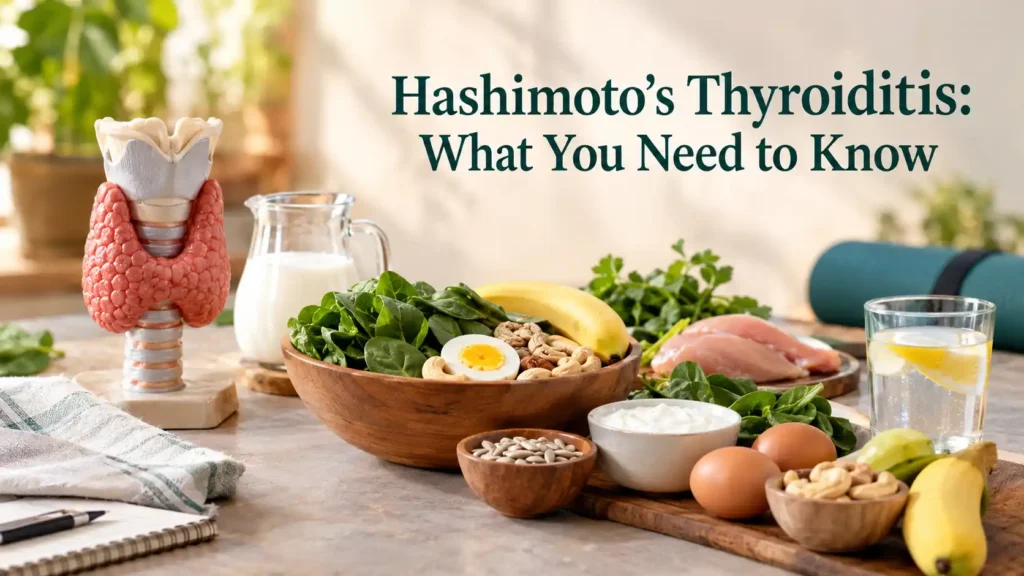
Foods mentioned as sources include:
- Milk
- Curd
- Eggs
- Chicken
- Spinach
- Cashew nuts
- Bananas
- Sunflower seeds
Including a variety of nutritious foods can help support dietary adequacy. Selenium supplements should not be taken in high doses without medical advice.
Stay Active and Hydrated
Regular physical activity and adequate water intake can support general well-being.
A balanced diet containing vegetables, fruits and other nutrient-rich foods is also important.
Wash Fruits and Vegetables Properly
Wash fruits and vegetables thoroughly before eating or preparing them.
The supplied guidance also recommends limiting highly processed foods, including biscuits, sauces and mayonnaise, which may contain added ingredients and preservatives.
These steps support general dietary health, but they cannot guarantee prevention or reversal of autoimmune thyroid disease.
What Is the Treatment for Hashimoto’s Thyroiditis?
Treatment depends on thyroid function, symptoms and test results.
When hypothyroidism is significant, doctors may prescribe levothyroxine, a thyroid hormone replacement medicine.
Levothyroxine helps replace the thyroid hormone the body is not producing adequately. TSH and thyroid hormone levels can then be monitored to assess the response to treatment.
Lifestyle changes and nutritious food choices can complement treatment, but they should not be used as a substitute for prescribed thyroid medication. Never stop or change thyroid medicine without consulting your healthcare professional.
Final Takeaway
Hashimoto’s thyroiditis is an autoimmune condition that can gradually reduce thyroid function and cause hypothyroidism.
Symptoms may include weight gain, fatigue, body aches, hair fall, dry skin and memory or concentration problems. Anti-TPO and anti-TG antibodies, along with thyroid function tests, can help doctors evaluate the condition.
Stress management, adequate sleep, regular physical activity and a balanced diet can support general health. When hypothyroidism develops, appropriate medical treatment and regular thyroid monitoring remain important.
Frequently Asked Questions
What is Hashimoto’s thyroiditis?
Hashimoto’s thyroiditis is an autoimmune condition in which the immune system targets the thyroid gland and may gradually reduce its function.
What are the common symptoms of Hashimoto’s disease?
Symptoms may include weight gain, fatigue, body aches, hair fall, dry skin, memory problems and difficulty concentrating.
Which antibodies are associated with Hashimoto’s thyroiditis?
Anti-TPO and anti-TG antibodies are commonly associated with autoimmune thyroiditis.
Can Hashimoto’s thyroiditis cause hypothyroidism?
Yes. Damage to thyroid tissue can gradually reduce hormone production and lead to hypothyroidism.
Which foods contain selenium?
Foods mentioned include milk, curd, eggs, chicken, spinach, cashews, bananas and sunflower seeds.
Can stress affect thyroid health?
Stress is discussed as a potential contributing factor in autoimmune health. Stress management can support overall well-being, but it does not guarantee prevention or reversal of Hashimoto’s thyroiditis.
What medicine is used to treat Hashimoto’s hypothyroidism?
Levothyroxine may be prescribed when thyroid hormone replacement is needed. The dose and treatment plan should be determined by a healthcare professional.
Can Hashimoto’s thyroiditis be treated with diet alone?
Diet and lifestyle habits can support overall health, but they cannot reliably replace thyroid hormone treatment when it is medically necessary.
Thyroid and Lifestyle Care at Dr. Rajender’s Lifestyle Clinic
At Dr. Rajender’s Lifestyle Clinic, Banjara Hills, Hyderabad, care focuses on personalized nutrition, lifestyle correction, physical activity and appropriate medical guidance. Dr. Rajender Ramagiri, Founder & Lead Physician, supports patients in working toward better metabolic health through a structured, evidence-based approach.
For persistent fatigue, unexplained weight changes, hair fall or concerns about thyroid function, consult a qualified healthcare professional for appropriate evaluation and treatment.
Read Also:

One Response