
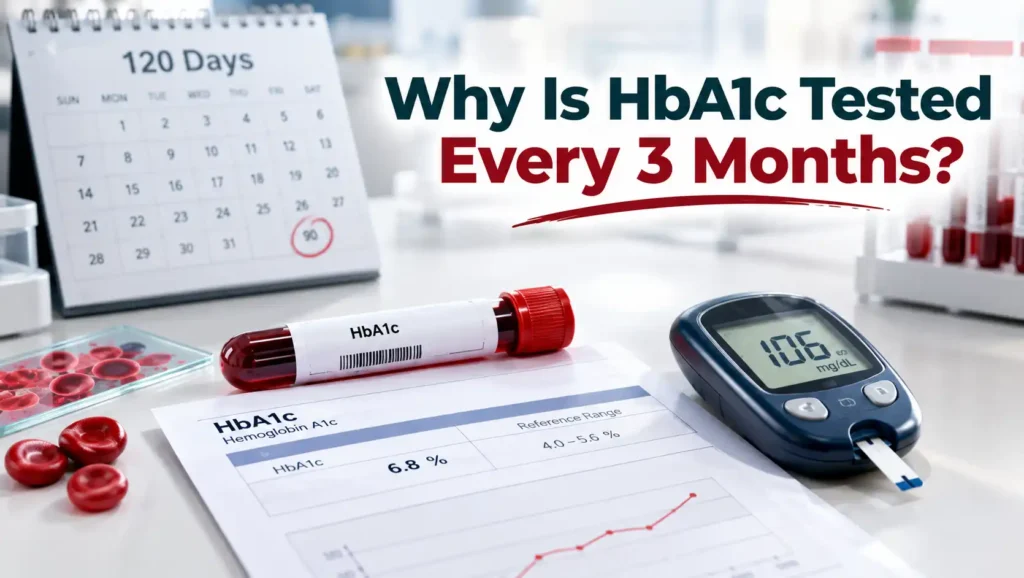
What Is the HbA1c Test?: The HbA1c test is an important blood test used in diabetes care. HbA1c stands for glycated hemoglobin A1c.
Adult blood contains mainly a type of hemoglobin known as hemoglobin A. Hemoglobin has alpha and beta chains, and HbA1c measures the glucose attached to the beta chain.
In simple terms, the test tells us how much glucose has become attached to hemoglobin in the blood.
Why Is HbA1c Tested Every 3 Months?
One of the main reasons HbA1c is checked approximately every three months is the lifespan of red blood cells.
Red blood cells are produced in the bone marrow and then circulate in the bloodstream for approximately 120 days, or around three months.
During this period, glucose becomes attached to hemoglobin. Therefore, HbA1c provides information about blood sugar levels over this longer period rather than showing only what is happening on the day of the test.
This is why checking HbA1c every few days or every few weeks does not provide the same useful picture.
HbA1c Shows More Than One Blood Sugar Reading
A person’s fasting and post-meal glucose readings can sometimes appear controlled on a particular day.
However, HbA1c can reveal whether blood sugar has actually remained controlled over the previous three months.
For example, someone may have a fasting glucose reading around 110 and a post-meal reading around 160 when they visit a clinic, while their HbA1c remains high.
This can indicate that blood sugar was not consistently controlled over the preceding months.
Factors discussed include:
- Not taking prescribed medicines regularly
- Skipping meals or eating at irregular times
- Consuming excess carbohydrates
- Eating sweets frequently
- Drinking sugary soft drinks
- Not following recommended lifestyle changes
- Lack of regular exercise
Therefore, a single good blood sugar reading cannot always represent long-term glucose control.
How Is HbA1c Used in Diabetes Treatment?
HbA1c is important not only for diabetes diagnosis but also for treatment planning and monitoring.
When a blood sugar reading is high, medication is not necessarily increased immediately based on one reading alone. The longer-term pattern can be evaluated through HbA1c and other glucose measurements.
HbA1c can help distinguish between a temporary rise in blood sugar and consistently elevated glucose levels.
For example, blood sugar may temporarily increase after consuming more food than usual, sweets or other carbohydrate-rich foods. HbA1c can help show whether the problem has been persistent over time.
What Are the HbA1c Ranges?
According to the values discussed in the provided content:
- Below 5.6%: Normal
- 5.7% to 6.4%: Prediabetes
- Above 6.5%: Diabetes
These values are used to categorize blood sugar status based on HbA1c.
How Does HbA1c Relate to Diabetes Complications?
The content discusses research including landmark trials such as DCCT and UKPDS, which examined the relationship between HbA1c and diabetes-related complications.
The central point is that higher HbA1c levels are associated with greater diabetes-related complications.
The complications discussed include:
- Heart-related problems
- Neuropathy
- Burning sensations in the feet
- Problems affecting vision
This highlights why maintaining consistent blood sugar control is important rather than focusing only on occasional glucose readings.
Why Should You Not Check HbA1c Too Frequently?
HbA1c reflects blood glucose over a longer period, so it does not change meaningfully within just a few days.
The provided explanation states that approximately:
- The most recent month contributes about 50%
- The month before that contributes around 25%
- The earlier period contributes around 25%
Therefore, after making changes to diet, exercise or medication, sufficient time is needed before expecting the HbA1c value to reflect those changes fully.
Can HbA1c Be Affected by Anemia?
The provided content also explains that HbA1c may sometimes be affected by hemoglobin levels.
In people with severe anemia, hemoglobin levels may already be low, which can influence the HbA1c result.
Therefore, HbA1c should be interpreted along with the person’s overall clinical picture and other blood sugar measurements.
Why Is HbA1c Important for Diabetes Management?
HbA1c is more than just another blood test. It provides a broader view of blood sugar control over time and can help in diagnosis, treatment planning and monitoring.
Consistent diabetes management involves taking prescribed medicines regularly, following dietary recommendations, exercising and maintaining healthy daily habits.
At Dr. Rajender’s Lifestyle Clinic, diabetes care combines medical guidance with nutrition and sustainable lifestyle changes to support long-term metabolic health.
For personalized diabetes evaluation and blood sugar management, consult Dr. Rajender Ramagiri, Founder & Lead Physician at Dr. Rajender’s Lifestyle Clinic, Banjara Hills, Hyderabad.
Frequently Asked Questions
1. What does the HbA1c test measure?
HbA1c measures the amount of glucose attached to hemoglobin and provides information about blood sugar levels over an extended period.
2. Why is HbA1c checked every three months?
Red blood cells have a lifespan of approximately 120 days, so HbA1c reflects blood sugar control over roughly three months.
3. Can HbA1c be checked every 10 days?
Checking it very frequently does not provide a useful picture of long-term glucose control because HbA1c reflects changes over a much longer period.
4. Can HbA1c show poor control even when today’s sugar is normal?
Yes. A single fasting or post-meal glucose reading may look controlled while HbA1c can show that blood sugar has been elevated over the preceding months.
5. What HbA1c level indicates diabetes?
According to the values provided here, an HbA1c level above 6.5% is classified as diabetes.
6. Why is HbA1c important in diabetes treatment?
It helps assess longer-term blood sugar control and can support treatment planning and monitoring rather than relying only on individual daily glucose readings.
Read Also:

One Response