

Introduction
Not all diabetes is the same. While most people are familiar with Type 1 and Type 2 diabetes, there is another lesser-known type called LADA (Latent Autoimmune Diabetes in Adults).
LADA is often misunderstood and misdiagnosed, which can delay proper treatment. Understanding this condition is important for better management and long-term health.
What Is LADA Diabetes?
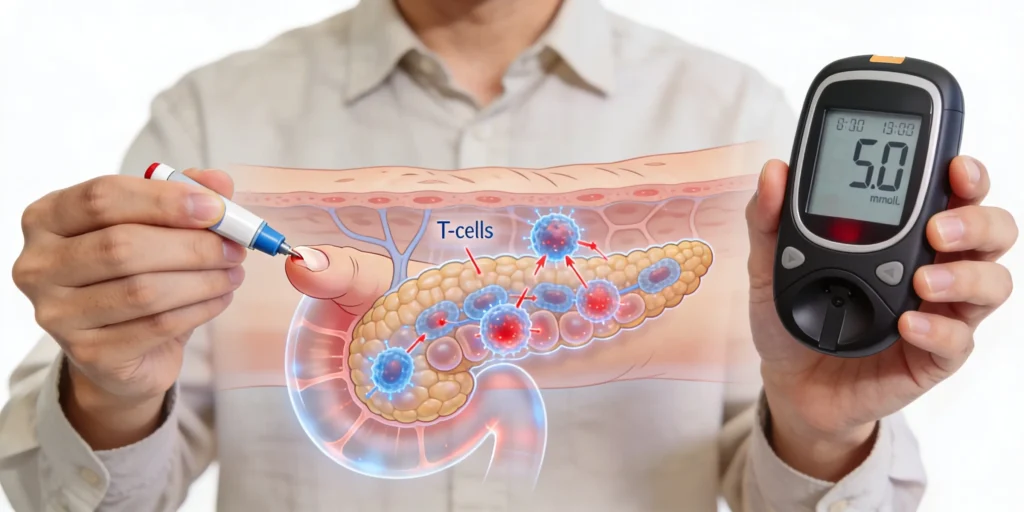
LADA is a form of diabetes that shares features of both Type 1 and Type 2 diabetes.
It is an autoimmune condition, meaning the body’s immune system attacks insulin-producing cells in the pancreas. However, unlike Type 1 diabetes, this process happens slowly and usually appears in adulthood.
👉 That’s why LADA is sometimes called “Type 1.5 diabetes.”
How Is LADA Different from Type 1 and Type 2?
| Feature | Type 1 | Type 2 | LADA |
|---|---|---|---|
| Cause | Autoimmune | Insulin resistance | Autoimmune (slow) |
| Age | Childhood | Adults | Adults |
| Insulin Need | Immediate | Later | Gradual |
| Progression | Rapid | Slow | Slow but progressive |
👉 LADA starts like Type 2 but behaves like Type 1 over time.
Causes of LADA
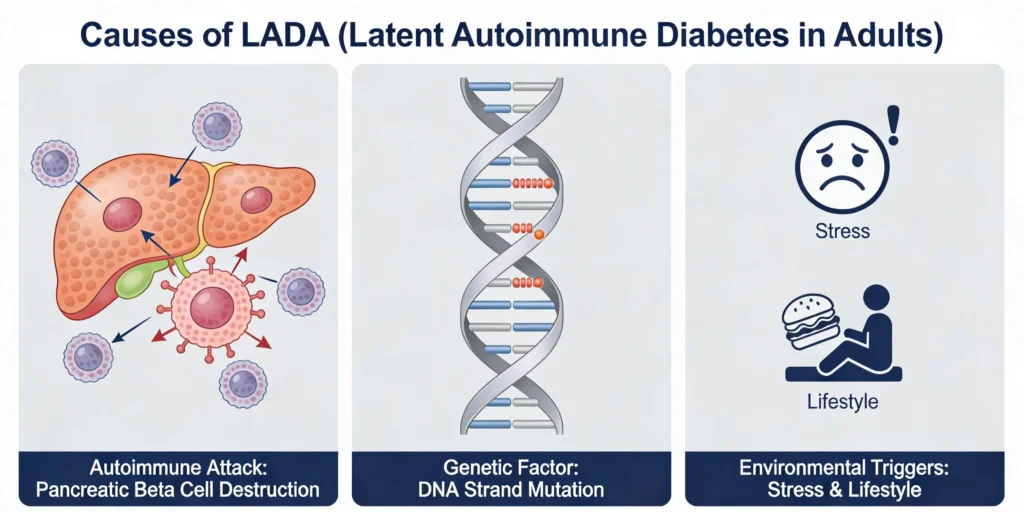
The exact cause is not fully known, but it involves:
- Autoimmune attack on pancreatic beta cells
- Genetic factors
- Environmental triggers
Over time, insulin production decreases as more cells are damaged.
Symptoms of LADA
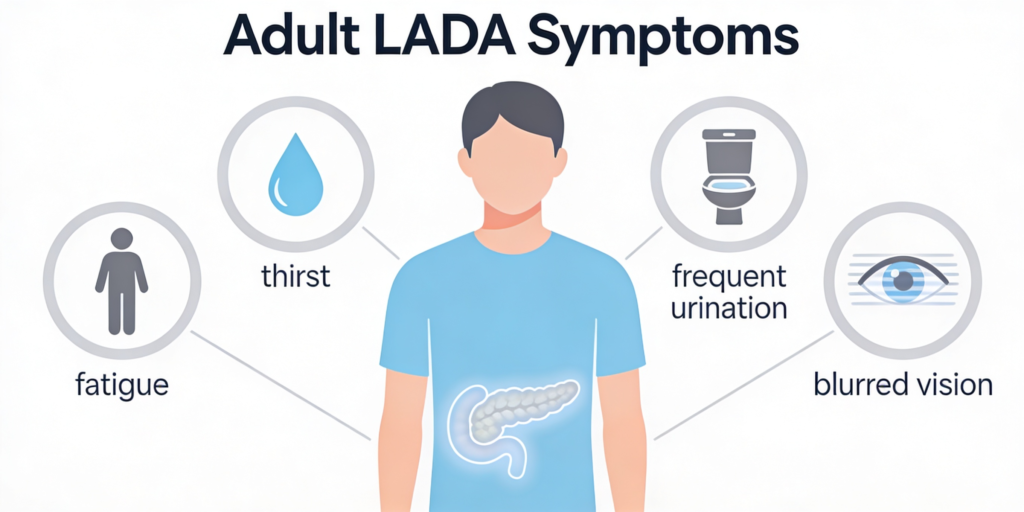
Symptoms may develop slowly and can be mistaken for Type 2 diabetes.
Common signs include:
- Increased thirst
- Frequent urination
- Unexplained weight loss
- Fatigue
- Blurred vision
👉 Because symptoms are mild initially, many people are misdiagnosed.
Who Is at Risk?
You may be at higher risk if:
- You are above 30 years
- You are not overweight
- You have a family history of autoimmune disease
- Blood sugar is not controlled with oral medications
Why Is LADA Often Misdiagnosed?
LADA is commonly mistaken for Type 2 diabetes because:
- It develops in adulthood
- Symptoms appear gradually
- Initial response to oral medications may occur
👉 But over time, medications stop working as insulin production declines.
How Is LADA Diagnosed?
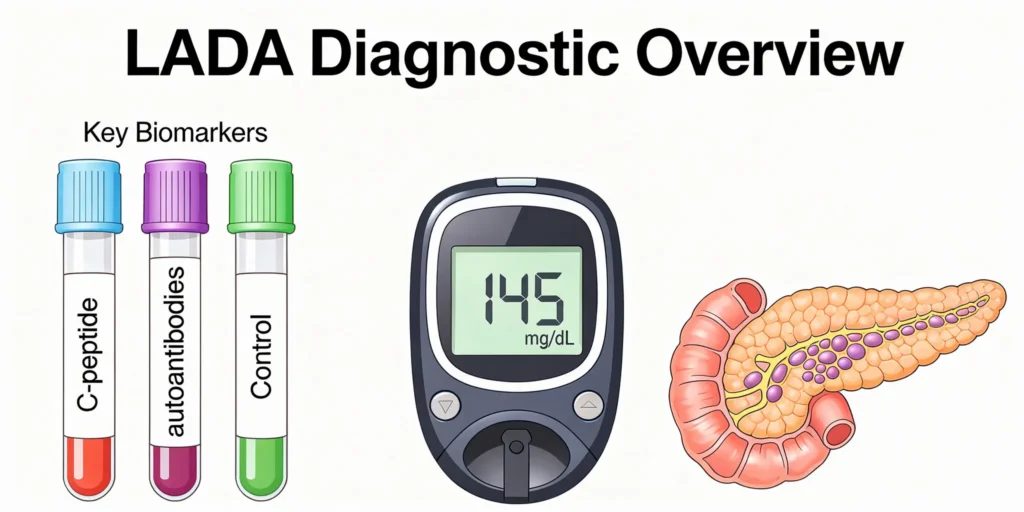
Diagnosis requires specific tests such as:
- Autoantibody tests
- C-peptide levels
These tests help differentiate LADA from Type 2 diabetes.
Treatment of LADA
Since LADA is progressive, treatment focuses on preserving insulin function.
1. Insulin Therapy
- Often required earlier than in Type 2 diabetes
- Helps protect remaining beta cells
2. Healthy Diet
- Balanced meals with controlled carbohydrates
- Avoid excessive sugar and processed foods
3. Physical Activity
- Improves insulin sensitivity
- Helps maintain overall health
4. Regular Monitoring
- Frequent blood sugar checks
- Adjust treatment as needed
Why Early Diagnosis Matters
Early identification of LADA helps:
- Start the right treatment sooner
- Prevent complications
- Improve long-term outcomes
Conclusion
LADA is a unique form of diabetes that develops slowly but requires careful management. It may appear like Type 2 diabetes initially, but it is actually an autoimmune condition.
👉 Understanding the difference is key to proper treatment.
🔹 Take the First Step Towards Better Diabetes Care
If your blood sugar is not improving despite treatment, it’s important to get the right diagnosis.
At Dr. Rajender’s Lifestyle Clinic, we help identify the root cause and guide you with personalized care for better diabetes management.
👉 Book your consultation today
📞 +91 8179630411
FAQs
1. Is LADA the same as Type 2 diabetes?
No, it is an autoimmune condition like Type 1 but develops slowly.
2. Can LADA be reversed?
No, but it can be managed effectively.
3. Do all LADA patients need insulin?
Most will require insulin over time.
4. How is it diagnosed?
Through antibody and C-peptide tests.
5. Can lifestyle help?
Yes, it supports better blood sugar control.