
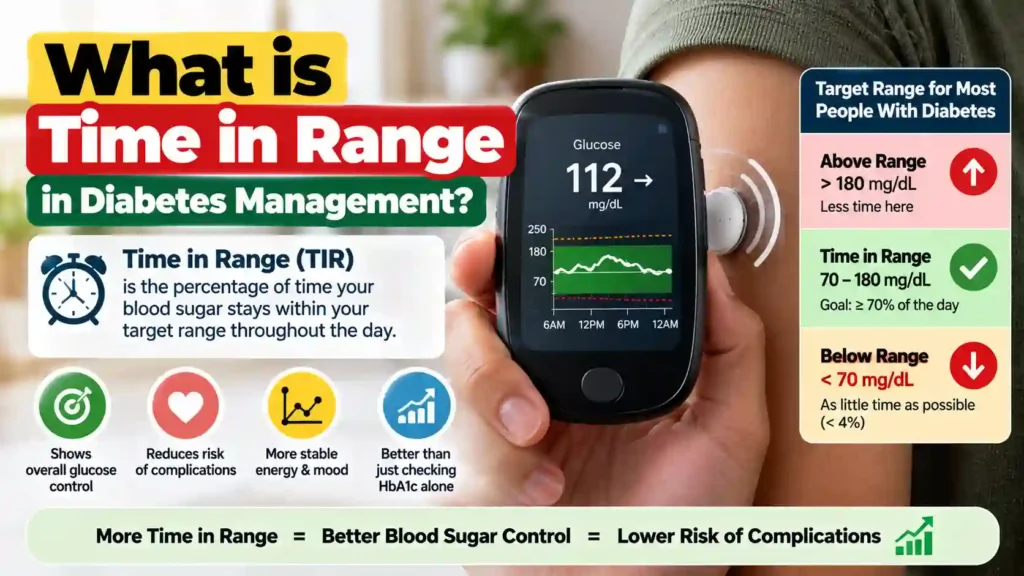
What Is Time in Range in Diabetes Management?: Managing diabetes involves more than checking whether blood sugar is high or low at a single moment. Blood glucose can change throughout the day depending on meals, physical activity, stress, sleep, illness, and medication.
Time in Range (TIR) is the percentage of time a person’s glucose levels remain within a defined target range. It is commonly measured using a continuous glucose monitor (CGM), a device that measures glucose levels throughout the day and night.
Time in Range can provide a broader picture of glucose management than an isolated reading. However, it does not replace HbA1c testing, medical consultations, or other recommended assessments.
What Is the Target Time in Range?
For many nonpregnant adults with diabetes, a commonly used CGM target range is 70–180 mg/dL. A frequently used general goal is to spend more than 70% of the time within this range.
These are general reference targets, not universal goals. Your clinician may recommend different targets depending on your age, diabetes type, medication, risk of hypoglycaemia, pregnancy status, and other health conditions.
Time in Range is generally considered alongside two other measures:
- Time below range: How much time glucose spends below the target range.
- Time above range: How much time glucose spends above the target range.
Avoiding dangerous low glucose levels is particularly important for people taking insulin or certain glucose-lowering medicines.
How Is Time in Range Measured?
A CGM sensor measures glucose in the fluid beneath the skin and sends readings to a compatible device or phone. The system can show glucose patterns, trends, and the percentage of time spent in different ranges.
For example, if your glucose is within your target range for 17 hours out of a 24-hour day, your Time in Range is approximately 71%.
This information can help you and your healthcare professional identify patterns that may not be obvious from occasional finger-prick readings.
Why Is Time in Range Important?
1. It Shows Daily Glucose Patterns
HbA1c estimates average blood glucose over roughly two to three months. However, an average may not reveal frequent highs and lows.
Time in Range provides additional information about how often glucose remains within the target range.
2. It Helps Identify Glucose Changes After Meals
CGM data may show whether glucose rises significantly after particular meals. This information can support discussions about portion sizes, meal composition, activity, and medication timing.
One reading or one meal should not be used to make major treatment changes independently.
3. It Can Reveal Overnight Changes
Some people experience glucose fluctuations while sleeping. CGM trends may help identify overnight lows or prolonged high readings, allowing their clinician to review the treatment plan when needed.
4. It Helps Guide Individualised Care
Time in Range can help healthcare professionals assess patterns and discuss realistic goals. It should be interpreted alongside symptoms, HbA1c, medication, and the person’s overall health.
How Can You Improve Time in Range?
Practical strategies may include:
- Follow your prescribed medication plan.
- Eat balanced meals with appropriate carbohydrate portions.
- Engage in regular physical activity suitable for your health.
- Maintain a consistent sleep routine.
- Monitor glucose as recommended.
- Discuss repeated high or low readings with your clinician.
Do not stop medication or change insulin doses solely because a CGM reading changes. Follow your personalised treatment instructions.
Frequently Asked Questions
1. Is Time in Range better than HbA1c?
They provide different information. HbA1c estimates average glucose over several months, while Time in Range shows how much time glucose stays within a target range. Both can be useful.
2. Can I measure Time in Range without a CGM?
Time in Range is most reliably calculated from continuous glucose data. Occasional finger-prick readings provide useful information but cannot show every glucose change throughout the day.
3. What is a good Time in Range percentage?
A commonly used target for many nonpregnant adults is more than 70% within 70–180 mg/dL. Your individual goal may differ.
4. Does a good Time in Range mean diabetes is cured?
No. Time in Range is one measure of glucose management. It does not establish that diabetes has been cured.
5. Should I change my medication to improve Time in Range?
Discuss your readings with your healthcare professional before changing medication. Treatment adjustments should consider low glucose risk and your individual circumstances.
Conclusion
Time in Range is a useful way to understand glucose patterns throughout the day. When interpreted alongside HbA1c and clinical assessments, it can help guide discussions about food, activity, and treatment.
For evidence-based diabetes monitoring and lifestyle guidance, consult Dr. Rajender’s Lifestyle Clinic, Banjara Hills, Hyderabad. Personalised medical support can help you understand your glucose patterns and work toward appropriate treatment goals.
Read Also:

One Response