
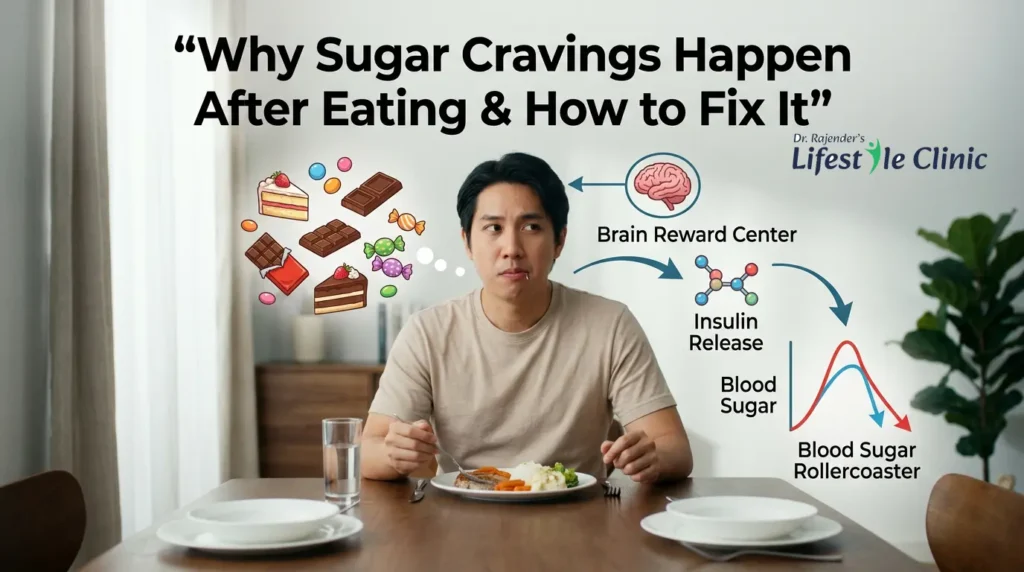
Many people experience a strange situation after finishing a meal. Even though the stomach feels full, the mind immediately starts craving something sweet. This feeling is very common, especially after lunch or dinner.
These sugar cravings after eating often feel emotional or habitual, but the science behind them is largely biological. Hormones, blood sugar fluctuations, brain chemistry, and even the order in which you eat food can influence these cravings.
Understanding why sugar cravings happen after meals can help you control them naturally without relying on extreme dieting or strict willpower.
Why You Crave Something Sweet Right After Eating
Many people believe sweet cravings are simply a bad habit. In reality, they are often caused by natural physiological responses in the body.
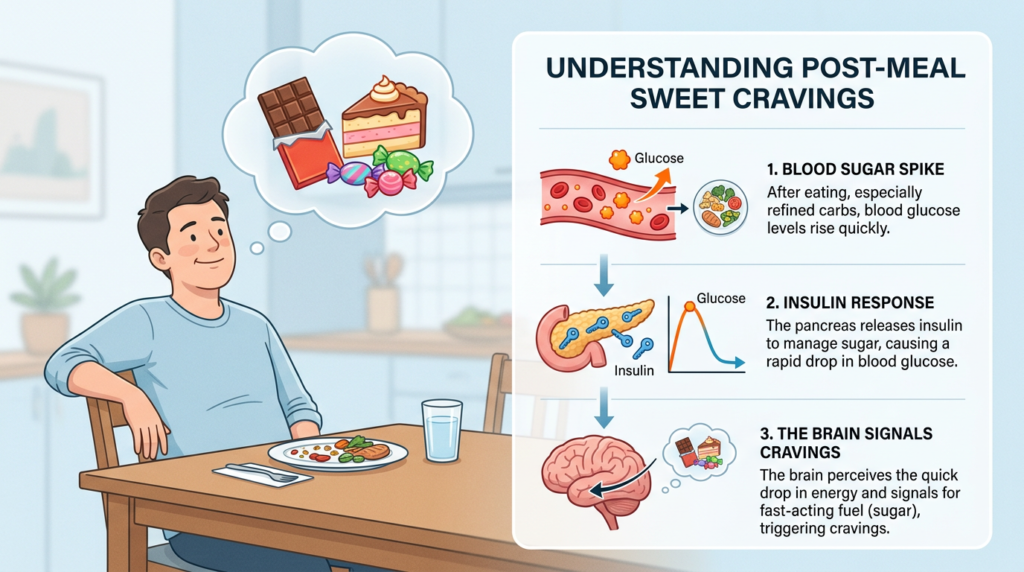
Several biological mechanisms can trigger sweet cravings after meals:
- Carbohydrates activate sweetness receptors on the tongue
- Insulin rises quickly after meals and then blood sugar dips
- The brain releases dopamine as a reward signal
- Taste contrast makes the brain seek sweetness after savory food
- Emotional fatigue increases comfort-eating behavior
Because of these mechanisms, people frequently say, “I can’t stop eating sweets even after a full meal.” The craving is often driven by hormones and brain signals rather than lack of discipline.
Blood Sugar Fluctuations and Sugar Cravings
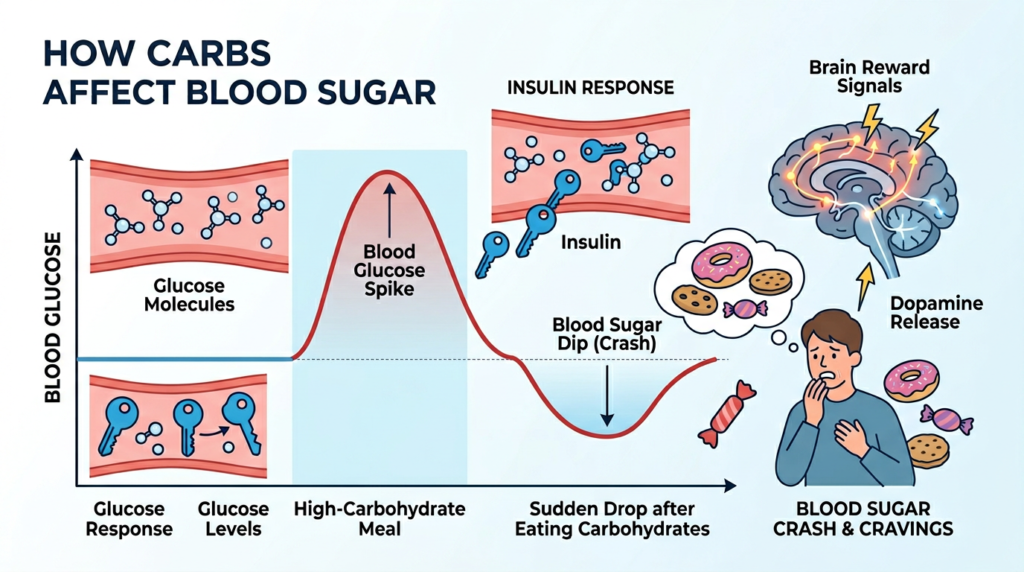
One of the most common causes of sugar cravings after eating is a fluctuation in blood sugar levels.
When a meal contains a large amount of refined carbohydrates such as white rice, bread, or sugary foods, blood glucose levels rise quickly. The body responds by releasing insulin to lower glucose levels.
However, when insulin acts rapidly, blood sugar may drop soon after. This drop signals the brain to seek quick energy again, often leading to strong cravings for sweet foods.
Clinical research shows that foods with a high glycemic index increase the risk of these rapid blood sugar swings, which explains why people often crave desserts shortly after eating carb-heavy meals.
The Brain’s Reward System and Sweet Cravings
Another reason for sugar cravings lies in the brain’s reward pathways.
Sweet foods stimulate the release of dopamine, a neurotransmitter associated with pleasure and reward. When you eat something sweet, dopamine signals reinforce the behavior and make the brain want to repeat it.
At the same time, serotonin levels may temporarily increase, improving mood and relaxation. Because of this effect, sweet foods often feel comforting during stress or emotional fatigue.
This is why sweet cravings after meals can feel emotionally driven even when the body does not actually need more energy.
Epigenetic Taste-Bud Changes: A Hidden Trigger
A lesser-known factor influencing sugar cravings is related to taste-bud signaling.
Some nutrition experts suggest that starting a meal with carbohydrates like rice or roti may increase the desire for sweet foods. When carbohydrates hit the taste receptors first, the brain becomes primed for additional sweetness.
This effect may persist for several hours and can make sugar cravings feel stronger after meals. Repeating this pattern daily reinforces the craving cycle.
Fix the First Bite: A Simple Habit to Reduce Cravings
One of the most effective strategies to reduce sugar cravings naturally is changing the order in which foods are eaten.
Instead of starting meals with carbohydrates, try this sequence:
- Begin with a salad or fiber-rich vegetables
- Eat cooked vegetables or sabzi
- Taste dal or protein sources
- Eat roti or rice at the end
This meal order helps slow glucose absorption and stabilize insulin levels. When blood sugar rises gradually instead of sharply, the body experiences fewer cravings afterward.
Many people searching how to stop sugar cravings naturally find that changing meal order is one of the easiest habits to implement.
A Morning Habit That Reduces Evening Cravings
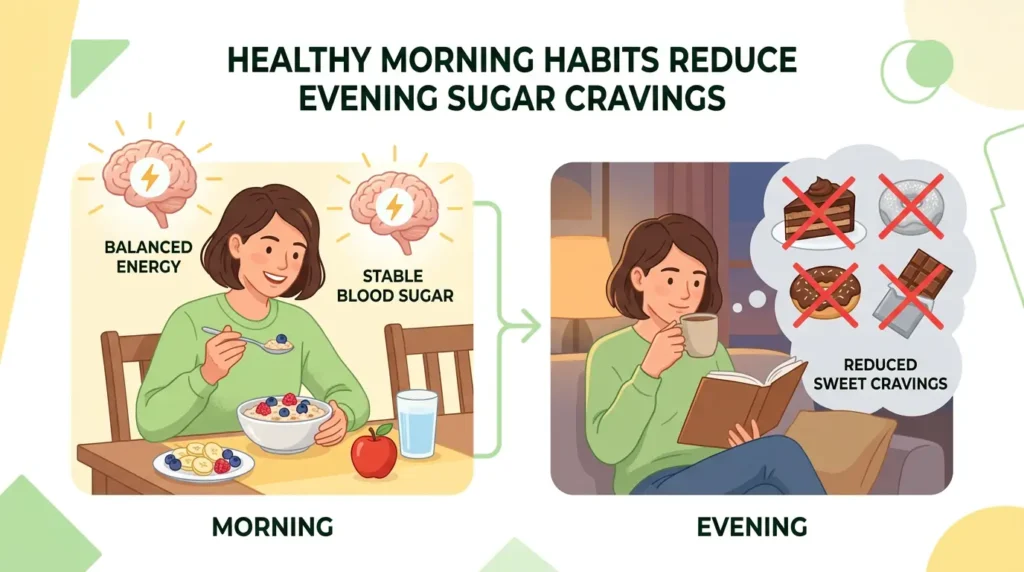
Another helpful strategy is eating natural fruit earlier in the day.
A small portion of fruit in the morning can provide gentle natural sweetness while supplying fiber and antioxidants. This can help satisfy the brain’s reward pathways early in the day.
As a result, the intensity of sweet cravings after meals later in the day may decrease.
Many people who struggle with evening cravings notice improvement when fruit is included as part of breakfast.
Choose Smarter Sweets When Cravings Strike
Completely avoiding sweets can sometimes make cravings stronger. Instead of suppressing the urge, choosing healthier sweet alternatives can help.
One simple option is:
1 date + 2 almonds
This combination provides natural sweetness along with fiber and healthy fats. The fats and fiber slow glucose absorption and prevent sudden blood sugar spikes.
Other better alternatives include:
- Fresh fruit with nuts
- Yogurt with berries
- Dark chocolate in small portions
These options satisfy sweet cravings while maintaining better blood sugar control.
The Role of Sleep, Stress, and Brain Health
Lifestyle factors also influence sugar cravings.
Lack of sleep, chronic stress, and emotional fatigue can increase hunger hormones and reduce impulse control.
For example:
- Sleep deprivation increases ghrelin, the hunger hormone
- Stress hormones like cortisol increase sugar cravings
- Low energy levels push the brain to seek quick sugar sources
Supporting brain health with nutrient-dense foods helps reduce cravings naturally.
Foods beneficial for brain health include:
- Nuts and seeds
- Berries
- Leafy greens
- Omega-3 rich foods like flaxseeds
These foods provide steady energy and reduce the urge for quick sugar.
Additional Clinical Strategies to Reduce Sugar Cravings
Research also suggests several effective strategies for controlling cravings.
Increase Protein Intake
Protein helps stabilize blood sugar and increases satiety.
Eat More Fiber
Fiber slows digestion and reduces rapid glucose spikes.
Stay Hydrated
Dehydration can sometimes mimic hunger or cravings.
Maintain Regular Meal Timing
Skipping meals can cause blood sugar drops and increase cravings later.
These habits help maintain stable glucose levels and reduce post-meal sugar cravings.
Conclusion
Sugar cravings after meals are not simply a matter of weak willpower. They are influenced by hormones, blood sugar changes, taste signals, and brain chemistry.
By making small changes such as adjusting meal order, including fruit earlier in the day, and choosing healthier sweet alternatives, it is possible to gradually retrain the body.
Over time, these strategies help reduce cravings naturally, allowing you to enjoy balanced meals without constantly feeling the need for sweets.
FAQshy do I get sweet cravings after meals?
Sweet cravings occur due to insulin changes, taste receptor activation, and dopamine release in the brain.
How can I stop sugar cravings naturally?
Start meals with vegetables or salads, eat carbohydrates last, and maintain balanced meals with protein and fiber.
What should I eat when I crave sweets?
Healthy alternatives like dates with almonds, fruits with nuts, or yogurt with berries can satisfy cravings without causing large sugar spikes.
Does meal order affect sugar cravings?
Yes. Eating vegetables and protein before carbohydrates can stabilize blood sugar and reduce cravings.
Which foods help reduce sugar cravings?
Fiber-rich vegetables, nuts, seeds, fruits, and protein-rich foods help stabilize blood sugar and reduce cravings.