
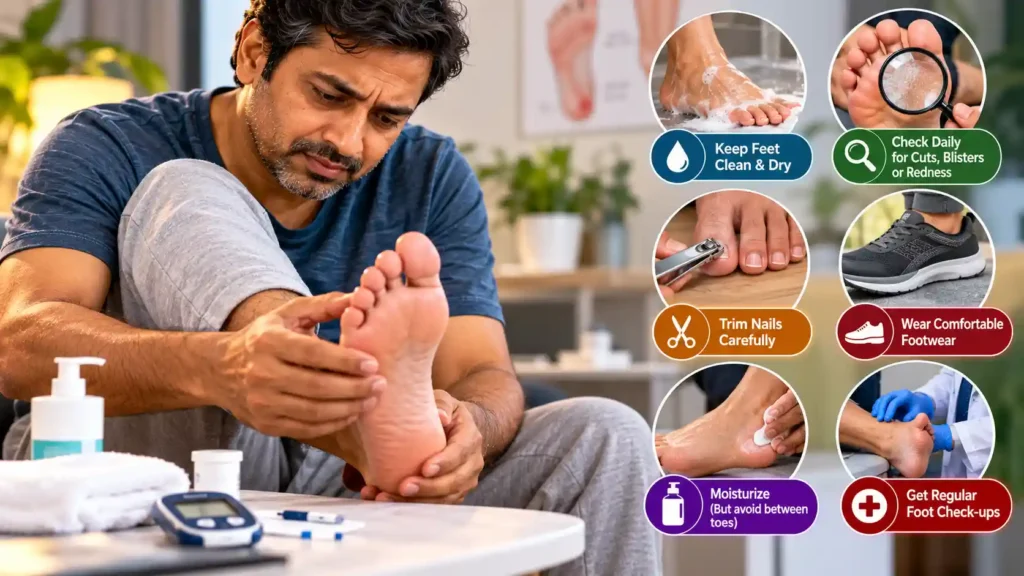
Diabetic Foot Care: Daily Routine and Warning Signs
Foot problems are one of the most serious and most preventable complications of diabetes. A small
blister or cut that would heal in days in someone else can become a deep ulcer or infection in a person
with diabetes, because nerve damage hides the pain and poor circulation slows healing. Most foot
ulcers can be prevented with simple daily habits. This guide explains the routine that protects your feet.
Why Feet Are at Risk
Neuropathy reduces feeling, so you may not notice injuries. Autonomic nerve damage dries the skin and
causes cracks. Narrowed leg arteries reduce blood flow, delaying healing. Foot deformities and calluses
create pressure points. Together, these factors can turn minor injuries into limb-threatening problems.
Your Daily Foot Routine
- Inspect: Look at the tops, soles, heels, and between the toes every day, using a mirror or asking
family to help. - Wash: Use lukewarm water and mild soap, and test the water with your elbow.
- Dry: Pat dry carefully, especially between the toes.
- Moisturise: Apply cream to the tops and soles, but not between the toes.
- Nails: Trim straight across, and file the edges. If you cannot see well or have thick nails, ask a
podiatrist. - Socks: Wear clean, seamless, cotton or moisture-wicking socks, and change them daily.
- Shoes: Check the inside of shoes for stones, folds, or sharp edges before wearing.
Choosing the Right Footwear
Choose closed shoes with a wide toe box, good arch support, and cushioning. Buy shoes in the
evening, when feet are largest, and make sure there is a thumb’s width of space beyond the longest toe.
Avoid pointed toes, high heels, thin flip-flops, and slippers with a strap between the toes. Break in new
shoes slowly. People with deformities or previous ulcers may need custom footwear or insoles
prescribed by a specialist.
Things to Avoid
- Walking barefoot, even at home, and on hot floors or roads.
- Hot-water bottles, heating pads, and soaking feet for long periods.
- Cutting corns or calluses yourself, or using blades, razors, or corn-removal acid pads.
- Tight socks, elastic bands, and crossing legs for long periods.
- Smoking, which damages circulation.
Temples, Mosques and Pilgrimages
Many places of worship require removing footwear, and floors can be very hot or wet. Where permitted,
wear clean socks, step on cool paths or mats, move quickly across hot surfaces, and check your feet
afterwards. Carry footwear to put on as soon as you leave.
Monsoon and Summer Risks
Wet shoes and constant moisture encourage fungal infections and skin breakdown, while hot
pavements can burn numb feet. Dry shoes thoroughly, and change wet socks promptly.
Warning Signs That Need Same-Day Care
- A blister, cut, sore, or crack that is not healing.
- Redness, swelling, or warmth in the foot.
- Pus, discharge, or a bad smell.
- Black or blue skin, or very pale, cold toes.
- Fever or chills with a foot wound.
- Sudden swelling and redness of a warm, numb foot, which can indicate Charcot foot.
Do not wait to see whether it improves. Early treatment can prevent amputation.
Treatment of Foot Ulcers
Treatment includes cleaning and removing dead tissue, antibiotics for infection, special dressings,
offloading with casts or shoes to remove pressure, improving blood flow when needed, and tight blood
sugar control. Healing may take weeks to months, and follow-up is essential.
Foot Checks by Your Doctor
Your feet should be examined at least once a year, including sensation testing with a monofilament and
checks of pulses and deformities. People at higher risk need checks at every visit. Remove your shoes
and socks at each consultation.
Care at Dr. Rajender’s Lifestyle Clinic
The clinic offers structured, evidence-based care for Type 2 diabetes, with personalised nutrition,
physical activity, lifestyle correction, and continuous medical guidance aimed at protecting nerves and
circulation through good control. Active foot ulcers need prompt care from a specialist team.
Book a Consultation
Visit https://www.drrajenderslifestyleclinic.com/ to learn more and book a consultation.
Frequently Asked Questions
How often should I check my feet?
Every day, preferably at the same time, and take someone’s help if you cannot see the soles well.
Can I get a pedicure if I have diabetes?
Only with care. Choose a clean, hygienic place, avoid blades and cutting of calluses, and tell the staff
that you have diabetes.
What type of footwear is best?
Closed shoes with a wide toe box, soft lining, and good support, with clean cotton socks, are best.
Is a small cut on the foot serious?
It can be if it does not heal. Clean it, cover it, and see a doctor if there is no improvement in a day or two
or if it looks infected.
Read Also:

One Response