
PCOS Diet Plan in India: Foods to Eat and Avoid
There is no single diet that cures PCOS, but what you eat has a powerful effect on insulin, hormones,
weight, skin, and cycles. A well-planned PCOS diet focuses on steady blood sugar, adequate protein,
healthy fats, and plenty of fibre, built around foods you already enjoy. This guide offers a practical Indian
PCOS diet plan that you can adapt with your doctor or nutritionist.
Why Diet Matters in PCOS
Many women with PCOS have insulin resistance, which raises insulin levels and stimulates the ovaries
to make more androgens. Meals heavy in refined carbohydrates and sugar cause sharp insulin spikes,
while balanced meals keep insulin steadier. Even a modest weight loss of five to ten percent in women
with excess weight can improve cycles and symptoms, and good nutrition benefits lean women too.
Principles of a PCOS-Friendly Diet
- Choose low-glycaemic, high-fibre carbohydrates such as millets, whole grains, pulses, and
vegetables. - Include protein at every meal.
- Add healthy fats from nuts, seeds, fish, and measured oils.
- Eat regular meals, and avoid long gaps.
- Limit sugary drinks, sweets, refined flour, and fried snacks.
- Eat a variety of colourful vegetables and fruit.
- Choose whole, minimally processed foods.
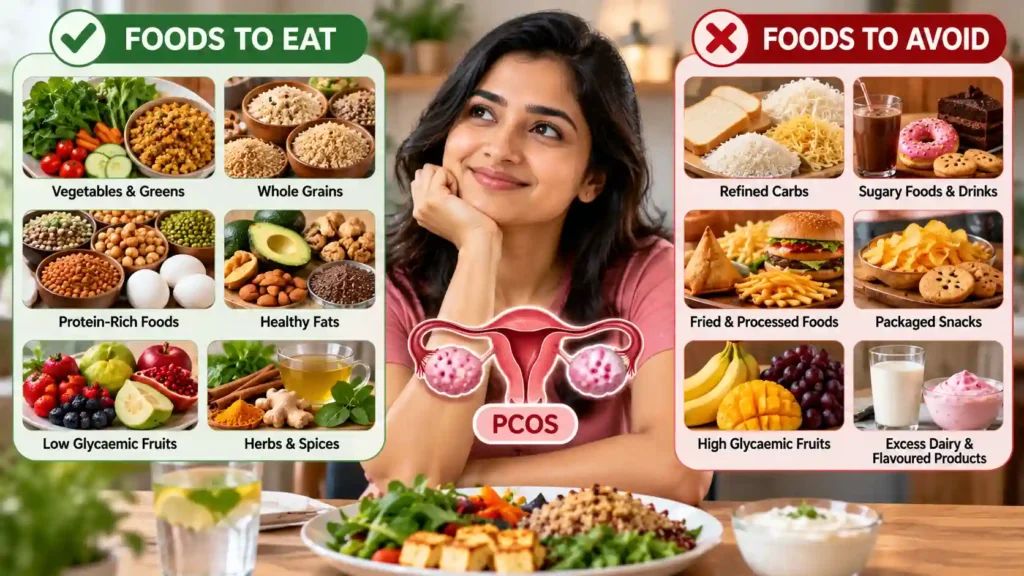
Foods to Emphasise
- Millets (jowar, ragi, bajra, foxtail), brown or red rice in small portions, and oats.
- Dals, rajma, chana, sprouts, and soy.
- Eggs, fish, chicken, paneer, tofu, and curd.
- Leafy greens, gourds, beans, carrots, cauliflower, and other vegetables.
- Guava, apple, pear, berries, orange, and papaya in sensible portions.
- Almonds, walnuts, flaxseeds, pumpkin seeds, and sesame.
Foods to Limit
- Sugary drinks, juices, sweets, and desserts.
- Maida products, white bread, bakery items, and instant noodles.
- Deep-fried snacks, and repeatedly reheated oil.
- Large portions of white rice.
- Packaged and ultra-processed foods.
- Excess tea and coffee with sugar.
A Sample Day
- Breakfast: Vegetable besan chilla or ragi dosa with chutney, and a boiled egg or curd.
- Mid-morning: A guava or apple with a few almonds.
- Lunch: Salad, dal, vegetable curry, one or two jowar or whole-wheat rotis or a small bowl of millet or
brown rice, and buttermilk. - Evening: Roasted chana, sprouts chaat, or nuts with unsweetened tea.
- Dinner: Grilled paneer, tofu, fish, or chicken with sauteed vegetables, one roti, and clear soup.
Managing Cravings
Cravings are common in PCOS because of insulin swings. Eat protein-rich meals, avoid skipping meals,
sleep enough, and keep healthy snacks ready. If you want something sweet, have a small portion after
a balanced meal, not on an empty stomach.
Supplements and Trends
Inositol and some other supplements are popular, but evidence is limited or mixed, and quality varies.
Discuss them with your doctor first. Extreme diets, long fasts, and detox plans can worsen hormonal
balance and cravings.
A Note on Eating Disorders
Women with PCOS have a higher rate of disordered eating. If you find yourself bingeing, restricting
severely, or feeling distressed about food, speak with your doctor, since support is available and
effective.
Pair Diet With Movement and Sleep
Walk after meals, add strength training two or three times a week, and sleep seven to eight hours.
These habits improve insulin sensitivity as much as diet itself.
Care at Dr. Rajender’s Lifestyle Clinic
The clinic offers structured, evidence-based care for PCOS and related metabolic conditions, with
personalised nutrition, physical activity, lifestyle correction, and continuous medical guidance.
Book a Consultation
Visit https://www.drrajenderslifestyleclinic.com/ to learn more and book a consultation.
Frequently Asked Questions
Do I need to avoid dairy in PCOS?
Not necessarily. Evidence is limited. Many women do well with curd and moderate dairy, though some
prefer to reduce it. Follow your own response and your doctor’s advice.
Is rice allowed in PCOS?
Yes, in controlled portions with vegetables and protein. Millets and brown rice are good alternatives.
Can diet alone fix PCOS?
Diet greatly helps, but PCOS is best managed with nutrition, activity, sleep, and medicines when
needed.
Is intermittent fasting good for PCOS?
It is not routinely recommended, and may not suit everyone. Regular, balanced meals are usually safer
and easier to sustain.
Read Also:

One Response