
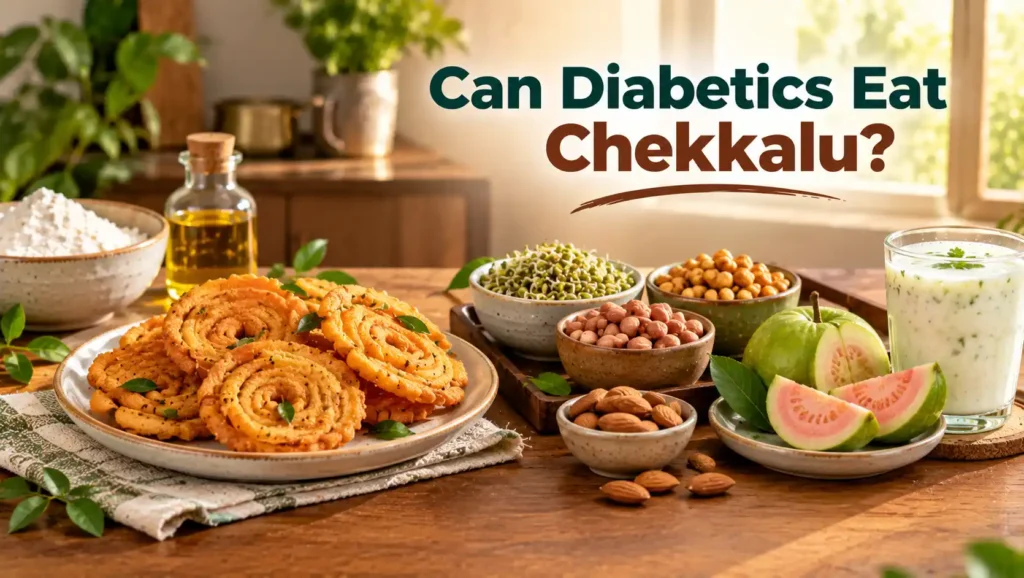
Can Diabetics Eat Chekkalu?: Chekkalu, also known as chakralu, is a popular South Indian savory snack. It is commonly eaten as an evening snack and is also prepared during festivals.
Because chekkalu is spicy rather than sweet, many people assume that it will not increase blood sugar. However, the ingredients used to prepare the snack are important.
Traditional chekkalu is commonly prepared using rice flour, and rice flour is a carbohydrate-rich ingredient that can raise blood sugar relatively quickly.
What Is the Glycemic Index of Chekkalu?
According to the provided information, chekkalu has a glycemic index of approximately 70, which places it in the high-GI category discussed in the content.
Rice flour can be digested relatively quickly and converted into glucose. The lack of fiber in the snack is also mentioned as another factor contributing to its higher glycemic response.
Therefore, the fact that chekkalu is savory rather than sweet does not mean that it is automatically suitable for people with diabetes.
Does Chekkalu Contain Carbohydrates?
Yes. According to the provided information, one chekkalu contains approximately:
- 100 calories
- 5 grams of fat
- 15 grams of carbohydrates
The fat content can vary depending on how much oil the snack absorbs during deep frying. The source notes that this may range from around 5 to 10 grams of fat.
Because chekkalu contains both carbohydrates and fat and has a high glycemic index according to the provided information, eating larger quantities may contribute to higher blood sugar levels.
Why Does Deep Frying Matter?
Chekkalu is traditionally deep-fried in oil at high temperatures.
The provided content raises concerns about high-temperature frying and discusses the possibility of increased trans fats and oxidative stress associated with such cooking methods.
It also connects oxidative stress and free-radical damage with complications discussed in diabetes, including problems affecting the eyes, kidneys and nerves.
For this reason, the content recommends limiting foods that are heavily deep-fried and choosing more nutritious snacks regularly.
Is Chekkalu a Healthy Daily Snack for Diabetes?
Chekkalu is not recommended as a daily healthy snack in the provided guidance.
However, this does not mean that it has to be completely forbidden.
The key recommendations are:
Right food + right portion + right timing.
A small amount can be enjoyed occasionally rather than becoming a regular part of the daily diet.
The provided guidance suggests limiting the portion to one chekkalu and, when desired, sharing it with a family member instead of eating several pieces at once.
Why Is It Easy to Overeat Chekkalu?
One concern discussed is that chekkalu may not keep you full for long.
Because it is a refined, deep-fried snack, eating one piece may make some people want to eat several more. When chekkalu is kept in a container nearby, it can also become easy to lose track of how many pieces have been eaten.
As a result, carbohydrates can add up without being noticed.
This can be particularly important for people who otherwise follow a healthy diet but consume large amounts of carbohydrates between their main meals.
Better Evening Snack Options for Diabetes
Instead of making chekkalu a regular evening snack, the provided guidance suggests several alternatives:
- Boiled peanuts
- Sprout salad
- Buttermilk
- Ragi porridge
- Boiled eggs
- Vegetable salad
- Almonds
- Walnuts
- Makhana
- Roasted chana
- Boiled chickpeas
- Orange
- Guava
These options can provide fiber, protein, vitamins or minerals and may be more suitable for regular snack planning.
Why Is Guava a Good Snack Option?
The provided content uses guava as an example of a healthier snack.
One guava is described as providing a good amount of fiber and vitamin C, with approximately 50 calories and 7 grams of carbohydrates according to the source.
Compared with repeatedly eating deep-fried snacks, fruit can provide a different nutritional profile while also helping diversify the diet.
Plan Your Snacks Along With Your Main Meals
Many people carefully manage breakfast, lunch and dinner but pay less attention to snacks between meals.
For example, someone may eat brown rice during lunch and jowar roti at night but still consume several high-carbohydrate snacks during the day.
These between-meal choices can add significant carbohydrates without being noticed.
Therefore, people with diabetes should plan breakfast, lunch, dinner and snacks together rather than focusing only on the three main meals.
How Often Can Diabetics Eat Chekkalu?
According to the provided guidance, chekkalu can be enjoyed occasionally, but it should not be treated as a daily healthy snack.
If you choose to eat it, keep the portion small and avoid repeatedly eating multiple pieces.
The main focus should remain on healthier snacks that can support better nutrition and metabolic health.
Choose Snacks That Support Metabolic Health
Managing diabetes does not mean completely avoiding every traditional food. Instead, the focus should be on portion control, timing and food quality.
Chekkalu can be enjoyed occasionally in a controlled quantity, while regular snacks can include options such as boiled peanuts, sprouts, eggs, vegetables, buttermilk, fruits, nuts and roasted chana.
At Dr. Rajender’s Lifestyle Clinic, diabetes care combines medical guidance with nutrition and sustainable lifestyle changes to support long-term metabolic health.
For personalized guidance on diabetes nutrition, snack planning and blood sugar management, consult Dr. Rajender Ramagiri, Founder & Lead Physician at Dr. Rajender’s Lifestyle Clinic, Banjara Hills, Hyderabad.
Frequently Asked Questions
1. Can diabetics eat chekkalu?
According to the provided guidance, people with diabetes can eat chekkalu occasionally in a controlled portion, but it is not recommended as a daily healthy snack.
2. Does chekkalu increase blood sugar?
Chekkalu is made using rice flour, which is a carbohydrate-rich ingredient. The provided information describes its glycemic index as around 70, so consuming larger quantities may increase blood sugar.
3. How many calories are in one chekkalu?
According to the provided information, one chekkalu contains approximately 100 calories.
4. How much carbohydrate does one chekkalu contain?
The provided content states that one chekkalu contains approximately 15 grams of carbohydrates.
5. What are healthier evening snacks for diabetes?
The suggested options include boiled peanuts, sprout salad, buttermilk, ragi porridge, boiled eggs, vegetables, almonds, walnuts, makhana, roasted chana, orange and guava.
6. Can I eat chekkalu every day if I have diabetes?
The provided guidance does not recommend chekkalu as a daily snack. It suggests eating it occasionally and keeping the portion limited.
Read Also:

One Response