
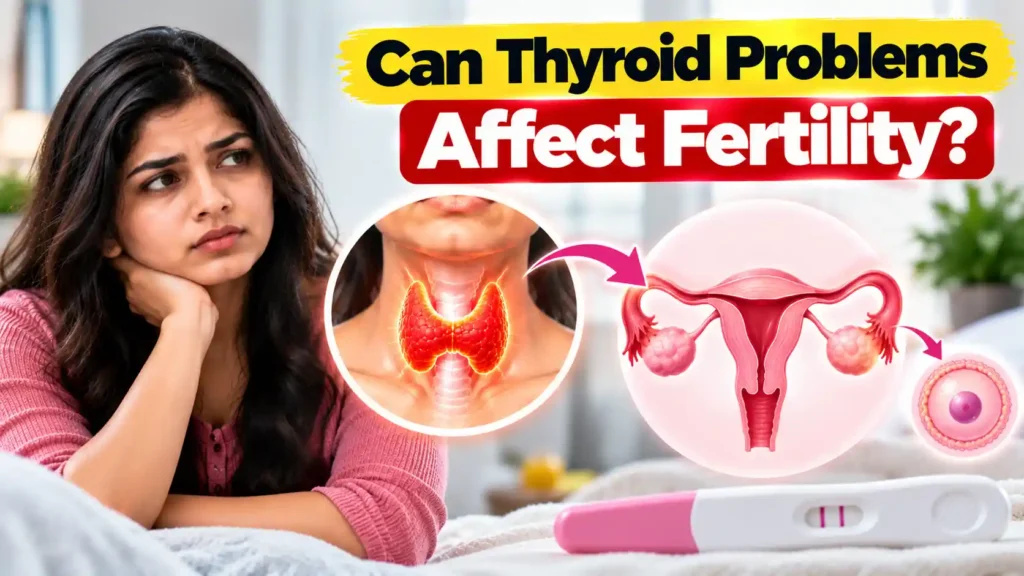
Can Thyroid Problems Affect Fertility: Planning a pregnancy can raise questions about hormones, menstrual cycles, and reproductive health. Thyroid function is one factor that may influence fertility because thyroid hormones interact with the reproductive system and help regulate several processes involved in conception.
Both hypothyroidism and hyperthyroidism can affect menstrual regularity and ovulation in some people. Untreated thyroid disease during pregnancy may also be associated with health risks for the pregnant person and developing baby.
However, thyroid dysfunction is only one of many possible causes of fertility difficulties. Having a thyroid disorder does not automatically mean that you cannot conceive. Appropriate assessment and treatment can help manage thyroid-related risks.
How Does the Thyroid Affect Fertility?
The thyroid produces T4 and T3, hormones that influence metabolism and interact with the hypothalamus, pituitary gland, and ovaries.
This system helps regulate reproductive hormones, menstrual cycles, and ovulation. When thyroid hormone levels are abnormal, the timing or regularity of ovulation may be affected in some individuals.
Thyroid disorders can also coexist with other conditions that influence fertility, including PCOS and autoimmune disorders.
How Can Hypothyroidism Affect Fertility?
1. It may interfere with ovulation
Hypothyroidism can disrupt the hormonal signals involved in releasing an egg from the ovary. Some women may ovulate irregularly or less frequently.
If ovulation does not occur consistently, the chance of conception in a given menstrual cycle may decrease.
2. It can cause menstrual irregularities
An underactive thyroid may contribute to heavy periods, irregular cycles, or periods that occur less frequently.
Tracking menstrual cycles can provide useful information, but regular periods do not guarantee that ovulation is occurring normally.
3. It may affect prolactin levels
In some people, hypothyroidism can increase prolactin, a hormone that can interfere with ovulation when elevated. If symptoms or test results suggest this problem, a clinician may recommend additional testing.
4. Untreated hypothyroidism matters during pregnancy
Overt hypothyroidism during pregnancy can increase the risk of complications for both the pregnant person and the baby. Thyroid hormone requirements may change during pregnancy, making timely assessment and follow-up important.
Women with known hypothyroidism who are planning pregnancy should discuss their thyroid control with their healthcare professional in advance.
Can Hyperthyroidism Affect Fertility?
Yes. Excess thyroid hormone activity may disrupt menstrual cycles and ovulation. Some people experience lighter, less frequent, or irregular periods.
Untreated hyperthyroidism during pregnancy can also increase the risk of complications. Appropriate management before conception is important, particularly when the condition is caused by Graves’ disease or requires antithyroid medication.
The safest treatment plan depends on the cause of hyperthyroidism, current medicines, and pregnancy plans.
Should You Get Thyroid Testing When Planning Pregnancy?
Thyroid testing may be particularly relevant if you:
- Have a known thyroid disorder.
- Experience persistent irregular periods.
- Have symptoms suggestive of hypothyroidism or hyperthyroidism.
- Have a history of thyroid surgery or radioactive iodine treatment.
- Are taking thyroid medication.
- Have a history of certain autoimmune conditions or previous thyroid-related pregnancy concerns.
Testing usually begins with TSH, with free T4 and other investigations added when appropriate.
Not everyone planning pregnancy needs the same tests. Your clinician can recommend screening based on your medical history and local guidelines.
What If You Are Already Taking Thyroid Medication?
Do not stop thyroid medication because you are trying to conceive or because you become pregnant.
People taking levothyroxine may need closer monitoring before and during pregnancy because thyroid hormone requirements can change. Contact your healthcare professional promptly after a positive pregnancy test to discuss monitoring and any treatment adjustments.
Do not independently change the dose. Pregnancy-specific targets and monitoring schedules should be determined by your treating clinician.
Lifestyle Habits That Support Reproductive Health
Eat a balanced diet
Include a variety of vegetables, fruit, pulses, whole grains, protein sources, and healthy fats. Avoid extreme diets that may interfere with general health or menstrual function.
Maintain appropriate physical activity
Regular activity supports cardiovascular and metabolic health. Choose a routine that is appropriate for your fitness level and medical condition.
Review supplements with your clinician
Iodine and other nutrients are important for thyroid function, but excess supplementation can be harmful. Prenatal supplements may contain iodine or iron, and iron can interfere with levothyroxine absorption if taken too close together. Ask how to space your medicines and supplements.
Seek a comprehensive fertility assessment when needed
Fertility involves both partners and can be affected by ovulation, sperm health, reproductive anatomy, age, and other factors. Thyroid testing is one part of an assessment, not a complete fertility evaluation.
Frequently Asked Questions
1. Can I get pregnant if I have hypothyroidism?
Yes. Many people with hypothyroidism can conceive, especially when thyroid function is appropriately managed. Individual fertility depends on several factors.
2. Should TSH be checked before pregnancy?
It is especially important to discuss testing if you have known thyroid disease, thyroid symptoms, or other relevant risk factors. Your clinician can advise whether testing is appropriate.
3. Can thyroid problems cause infertility?
Thyroid dysfunction can contribute to fertility difficulties by affecting menstrual cycles and ovulation. However, infertility often has multiple possible causes.
4. Is thyroid medication safe during pregnancy?
Levothyroxine is commonly used to treat hypothyroidism during pregnancy. Untreated hypothyroidism can pose risks, so medication should not be stopped without medical advice.
5. Does hyperthyroidism need treatment before conception?
Planning should be discussed with an endocrinologist or other appropriate specialist. The safest approach depends on the cause, severity, medication, and pregnancy plans.
Conclusion
Thyroid disorders can influence fertility by affecting ovulation, menstrual cycles, and reproductive hormone regulation. Both underactive and overactive thyroid conditions deserve appropriate assessment when planning pregnancy.
With individualised testing, suitable treatment, and follow-up before and during pregnancy, thyroid-related risks can often be managed more effectively.
Planning pregnancy and concerned about thyroid health?
Dr. Rajender’s Lifestyle Clinic in Banjara Hills, Hyderabad, provides medical guidance for thyroid and metabolic health. Book a consultation to review thyroid symptoms and test results. For fertility difficulties or pregnancy planning, coordinate care with an appropriate gynaecologist or fertility specialist.
Read Also:

One Response