
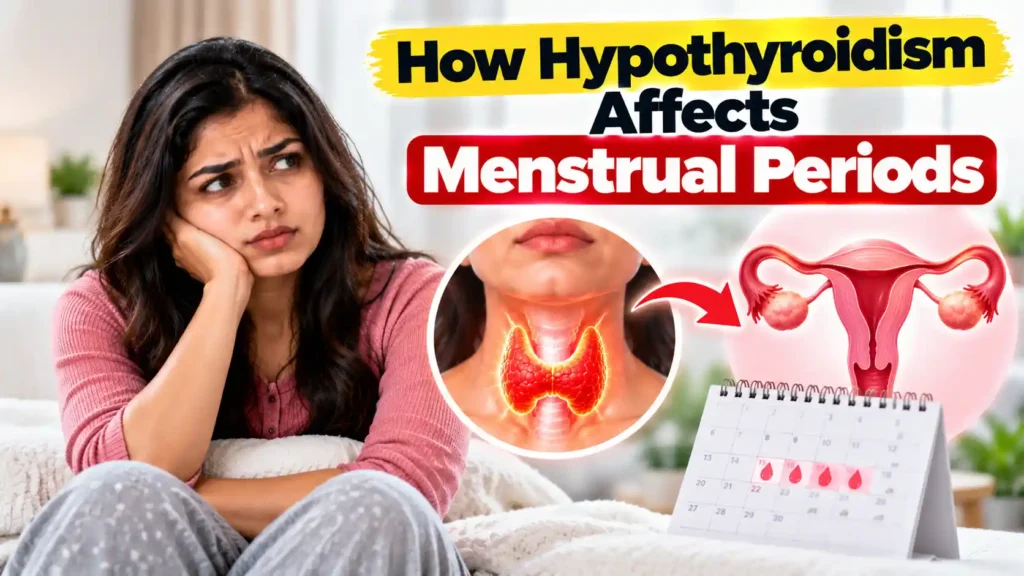
How Hypothyroidism Affects Menstrual Periods: Menstrual cycles can change for many reasons, including stress, changes in body weight, pregnancy, polycystic ovary syndrome (PCOS), and hormonal disorders. One possible contributor is hypothyroidism, a condition in which the thyroid gland does not produce enough thyroid hormone.
Thyroid hormones influence metabolism and interact with the reproductive hormone system. When thyroid function is abnormal, some women experience changes in menstrual frequency, bleeding duration, or flow.
Hypothyroidism can contribute to heavy or irregular periods, but menstrual changes should not automatically be attributed to the thyroid. A proper assessment helps identify the cause and determine whether treatment is needed.
How Does the Thyroid Influence the Menstrual Cycle?
The menstrual cycle is regulated by communication between the brain, pituitary gland, ovaries, and uterus. Thyroid hormones help support normal reproductive function and can influence the hormones involved in ovulation and menstruation.
When thyroid hormone levels are too low, this hormonal system may be disrupted. The effects differ from person to person and may depend on the severity and duration of hypothyroidism.
How Can Hypothyroidism Affect Menstrual Periods?
1. Heavy menstrual bleeding
Some women with hypothyroidism experience heavier or longer periods. Thyroid dysfunction can affect reproductive hormones and menstrual regulation, although other causes—such as fibroids, adenomyosis, or bleeding disorders—may also be responsible.
Heavy bleeding should be evaluated, especially if it affects daily activities or causes symptoms of anaemia.
2. Irregular menstrual cycles
Hypothyroidism may contribute to cycles that become less predictable. Periods may occur more or less frequently than usual.
However, irregular periods can also be associated with PCOS, perimenopause, stress, significant weight changes, and other hormonal conditions.
3. Changes in ovulation
Thyroid dysfunction can interfere with the hormonal processes involved in ovulation. If ovulation becomes irregular, menstrual cycles may also change.
This can be relevant for women trying to conceive because regular ovulation is an important part of natural fertility.
4. Changes in prolactin levels
In some cases, primary hypothyroidism can increase prolactin levels through changes in the hypothalamic-pituitary system. Elevated prolactin may interfere with ovulation and contribute to irregular periods or difficulty conceiving.
Not everyone with hypothyroidism develops elevated prolactin, and additional testing is only needed when clinically indicated.
5. Menstrual changes alongside other symptoms
Menstrual changes may occur with fatigue, cold intolerance, constipation, dry skin, or hair thinning. When several symptoms occur together, a healthcare professional may consider thyroid testing.
When Should You Consider a Thyroid Test?
A clinician may recommend thyroid function testing if you experience persistent menstrual irregularity, particularly when accompanied by symptoms of hypothyroidism or a personal history of thyroid disease.
Testing commonly begins with TSH. Free T4 may be measured to clarify an abnormal result. Other investigations may be needed depending on the menstrual symptoms.
If bleeding is heavy, your clinician may also consider a complete blood count, iron studies, pregnancy testing, or evaluation for gynaecological causes.
Can Treating Hypothyroidism Improve Menstrual Regularity?
If hypothyroidism is responsible for menstrual changes, appropriate thyroid hormone replacement may help restore more regular cycles over time.
Levothyroxine is commonly prescribed for hypothyroidism. The dose is individualised, and follow-up blood tests help assess the response.
Menstrual cycles may not normalise if another condition is also present. Do not take thyroid medication or hormonal supplements without appropriate medical advice.
Lifestyle Habits That Support Hormonal Health
- Eat balanced meals: Include vegetables, pulses, whole grains in suitable portions, and adequate protein.
- Maintain regular physical activity: Choose activities that suit your health and energy levels.
- Prioritise sleep: A consistent sleep routine supports general hormonal and metabolic health.
- Avoid extreme dieting: Rapid weight changes and severe food restriction can disrupt menstrual cycles.
- Attend follow-up appointments: Track cycle dates, bleeding patterns, symptoms, and medication changes.
Lifestyle measures can support general health, but they do not replace thyroid treatment when it is medically necessary.
Frequently Asked Questions
1. Can hypothyroidism cause heavy periods?
Yes. Hypothyroidism can contribute to heavy or prolonged menstrual bleeding, but other causes should also be considered.
2. Can an underactive thyroid delay periods?
It can contribute to irregular cycles, including periods that occur less frequently. Pregnancy and other hormonal conditions should also be considered when periods are delayed.
3. Will my periods become normal after thyroid treatment?
They may improve if hypothyroidism is the main cause. Recovery varies, and additional causes of menstrual irregularity may need treatment.
4. Can hypothyroidism affect fertility?
Yes. Untreated hypothyroidism can interfere with ovulation and reproductive function in some women. Appropriate assessment and treatment are important when planning pregnancy.
5. When is heavy menstrual bleeding an emergency?
Seek urgent medical care if you are bleeding heavily and feel faint, very weak, short of breath, or have severe pain. Bleeding that soaks through a pad or tampon about every hour for several consecutive hours also warrants urgent assessment, particularly if accompanied by dizziness or weakness.
Conclusion
Hypothyroidism can affect menstrual cycles by interfering with reproductive hormone regulation and ovulation. Some women experience heavy bleeding, irregular periods, or difficulty conceiving. However, these symptoms can have several causes, so appropriate assessment is important.
Thyroid testing, treatment when needed, and regular medical follow-up can help address thyroid-related menstrual changes and support reproductive health.
Need guidance about thyroid symptoms and menstrual changes?
Dr. Rajender’s Lifestyle Clinic in Banjara Hills, Hyderabad, provides medical guidance for thyroid and metabolic conditions. Book a consultation to discuss your symptoms and whether thyroid assessment may be appropriate. Persistent or heavy menstrual bleeding may also require evaluation by a gynaecologist.
Read Also:

One Response